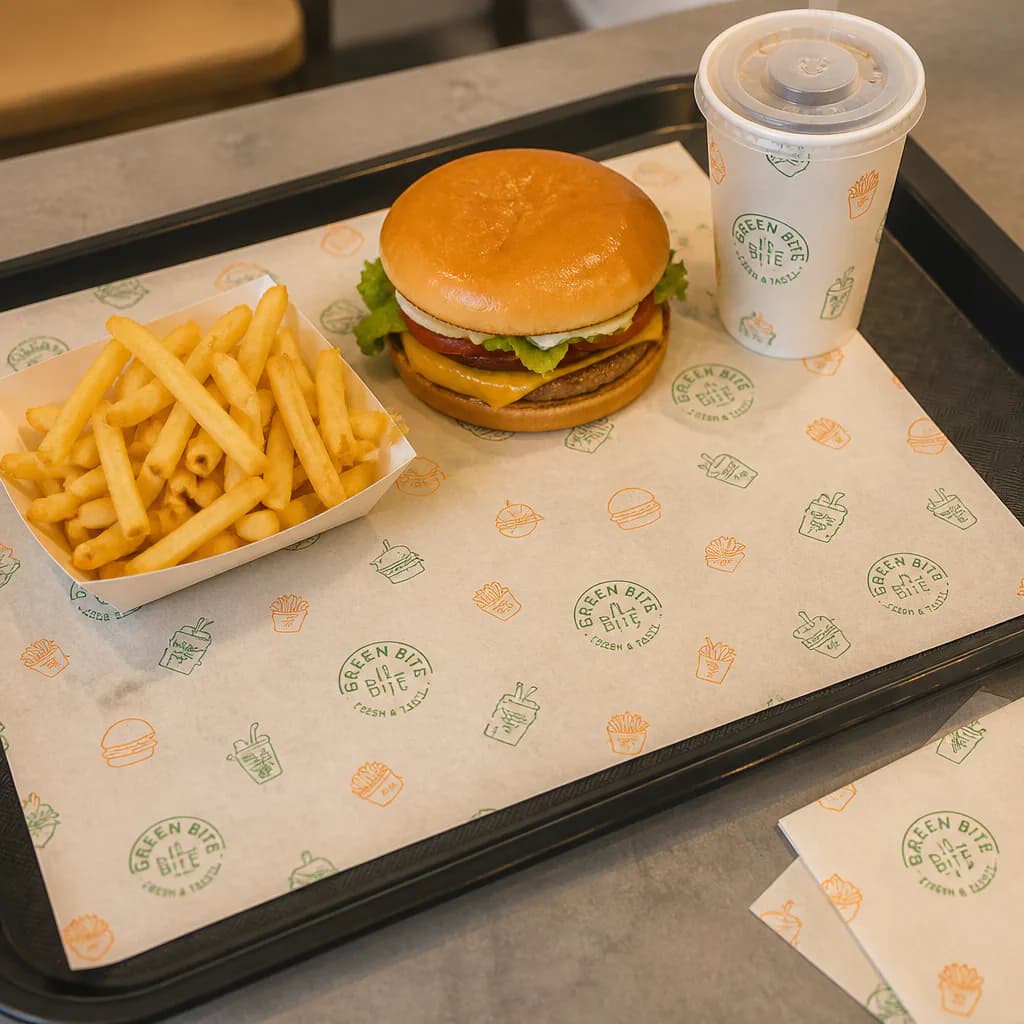
Specify the paper for the food and the way it is used
Xucheng Packaging coordinates custom printed greaseproof wrapping paper sheets for foodservice projects. Start with the food, how staff handle the sheet and what must remain presentable at handover. Sheet dimensions, paper construction, printing and packing are then reviewed together for a project quotation. A brown or white sheet, a stated paper weight or the word “greaseproof” alone cannot establish suitability for every food.
This page is for buyers comparing a grease-resistant paper requirement across several foods or service formats. If the main decision is how to fold one finished sheet around a burger, use our burger wrapping paper product page. For a mixed sandwich menu, sandwich wrapping paper addresses fit and fold. The paper route discussed here can inform those projects, but it does not replace their finished-sheet trials.
Tell Lynn what food you serve and whether the sheet will wrap it, line a tray or support counter service. You can Chat on WhatsApp or choose an email option before you have photos, measurements, artwork or an order quantity. A food or wrapper photo is optional and can follow; sheet size, paper construction and sample details can be worked through as the project develops.
Separate the food-contact requirement from the sheet format
Different jobs may need similar-looking sheets but different specifications. A wrap bends and overlaps around food. A liner sits under food or a container. A counter sheet may have to separate easily from a stack. Test the job the buyer will actually perform before asking one paper to cover every menu item.
For a continuous web cut to length at a counter, a roll specification is a different purchasing decision. A pre-cut sheet size cannot simply be renamed as a roll width. For a fixed reusable tray, see paper tray liners; for ready-sized pickup at a deli counter, see deli paper sheets.
Define the result the paper must achieve
Describe the food as it reaches the packing station, not only by its menu name. Note whether it is hot, oily, buttery, moist or sauced; which side of the sheet touches it; and the usual time between packing and eating. A freshly served item and one held inside a takeaway bag may challenge the paper differently. Also explain whether the sheet must fold tightly, remain flat, peel away cleanly or stay legible after contact.
Use a current wrapper as evidence when possible. If it stains, tears, sticks or feels damp, mark where and when the change appears. An oily mark at a folded seam asks a different question from a uniform mark across the flat area. If the print disappears into a crease, that is an artwork or fold-placement issue rather than proof that a heavier paper is required.
Do not use an unqualified “oil-proof,” “leakproof” or holding-time claim as the brief. State the food and the result you need, then assess the proposed sheet under those conditions. A paper that passes one burger or pastry trial is not automatically suitable for a wetter filling, a hotter service step or another destination market. Oven, microwave, grill and cooking uses require separate confirmation; a normal foodservice wrap is not evidence for those uses.
Compare paper options for your food and service conditions
Natural greaseproof paper, a treated or coated sheet, and waxed or laminated constructions are different routes that may be evaluated. The right option depends on the actual food, contact duration, folding, print and destination requirements. Naming a route here does not mean that every construction is available for every project or carries the same documents.
A dense natural greaseproof paper may be worth assessing when oil resistance is the central need. A surface-treated or coated sheet may be considered where the contact conditions call for a different barrier response. Waxed or laminated constructions introduce further questions about temperature, contact, print and disposal expectations. Ask for the proposed construction and its intended use rather than accepting “greaseproof” as a complete material description.
Grammage is part of the specification, not a substitute for a trial. Two sheets of the same weight can behave differently at an oily fold or beneath warm food. Start from a working reference sample if you have one; otherwise compare candidate papers against the same food, sheet size and holding conditions. We review the paper and production route with the relevant partner before the final specification is approved.
If direct food contact or a particular document is required, name the destination market and the intended contact conditions at the start. Document availability must be checked for the selected paper, print and production route. An external liner with a closed food box on top does not establish direct-contact suitability for an open sandwich.
Set sheet dimensions, print and packing together
For an existing successful format, measure an unused flat sheet across its finished width and length. Photograph the sheet flat and in its normal wrap or liner position. If the format is new, send the finished food or tray dimensions and the staff handling method; sampling can establish the sheet size. A product photo alone may hide the folded overlap or the space the paper needs at the tray edge.
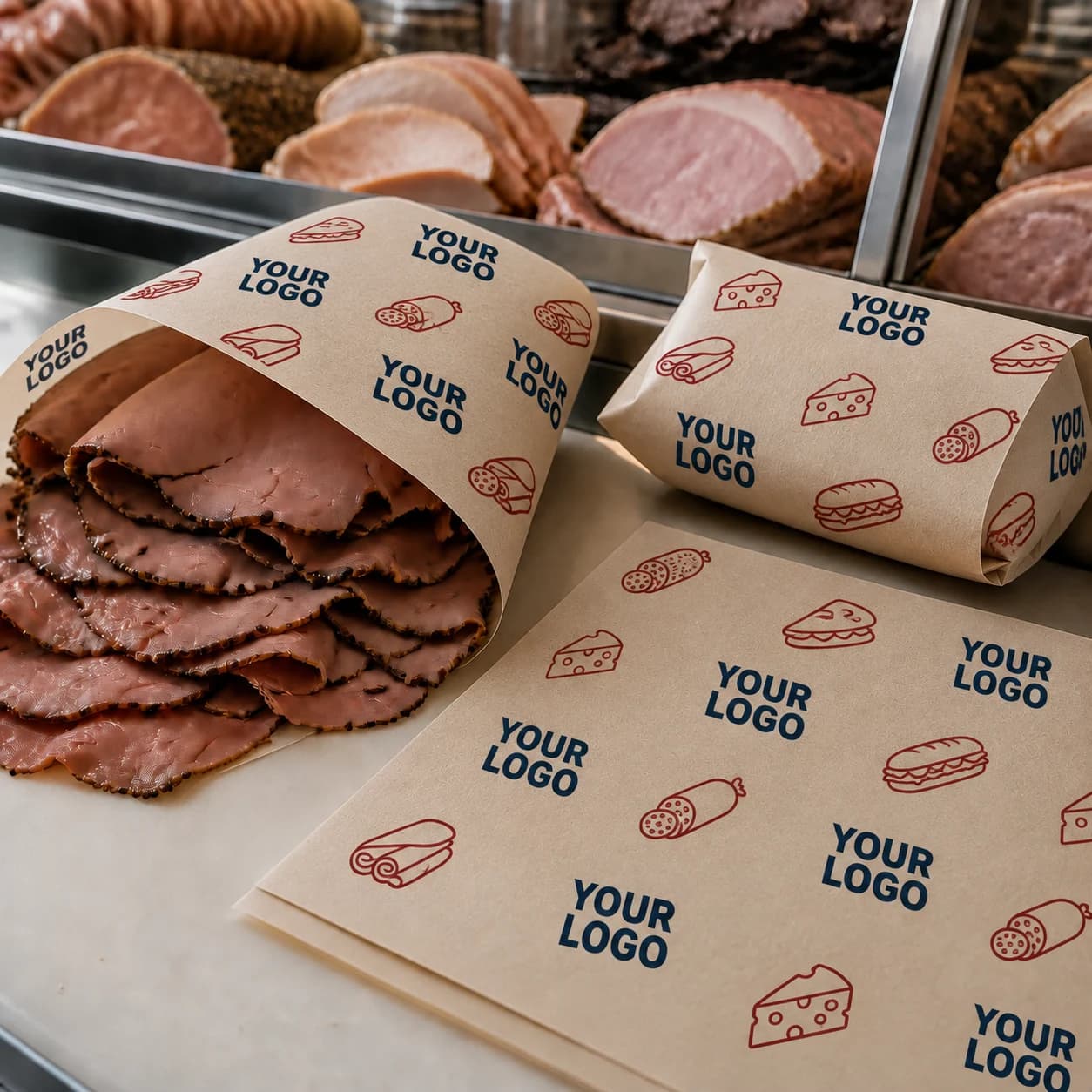
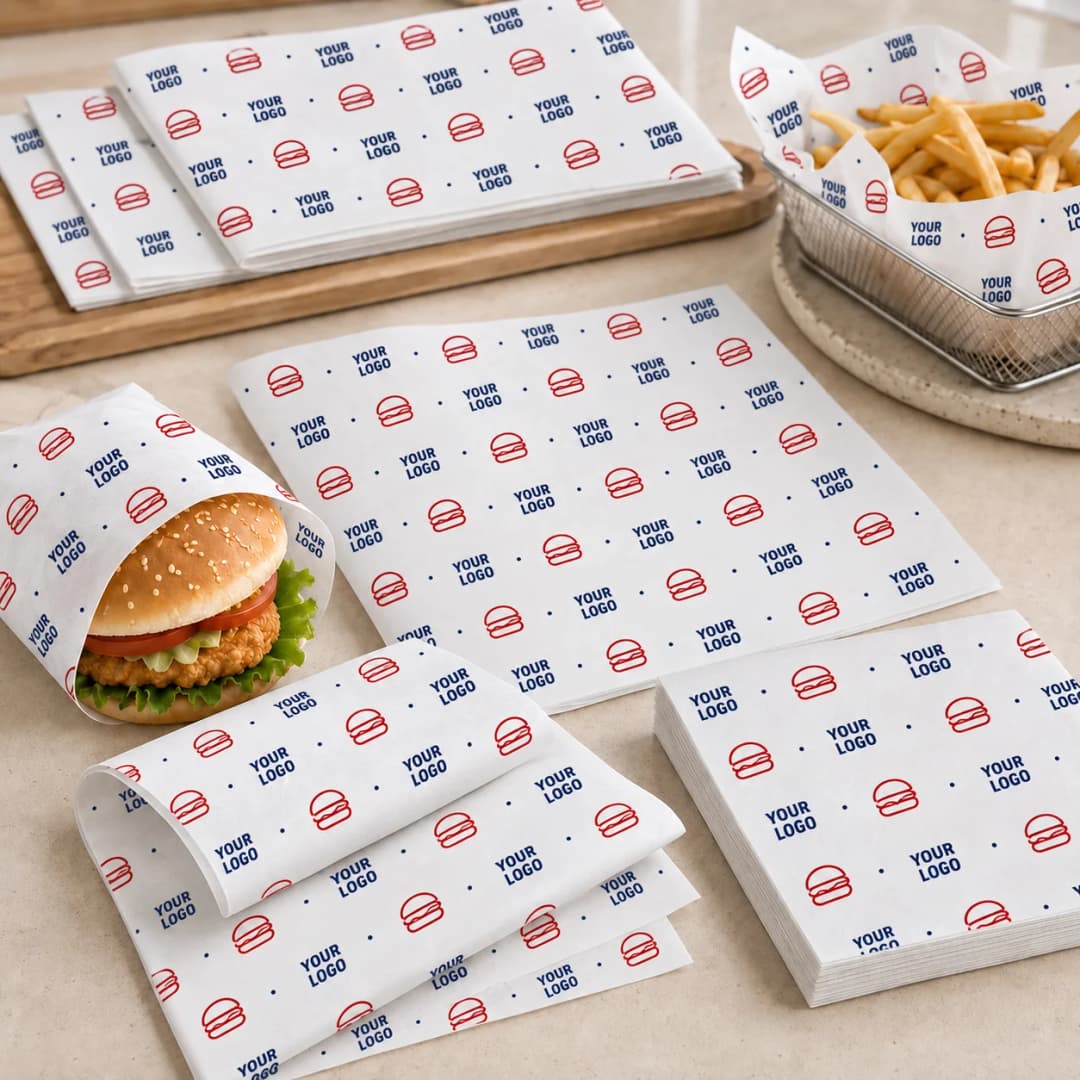
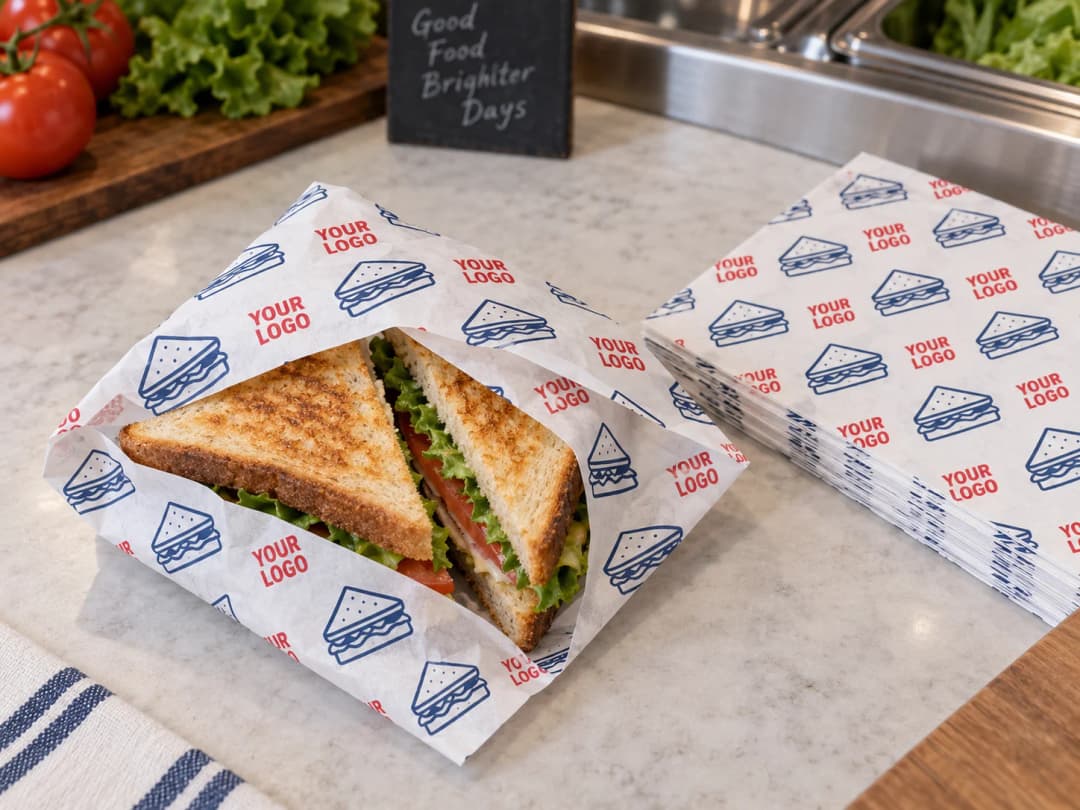
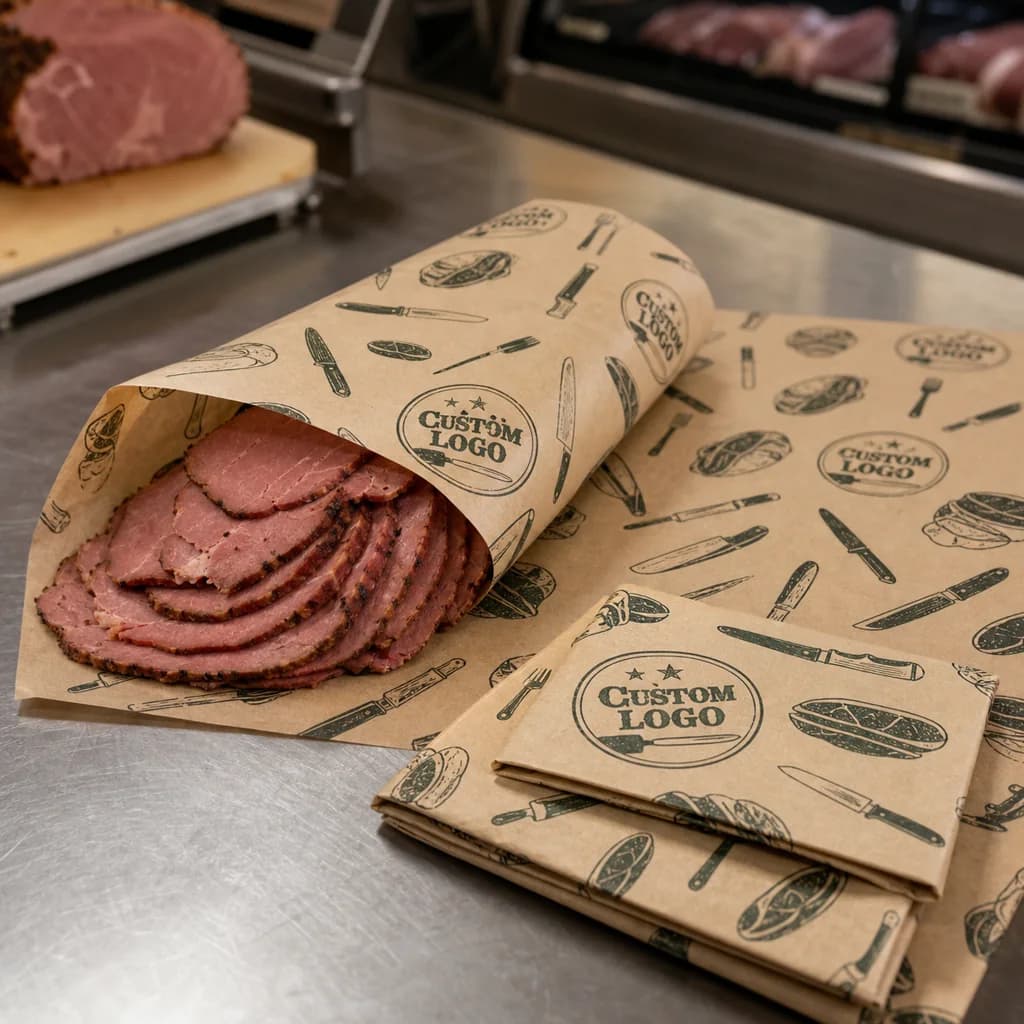
Decide whether the logo should appear as a repeating pattern or in a controlled position. Mark the visible panel after the real fold, including any overlap and tucked ends. For a flat liner, show which area remains visible after food or containers are placed on it. A design approved only as a flat artwork file may disappear in service. Confirm color references, coverage, orientation and any unprinted area with the proposed printing route.
Record how staff receive and dispense the sheets: flat stacks, folded packs or another agreed arrangement. Inner-pack quantity, version labels and carton identification matter when several sizes or artworks are ordered. Separate the requested quantity by finished size and design so the quotation, sample and repeat order refer to the same item. A total across different specifications should not be treated as one production run.
Test a sample in the actual service sequence
- Check fit without changing the food. Place the candidate sheet around the assembled item or inside the actual tray. Record exposed areas, closure overlap and excessive bulk.
- Repeat under normal contact conditions. Use the real food temperature, oil, sauce or moisture and the normal holding period. Look at folds and contact points as well as the flat area.
- Check handling. Ask staff to take a sheet from its proposed pack, wrap or line the order at normal speed, then hand it over. Note sticking, tearing or difficult separation.
- Check printed appearance. View the wrapped or loaded product as the customer receives and opens it. Confirm logo visibility, direction and any critical text.
- Keep the approved reference. Save the tested sheet dimensions, material description, artwork revision, food/use conditions, inner-pack arrangement and photos. If the food, fold, paper or artwork changes later, repeat the affected part of the trial.
These are approval questions for a project sample, not a claim that an untested sheet will resist every grease or moisture condition. If fit passes but staining does not, investigate the material route without automatically changing the sheet size. If the barrier passes but the logo is hidden, change the artwork placement or fold instruction rather than ordering a different paper.
Give each supplier the same quotation brief
Comparing prices is useful only when the proposed sheet performs the same job. Send one clear brief for each finished version, then request that a material or packing alternative be identified separately. Our food wrapping paper quotation guide explains how to compare scope, quantity and terms across offers; the table below gives the project inputs for this product.
The current guide for this paper category starts at 10,000 pieces; the practical minimum and price are confirmed for the actual size, paper, print coverage and packing arrangement. There is no universal finished-sheet price. If a quotation changes the paper construction or combines versions, ask what has changed before comparing unit costs.
Available non-custom samples can be supplied free, with courier costs paid by the buyer. Custom printed samples are charged, with the custom sample fee credited in full against the formal order; courier costs remain with the buyer. The target is to dispatch a custom sample within seven days after structure, material and artwork are confirmed and the sampling fee is paid. Sample availability and the actual project schedule are reviewed in the quotation.
Add other packaging only when it solves another task
For a burger that needs a full or partial paper wrap, custom burger wrapping paper is the direct finished-sheet choice; its size and fold guide deals with the assembled burger. For several sandwich shapes, custom sandwich wrapping paper helps set the flat-sheet format, while the sandwich sizing guide helps decide whether one or several sizes are justified.
For quick counter pickup, deli paper sheets address flat versus interfolded handling and dispensing. A packaging sticker or label may identify a menu item or secure an agreed overlap, but its adhesion must be tested on the selected paper and it cannot make an undersized wrap fit. Use an outer paper bag when the completed order needs carrying; the bag is not the food-contact wrapping sheet.
The greaseproof burger paper guide goes deeper on a burger-specific food and material trial. It does not replace the multi-use procurement brief on this page. If your project involves several foods, list each food and its intended sheet job instead of assuming one paper construction and size will work for all.
Questions buyers ask before approving a specification
Is greaseproof paper the same as wax paper?
No. They describe different possible constructions. Ask which paper and surface route the quotation proposes, what food and temperature it is intended for, and what sample or document supports that use. The appearance of a sheet does not settle those questions.
Can one printed sheet serve burgers, sandwiches and bakery items?
Possibly, if each food passes the same sheet's fit, contact and handling checks. Record the menu groups separately during sampling. A shared artwork or grammage does not prove shared suitability.
Should I order a thicker paper when grease shows through?
Not automatically. Note the food, contact time and where the mark appears. The construction, treatment, fold and handling may matter more than weight. Compare candidate papers under the same conditions before changing the approved size or print.
Can I quote before deciding the exact sheet size or material?
Yes. Start by describing the food and whether you need a wrap, liner or counter sheet. You do not need a photo, measurements, final artwork, an order quantity or a destination address to make first contact. Share any details you already know; photos, quantities, artwork and destination requirements can follow as the project takes shape. The finished specification and order details are still needed to confirm a final quotation.
What if the paper will touch food directly?
Identify the contact side, food type, temperature, duration, destination market and any required document. The selected paper, print and intended use must be reviewed together; a generic food-packaging description is not a product-specific compliance statement.
Will a printed logo remain visible after wrapping?
That depends on the real fold or loaded liner view. Test a printed sample around the finished food. A repeat can suit variable placement; a fixed-position logo needs a controlled sheet size, fold and pickup direction.
Start a greaseproof paper project
Start with how you plan to use the sheet and what you already know; a food or wrapper photo can follow. Message Lynn on WhatsApp to discuss the paper before every detail is settled, choose an email option, or leave a brief web message as a backup. Target size, artwork and any essential food-contact document can follow during sampling and final quotation review.