Flat sheets for the sandwich your team actually serves
Choose sandwich wrapping paper when staff need to fold a flat sheet around the finished food, close a takeaway wrap or create a partial handhold for eating. Xucheng Packaging coordinates custom sheet dimensions, paper selection, printing and packing around that operation. A long sub, a thick toastie and two cut halves can require different handling even when purchasing ultimately uses one sheet size.
This product is pre-cut wrapping paper. It is separate from a formed sandwich bag, which receives food through an opening, and from a carry bag holding the complete order. Start with your sandwich and packing method; there is no fixed retail size or universal price to select before those requirements are understood.
For a café, the priority may be a neat wrap with a visible logo. A sandwich chain may also need consistent pack identification across menu groups and locations. A distributor may need several size and artwork combinations recorded separately. Those are different purchasing briefs for the same sheet product, rather than reasons to create a new product for every logo or menu name.
Turn the menu into a practical sheet specification
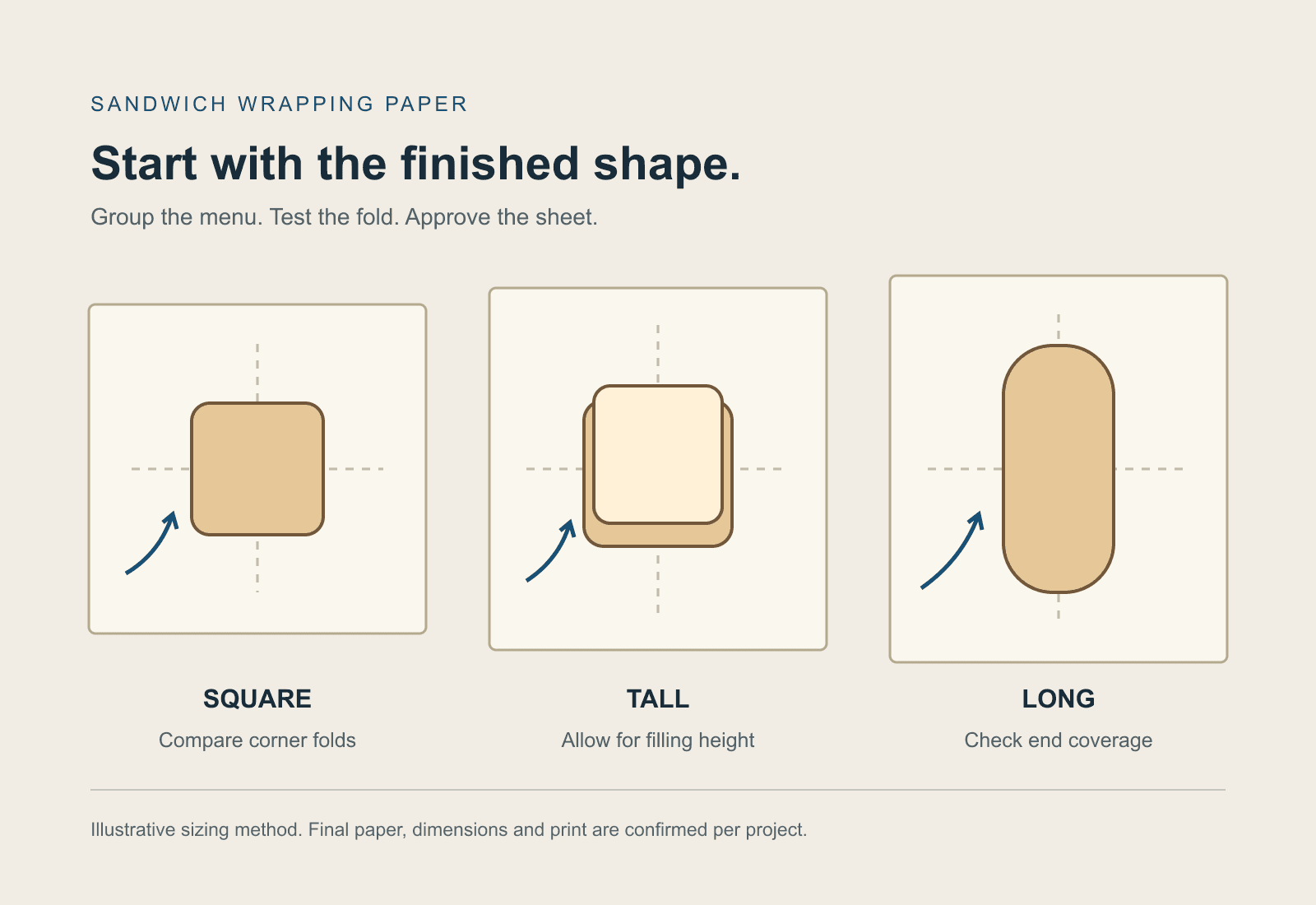
Measure the sandwich after filling, pressing and cutting, in the arrangement used at the wrapping station. Record length, width and maximum height. Two triangular halves wrapped together have a different paper path from halves wrapped individually; the bread dimensions alone will not describe either arrangement.
Use an existing successful wrapper as the first reference when available. Otherwise, send top and side photos, approximate finished-food dimensions and the intended opening method. Final sheet dimensions can be developed through a sample; you do not need a finished specification to begin the discussion.
One purchased size can serve different menu groups when each group passes its own repeatable fold. A different fold does not automatically require another sheet size. Check the items that need the most coverage and those that create the most excess paper. Add another size when a common sheet leaves exposed ends, a short closing seam or troublesome bulk during normal handling.
The sandwich wrapping paper size guide explains that menu trial in detail. Use this product page to bring the result together with material, print, quantity and packing for quotation.
Select the paper for contact conditions, not appearance alone
Tell us whether staff pack a hot pressed sandwich, a cold filled roll or a moist cut sandwich, and how long it remains wrapped before eating. White or brown appearance and paper weight do not establish grease resistance, moisture behavior or suitability for a particular temperature.
If you already have a material that works, send its specification or a sample. If the paper stains, sticks, tears or becomes difficult to handle, describe what happens and when. We can review a paper and treatment route with the relevant production partner, then confirm the proposed construction for your sample. A successful sheet size can remain unchanged while the material is reassessed.
Food-contact documentation must relate to the selected paper, print, intended use and destination market. Let us know about required documents or unusual conditions at the start. Wrapping a warm sandwich does not establish that the sheet is suitable for an oven, microwave or grill; those uses need their own review.
For a broader project involving several foods and barrier requirements, see greaseproof wrapping paper. Its role is material and food-use specification; it does not replace the sandwich fit trial.
Put the print where customers will see it
Approve the sheet size and fold before finalizing important artwork. Open a successful trial wrap and mark the visible panels, tucked ends and closing overlap. This gives the designer a usable print area instead of a flat rectangle that may hide the logo when folded.
A repeat pattern is useful when food placement varies. A fixed logo, menu identifier or QR code needs a predictable panel and orientation. Wrap the printed proof around every menu group assigned to that artwork and check it in the customer's hands, not only on a screen.
Send AI, PDF or EPS artwork where available, with intended color references. A clear JPG or PNG can start the review, although production artwork may need further preparation. Confirm print coverage and any required unprinted area with the proposed production route rather than copying another supplier's template.
When several sheet sizes or artwork versions look similar in a stack, agree clear inner-pack identification. Staff should be able to select the right pack without unfolding a sample from every bundle.
Approve the sample through packing, carrying and opening
- Check the geometry with representative sandwiches and the recorded fold. Use suitable food-contact paper for food that will be eaten; unverified mock-up paper is only for dummy items or samples excluded from sale and consumption.
- Repeat with the proposed paper under the actual food and holding conditions. Keep a short seam or bulky underside separate from staining, tearing or other material observations.
- Check the printed sample after wrapping. Confirm visible branding, readable information and the orientation staff need when picking up sheets.
- Place the wrap in its normal outer package and follow the intended handover. Check whether it unfolds, shifts, is compressed or becomes awkward to open.
- Retain the approved dimensions, paper reference, artwork revision, packing arrangement and sample photos for repeat orders.
If a new sandwich, fold or outer pack changes the process, repeat the affected check. A material change needs a contact-performance review even when the printed design stays the same. Keeping these decisions separate makes sample feedback more useful than simply asking for a larger or thicker sheet.
Complete the order with packaging that has a clear role
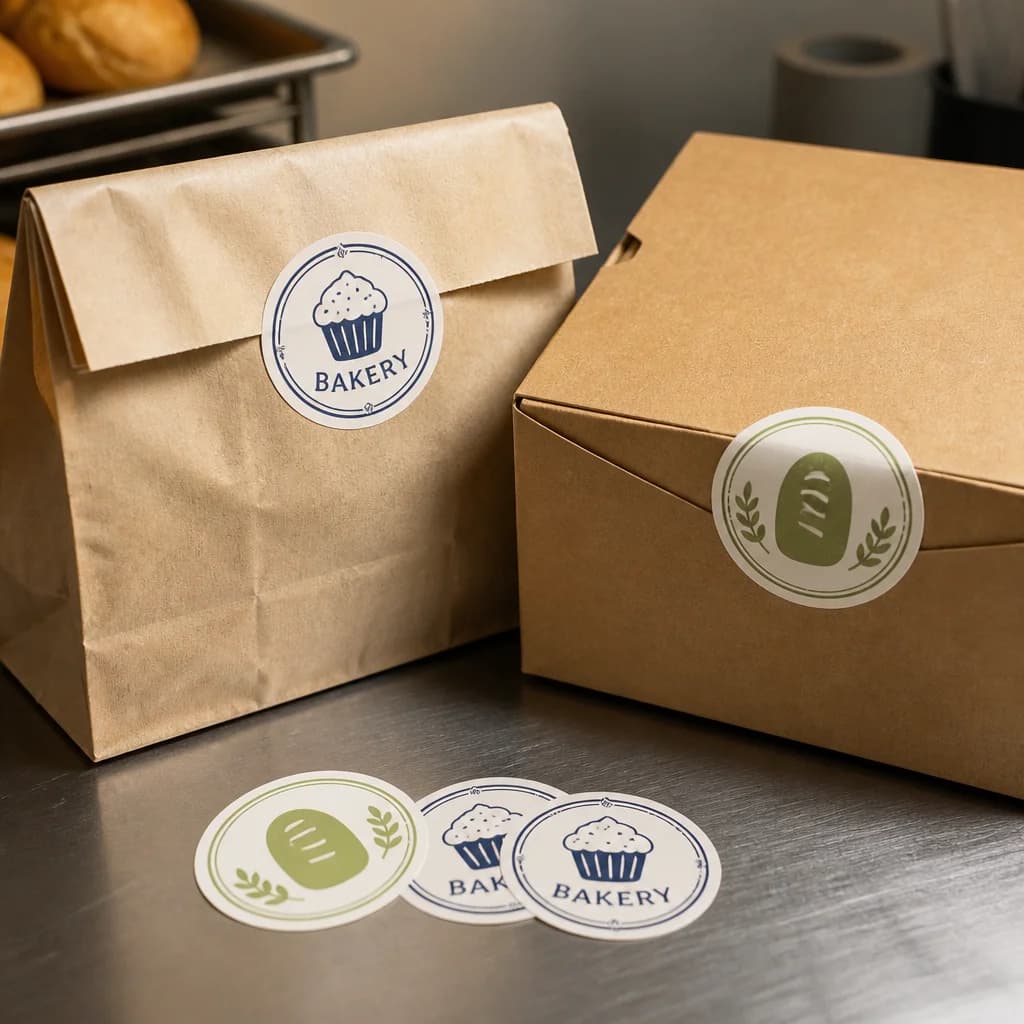
Custom packaging stickers and labels can identify a menu item or hold an agreed paper overlap. Test adhesion on the actual wrapper and opening motion. A label should not conceal a sheet that cannot cover the food.
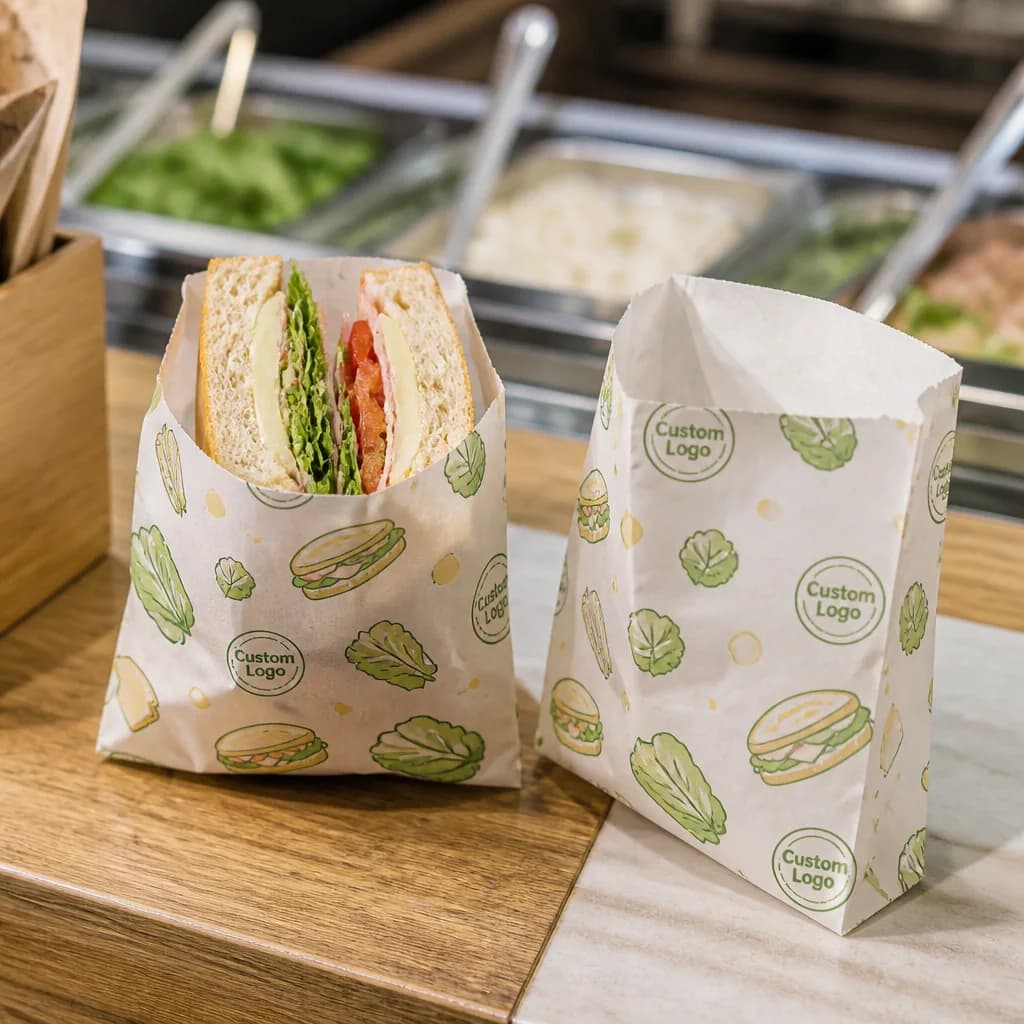
Choose sandwich paper bags when the operation prefers loading through a formed opening. Compare usable bag width, depth and opening with the food; do not order a bag from flat-sheet dimensions.
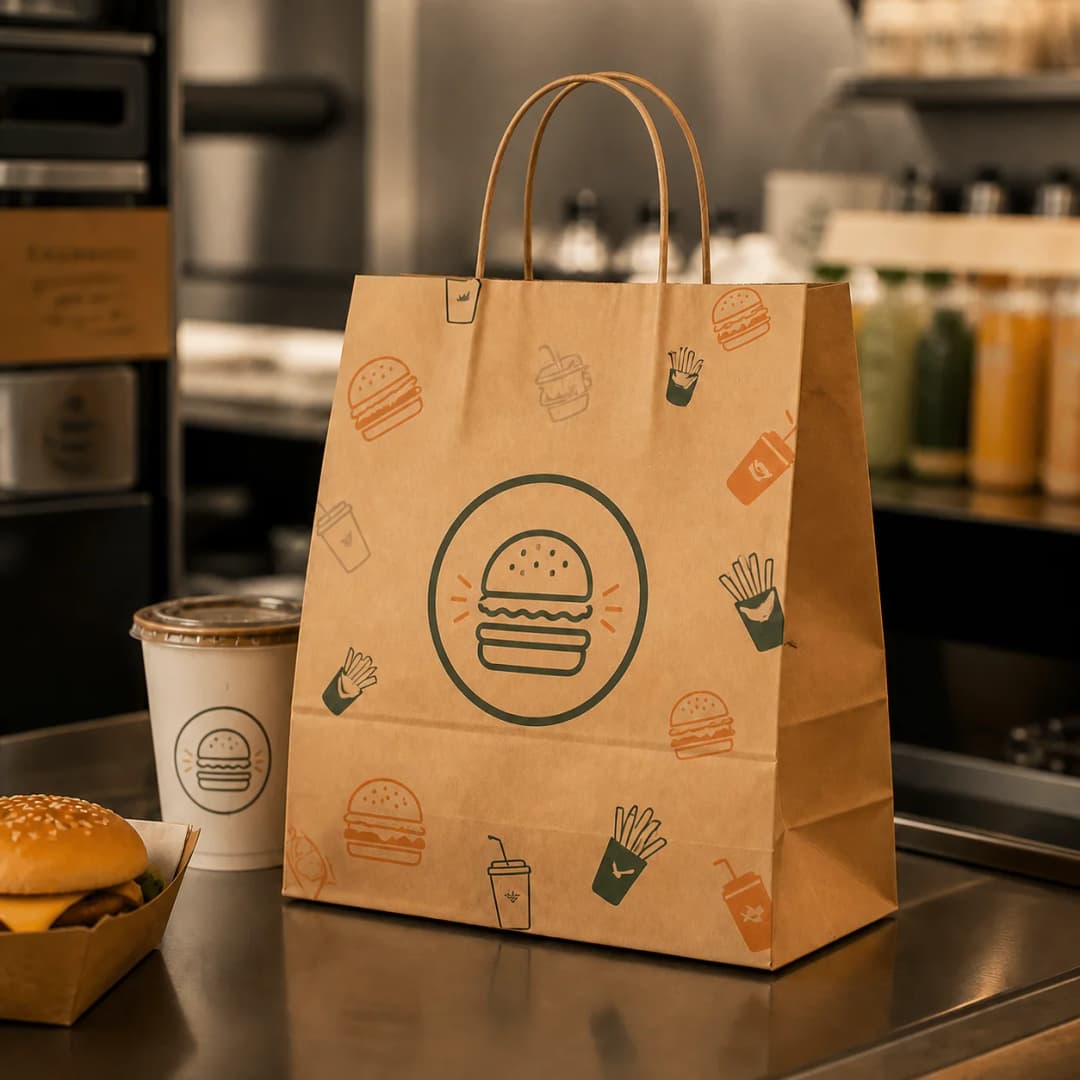
Use takeaway paper bags to carry the wrapped sandwich with the rest of the meal. Check the loaded arrangement so the outer bag does not crush or unfold the wrap. A serving-tray liner has another purpose: it lies inside the reusable tray and should not be counted as part of the sandwich's enclosing wrap.
Quantity, samples and repeat orders
The current paper-product MOQ guide starts at 10,000 pieces. The quotation confirms the applicable quantity for your sheet specification and artwork split. A total spread across several sizes and designs is different from one production specification, so send the breakdown rather than only the combined count.
Price is quoted for the finished sheet, selected material, artwork, quantity and packing. There is no single price covering every dimension or print arrangement. Include the destination country and required delivery timing so shipment options can be reviewed with the order.
Custom printed samples are charged, with courier costs paid by the buyer; the custom sample fee is credited in full against the formal order. The custom-sample target is seven days after structure, material and artwork are confirmed. Available non-custom samples can be supplied free, with courier costs paid by the buyer. Sample availability and the project schedule are confirmed during review.
Most approved custom orders target dispatch within 30 days after payment and final approval; additional requested testing is outside that production target. Preserve the agreed sheet, paper, print and pack references for replenishment, and flag changes before reordering.
Questions before requesting sandwich paper
Can one sheet work for a whole sandwich and cut halves?
Yes, if both packed arrangements pass their own recorded fold with the same dimensions. Test the coverage and excess paper on each. Different packing instructions do not alone justify buying another size.
Can I start without a sheet size or final artwork?
Yes. Send sandwich photos, approximate measurements, the intended full or partial wrap and the problem you want to solve. Existing wrapper photos are useful. Final dimensions and artwork can follow the trial.
Is this the same product as a sandwich paper bag?
No. These are flat sheets folded around food. A formed bag has an opening and usable internal dimensions. Choose by the loading and opening process your team needs.
Does the same size mean the same paper can serve hot and cold sandwiches?
No. Dimensions describe fit. Oil, moisture, temperature and contact time determine what the proposed paper needs to handle. Review those conditions separately, even when the sheet dimensions are shared.
Can a sticker hold the wrap closed?
It can be assessed as part of the intended fold. Confirm its position, adhesion to the chosen paper and customer opening action using a sample. It does not correct missing sheet coverage.
Request a sandwich wrapping paper quotation
Send the sandwich type, finished-food photos, current sheet dimensions if known, food-contact conditions, estimated quantity by size and artwork, and destination country. Mark undecided fields so they can be resolved in the project review.
Discuss custom sandwich wrapping paper with Xucheng.