Printed sheets for the work at your deli counter
Pick up a sandwich, separate portions, fold paper around sliced food or line a serving basket. Custom deli paper sheets give each task a pre-cut piece of paper and a place for your brand. Xucheng Packaging coordinates finished sheet size, flat or interfolded supply, paper selection, print pattern and packing around the food and the way your team serves it.
Start with what the sheet needs to do. A piece used briefly to handle food has a different job from a wrap that stays around it during takeaway, or a liner displayed beneath a meal. The format, coverage and visible print should follow that job. Paper color, a deli pattern or the word "waxed" alone does not establish performance.
You can discuss the application before the size, material or artwork is final. Chat with Lynn on WhatsApp, or choose an email option. A counter or current-sheet photo can follow when useful.
Choose the application before choosing one sheet for every task
Pick up and hand over food
For a bakery, café or sandwich counter, the sheet can sit between the food and the hand during pickup or handover. Choose coverage around the actual item and the normal grip. A large piece that folds awkwardly around a small item may make the handover less convenient; a small piece that slips away may leave too little usable coverage. Assess the paper with the food rather than treating the sheet as a substitute for your normal food-handling practice.
Separate slices or portions
A sheet placed between sliced food or prepared portions has a separating role. Size it around the contact area, and consider how staff remove one portion from the stack. Paper suitable for a short pickup is not automatically suitable for longer contact with a moist, oily or chilled product. That contact period belongs in the material review.
Wrap a counter portion
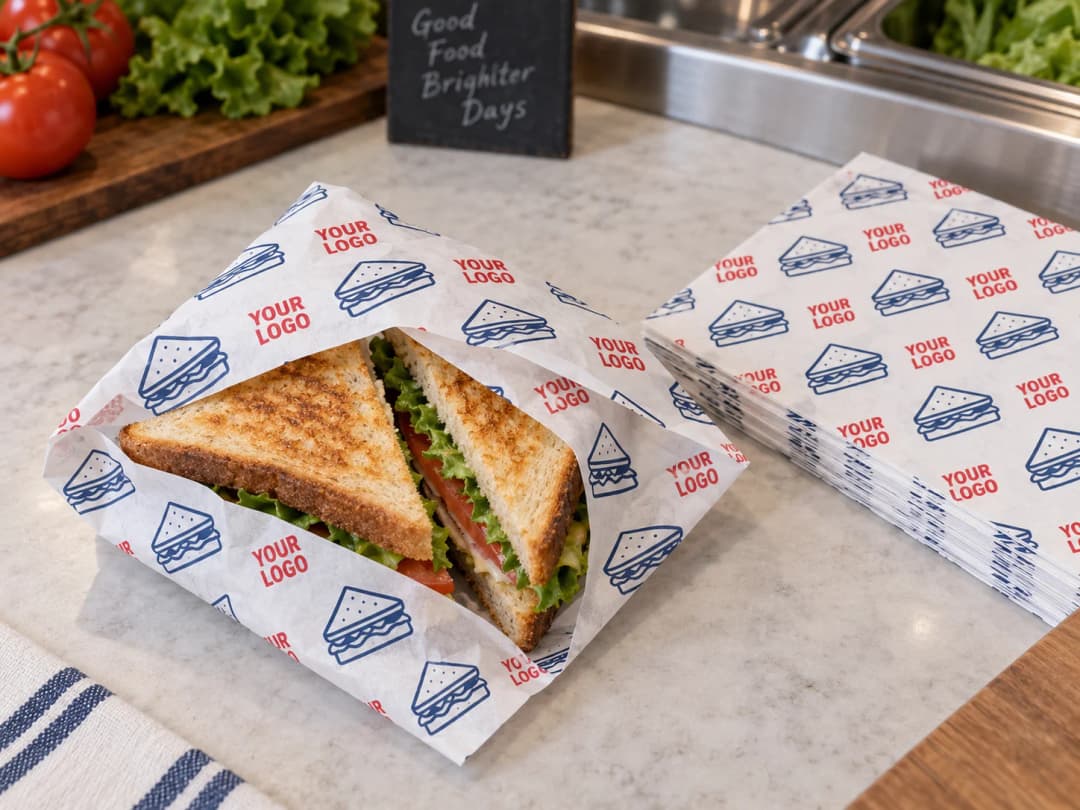
For sliced food or a prepared sandwich, a flat sheet can fold around the portion for handover or takeaway. Allow enough paper for the intended coverage and overlap without unnecessary bulk. A partial wrap leaves an eating opening; an enclosing wrap needs coverage at the ends as well. The outer bag or box may provide another part of the carrying arrangement.
When the project mainly concerns enclosing sandwiches and choosing sizes across a menu, use sandwich wrapping paper and its existing menu size guide. A deli counter sheet remains useful where pickup, separation and dispensing are central to the order.
Line a basket or serving tray
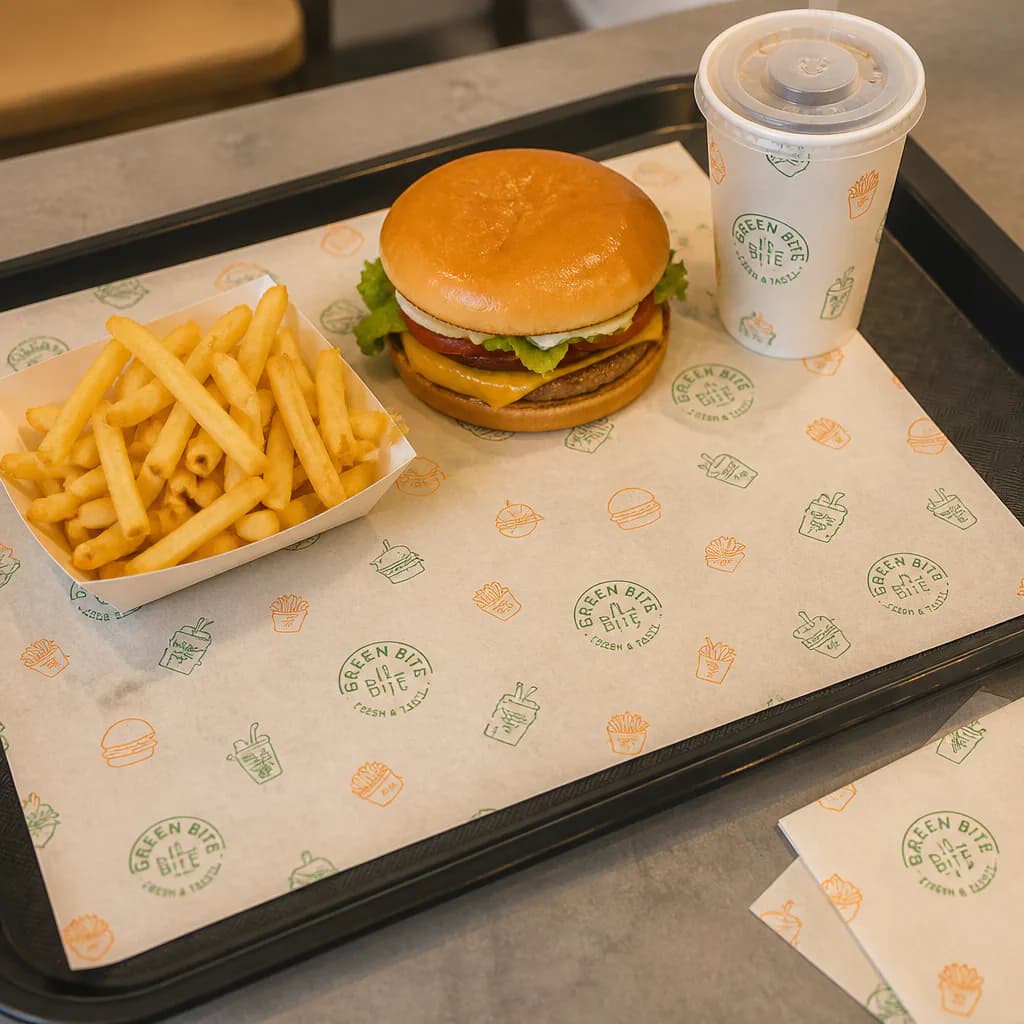
A liner lies beneath the served food rather than enclosing it. Size it to the usable base and the loaded presentation. Food can cover a central logo, so the exposed perimeter may be a better place for repeated branding. A printed liner does not establish that the paper prevents leaks or replaces the container.
For a large reusable serving or cafeteria tray, see paper tray liners. Choose that page when tray-base coverage and the complete meal layout are the main decisions. For a small deli basket, start with the basket itself and the portion that sits inside it.
Flat stacks or interfolded dispensing
Flat sheets are stacked as individual finished pieces. They can suit a counter where staff take a sheet, place the food and fold or line it. Decide where the stack sits, which way the print faces and how a fresh pack is added during service.
Interfolded sheets are arranged so pulling one presents the next. This format needs a compatible pack or dispenser arrangement. Finished sheet dimensions, folded dimensions, sheet separation and the dispensing opening are different details; a loose flat sheet cannot demonstrate how a full interfolded pack feeds.
Choose by the actual pickup motion and counter space. Interfolding is not automatically necessary for a busy counter, and a larger pack is not automatically easier to use. A photo or reference pack can help establish the proposed format. We review the converting and packing route before confirming it for the order.
Make the custom print visible in use
Choose a logo, repeat pattern or design that works with the finished sheet and serving action. A repeat can leave branding visible when staff place food differently from one order to the next. A fixed-position logo needs a predictable panel and orientation: a fold can hide it, and a loaded liner can cover it.
Open a successful trial wrap or arrange the sheet beneath the normal portion to identify the exposed areas. For dispensing, check which side and edge emerge first, then inspect the printed sheet after pickup. The artwork should be readable in the customer's view, not only on the unused flat sheet.
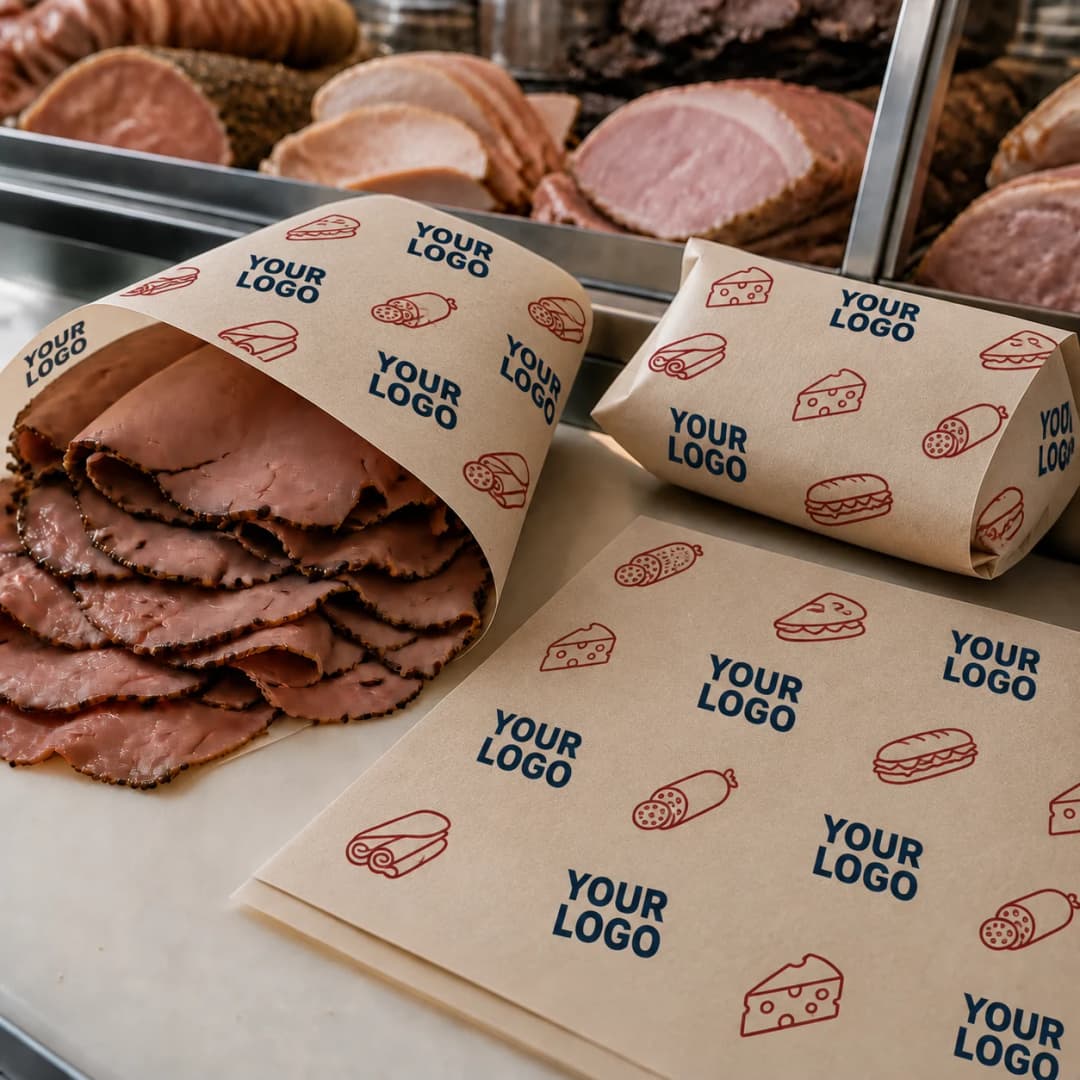
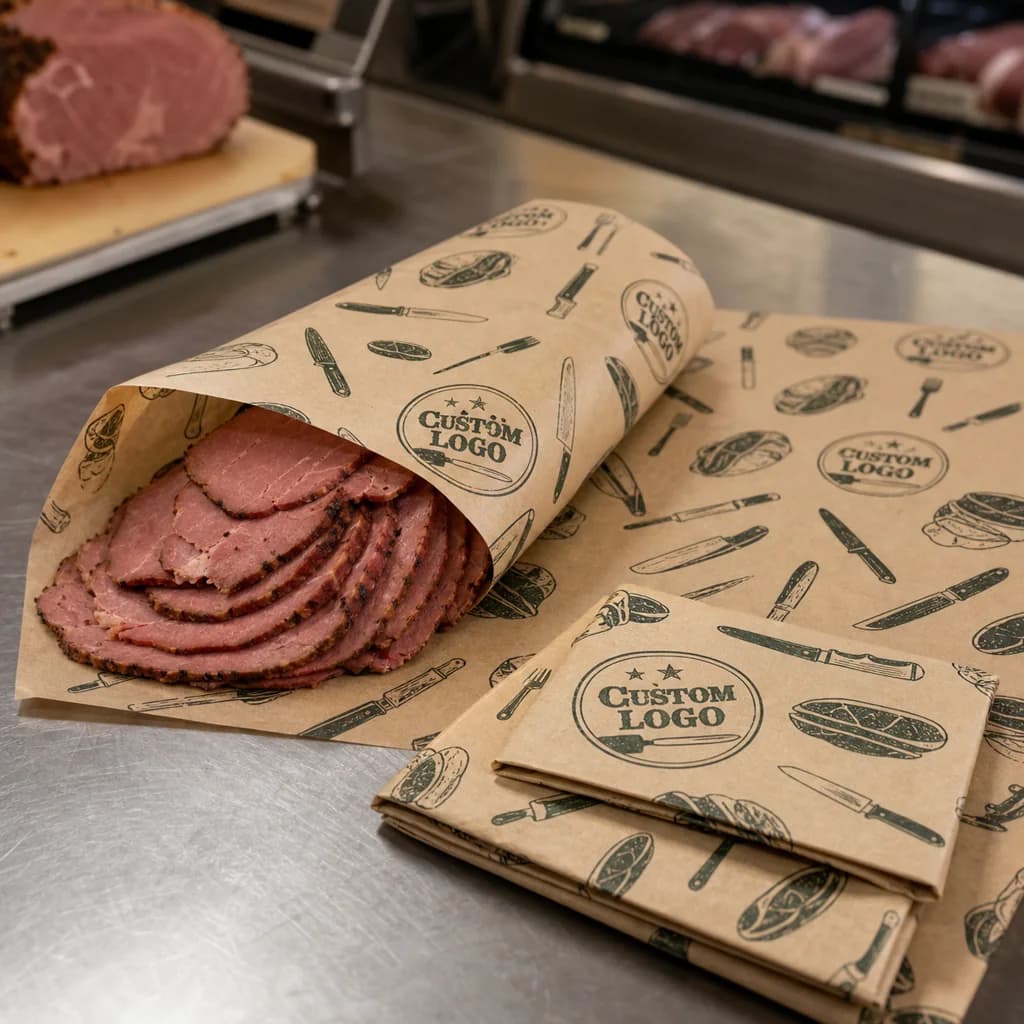
The retained product image shows an illustrative printed sheet and wrapped sliced food, not a customer order or an approved material specification. Color, dimensions, print coverage and the proposed paper remain project choices. Available artwork can start the discussion; production-ready files and color references can be reviewed later.
Match the paper to the food and contact time
A grease-resistant paper route may be evaluated for oily deli foods. A dry-waxed sheet route may suit selected counter tasks. Neither description establishes the final performance: confirm the actual base paper, wax or treatment, temperature limits and destination requirements for the proposed construction.
Describe whether the paper touches warm food, chilled slices, cheese, a moist filling or a dry bakery item, and whether contact lasts only through pickup or continues during storage and takeaway. An existing successful sheet or its specification is a useful reference. If a sheet stains, sticks or tears, describe the food and when it happens so the material question stays separate from size and folding.
Required food-contact documents must relate to the selected paper, print, intended contact and destination market. A deli-paper label does not establish oven, microwave, freezer or smoker suitability. Unusual conditions need their own review. The existing greaseproof wrapping paper page explains the broader material-selection project.
Quotation and samples after the first conversation
The final quotation depends on finished width and length, flat or interfolded format, selected paper route, print coverage and colors, quantity and inner packing. MOQ is confirmed per project; there is no single minimum or unit price covering every deli-sheet construction.
Details can be added as the project develops:
- Use: pickup, separation, wrapping or lining, together with food temperature, oil, moisture and contact time.
- Sheet and pack: current size if known, folded or interfolded format, sheets per pack and any dispenser reference.
- Print: available artwork, colors, coverage and the viewing direction at the counter.
- Order: estimated quantity, packing preference, delivery country and any essential document or timing requirement.
A suitable sample helps compare normal pickup, sheet separation, coverage and printed presentation. Try the proposed construction with the actual food before approval. Retain the approved dimensions, paper reference, artwork revision and pack arrangement so repeat orders follow the same specification.
Custom printed samples are charged, with courier costs paid by the buyer; the custom sample fee is credited in full against the formal order. Available non-custom samples can be supplied free, with courier costs paid by the buyer. The first digital mockup target is within three hours during China working hours after usable artwork arrives. A custom sample targets dispatch within seven days after structure, material and artwork are confirmed and the sampling fee is paid. Most approved custom orders target factory dispatch within 30 days after payment and final artwork or sample approval; requested testing time is additional. Confirm the project schedule in the conversation.
Common deli-paper questions
Is deli paper always waxed?
No. Deli sheets may use greaseproof, treated or dry-waxed paper routes. Confirm the actual construction and intended food contact rather than relying on the product name.
Can one size serve pickup, wrapping and lining?
Possibly, when it provides workable coverage for each task and the selected material suits each contact condition. Check the applications separately. Sharing an artwork or pack does not establish shared suitability.
Are deli sheets the same as a sandwich bag?
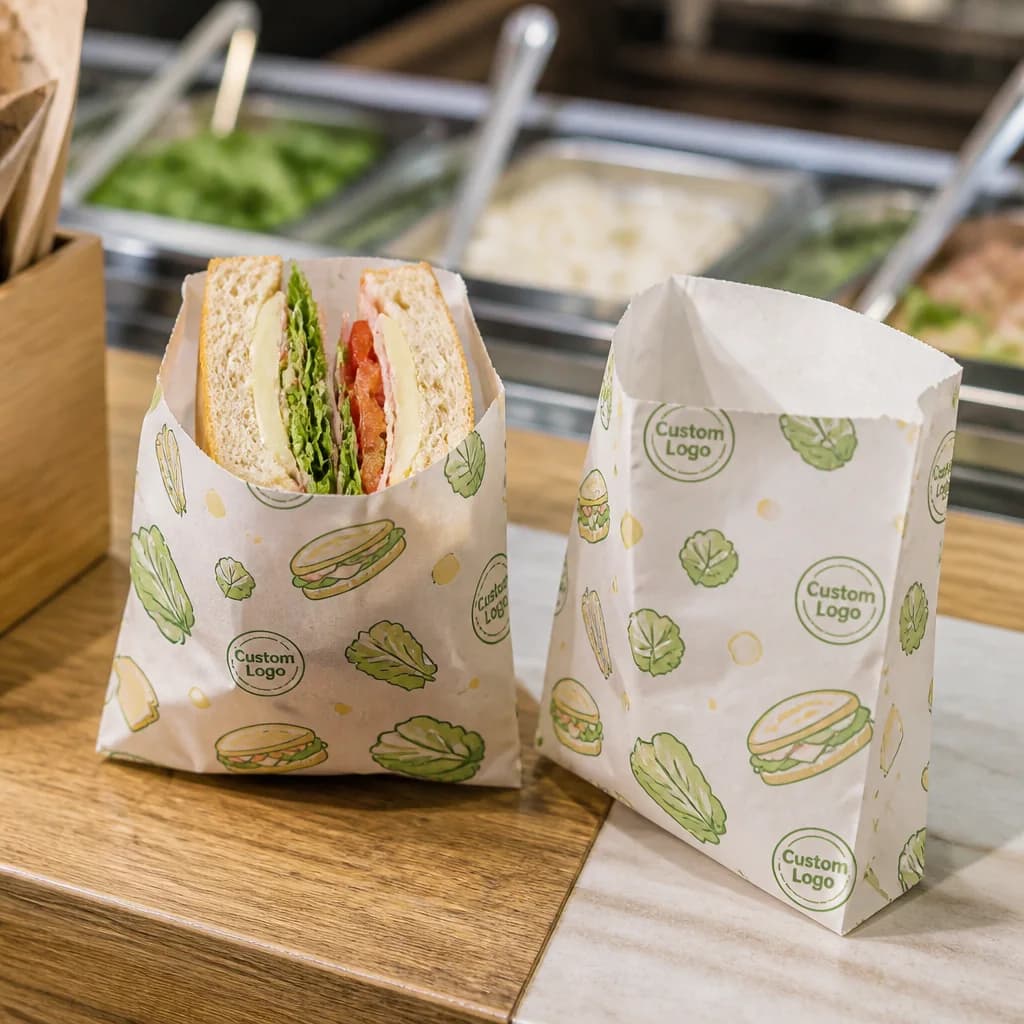
No. A deli sheet is a finished piece laid out or folded by staff. A sandwich paper bag is a formed package loaded through an opening; its usable width, depth and opening need a separate fit review.
Can I enquire before choosing flat or interfolded supply?
Yes. Start with the counter task and the result you want. A sheet or dispenser photo can be useful later, but it is not a condition for contacting Lynn.
Talk with Lynn about your deli-counter sheet
Tell Lynn what you want the paper to do. Chat on WhatsApp, choose an email option, or leave a brief web message as a backup. You do not need a finished specification, artwork or quantity for the first conversation.