Printed bags for a pastry, a boxed meal or the complete order
A paper bag can be the package around a bakery item or the outer carrier that brings several food packs together. The right format depends on which job you need it to do. Xucheng Packaging coordinates flat or satchel bags, block-bottom bags and handled takeaway formats, with size, paper, artwork and packing developed for your restaurant, bakery or café order.
Give a small counter purchase its own printed bag, or carry your brand from the restaurant counter to the customer's destination on a larger bag. Your design can use a main logo, a repeat pattern or coordinated artwork across the order. The bag should open and load conveniently while presenting that print in the customer's view.
You can start by telling Lynn what the bag needs to hold. Chat on WhatsApp, or choose an email option. Company details, final size, quantity and artwork are not required before the first conversation.
When the bag is the food package
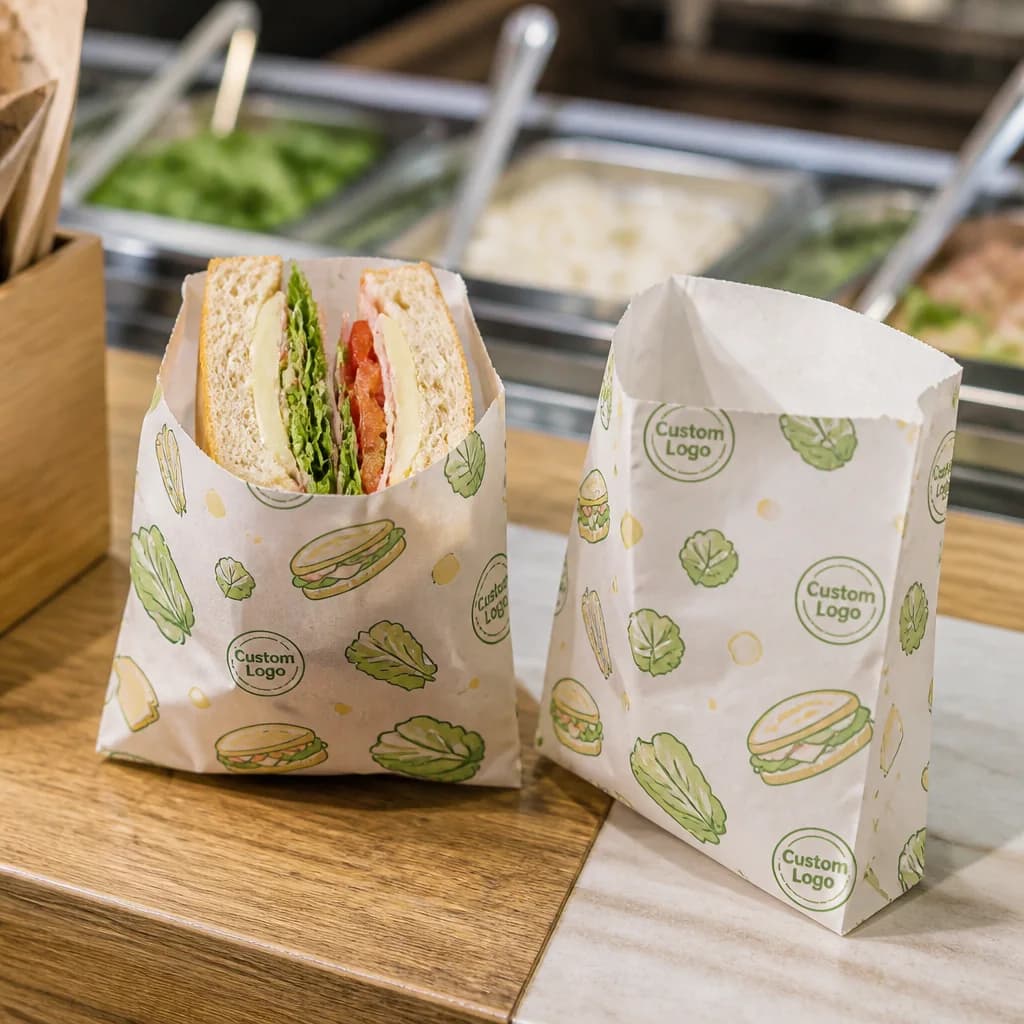
For bread, a pastry or another light bakery item, a flat or satchel bag offers an opening through which staff can load the food. Match the usable width and opening to the item so it can go in and come out without being forced through a narrow mouth. Leave practical space for the intended top fold rather than choosing by the unused bag's outside size alone.
Decide whether the bag touches the food directly. Dry bread, an oily pastry and a moist filling create different contact conditions. Paper appearance does not establish grease resistance or suitability for every food. The proposed paper and any treatment are reviewed for the actual product, temperature, contact time and destination requirements.
For an individual sandwich loaded into a formed food-contact package, see sandwich paper bags. That page focuses on the sandwich opening, coverage and food fit. If staff fold a flat sheet around the item instead, sandwich wrapping paper is the separate sheet format. Neither format replaces an outer bag when the customer is carrying several packs.
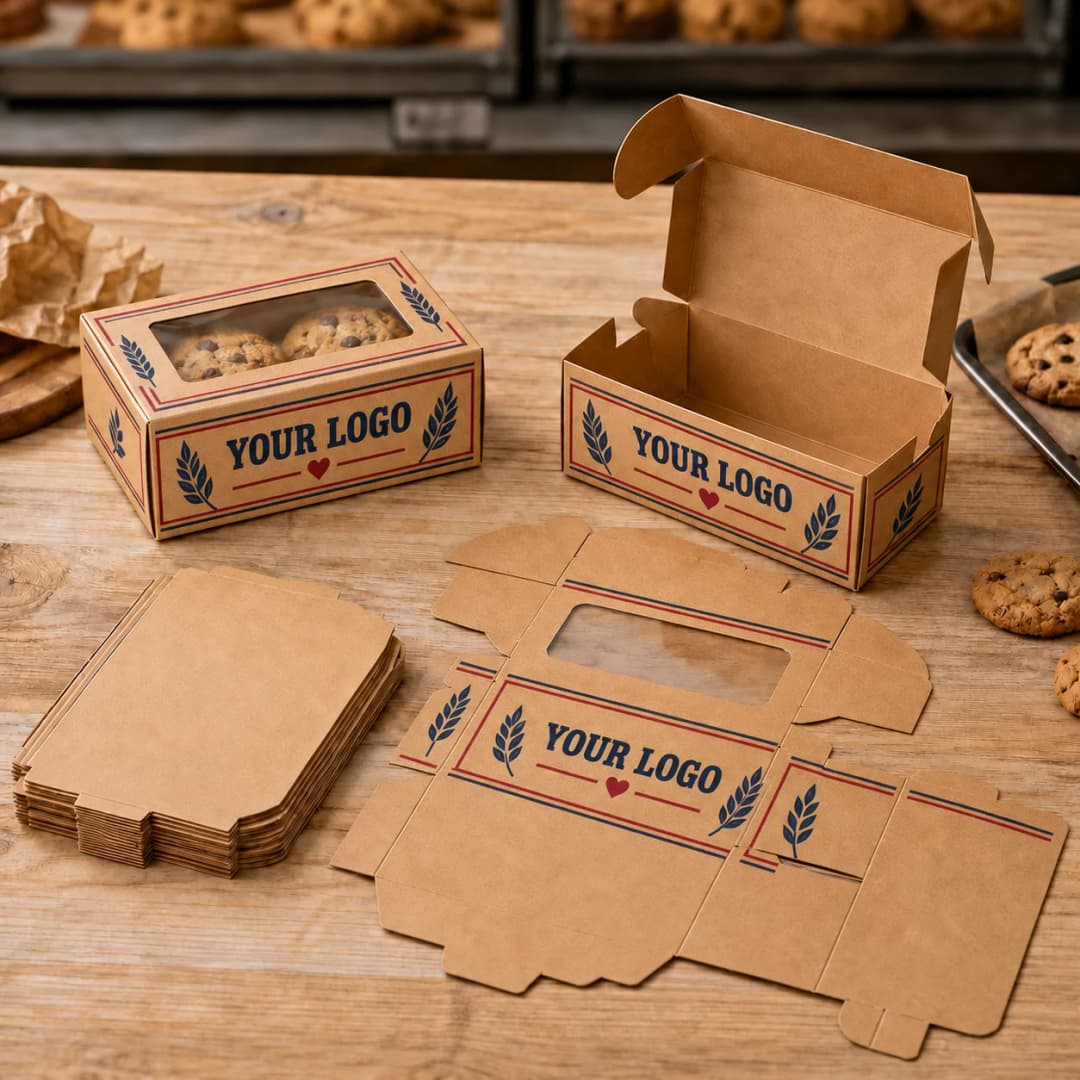
A small paper bag does not give a decorated cake or fragile pastry the support of a shaped container. If the food needs clearance around decoration or separation between pieces, choose cake and pastry boxes for that part of the order, then review a carrying bag around the closed box.
When the bag carries already packed food
Restaurant takeaway orders usually start with the containers inside. A bag around a burger box, a meal box or several bakery packs has a carrying role: its usable base, opening, height and carrying method need to work with the complete arrangement. It need not touch the food in the same way as a small bakery bag, but the real load and journey still matter.
SOS means a self-opening sack with a block or square bottom. The base opens out to give the pack a footprint for loading. It does not mean the bag has handles. A no-handle block-bottom bag and a handled carrier can share a broad base shape while having different carrying and top-folding arrangements.
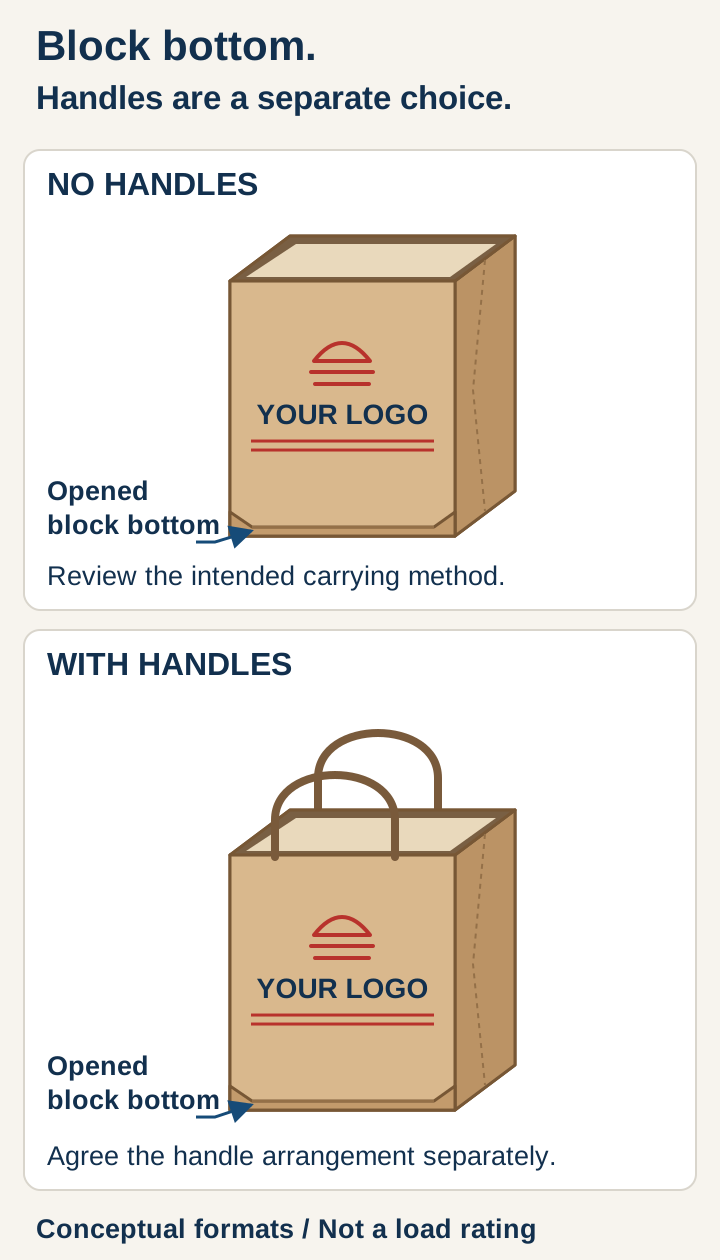
Both examples have an opened block bottom. The second example adds handles; the illustration does not compare carrying strength. Discuss how the complete order will be loaded and carried, then review the chosen handle arrangement with the assembled sample.
An SOS bag can suit an order handed over with the base supported. A handled carrier provides another way to lift and carry the load. Review whether staff or the customer will hold the top, use handles or support the base, and whether the bag must leave room for a fold above the packs. The choice should follow the order and service routine rather than the size label on a previous bag.
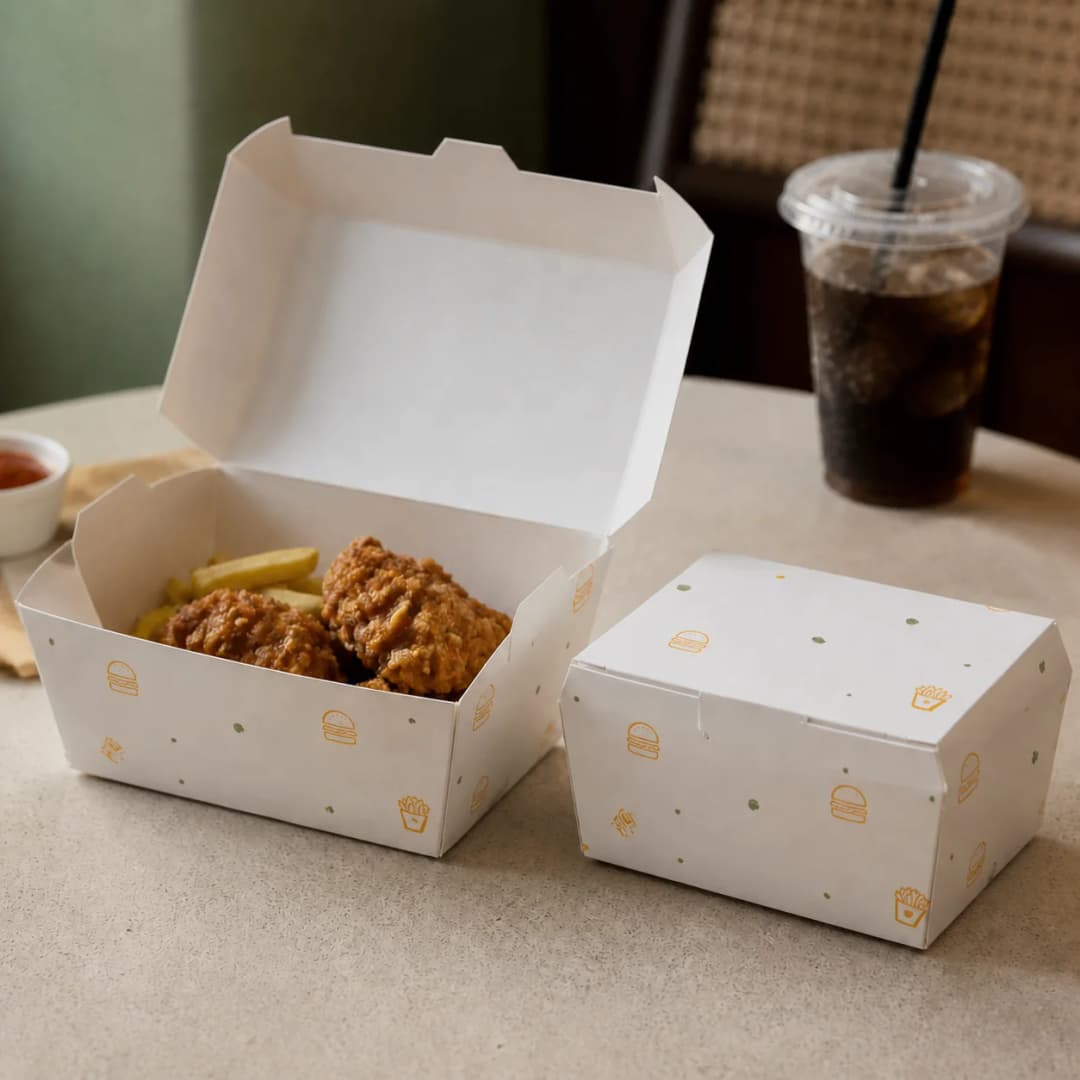
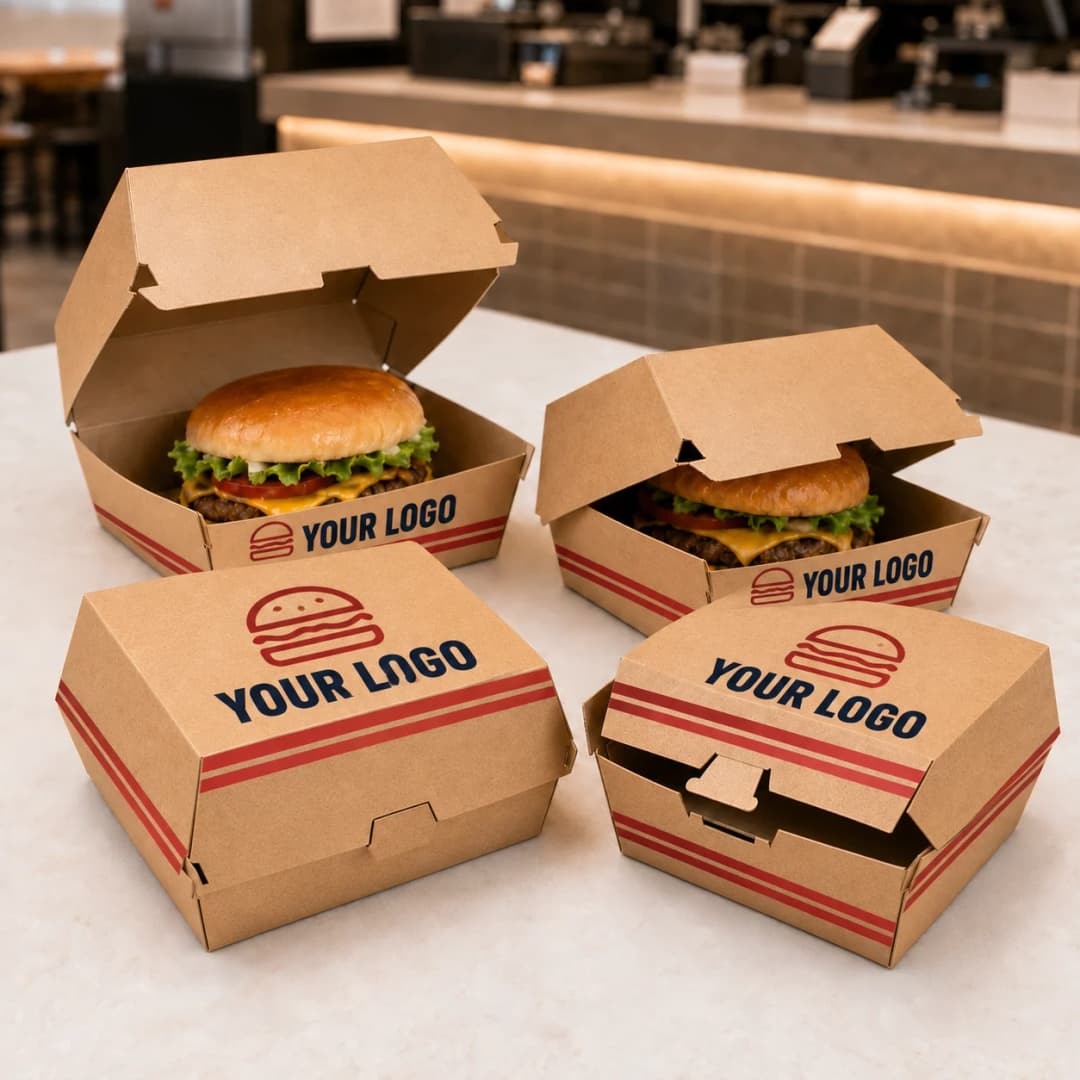
Use takeaway food boxes for a separate meal container, or burger boxes for the burger pack itself. The bag is then sized around those packs; it is not a substitute for their closure or food-containment role. An open item placed inside does not become sealed simply because the outer bag is folded.
Flat handles, twisted handles or no handles
Flat paper handles and twisted paper handles offer different presentation and carrying feel. Flat handles can be useful where compact stacking is part of counter storage; twisted handles form a rounded grip and a different retail-style appearance. Neither proves a load rating or guarantees that the assembled bag is stronger.
Handle attachment, reinforcement, paper, folds and dimensions all contribute to the finished carrying structure. A larger bag with the same paper grammage can behave differently because the load and its distribution change. Choose the handle format as part of the bag, then assess the assembled sample with the intended order.
For a no-handle format, make the carrying method clear. Supporting the base is a different action from lifting a folded top. A short counter handover and a longer walk with several containers may call for different arrangements. There is no universal handle type or weight capacity that fits every takeaway bag project.
Make the print work on the loaded bag
The broad front and rear panels are useful places for a logo or main graphic. Side gussets offer another visible area when the bag is opened. A top fold, handle attachment or bottom fold can hide or interrupt artwork, so the final design needs to be considered on the formed, loaded bag as well as the flat layout.
Choose the viewing direction at handover. A small food bag may be folded above the item, while an outer carrier may remain upright with handles visible. Keep essential wording and the main logo in an area that remains exposed in the chosen arrangement. For repeat artwork, review how the pattern crosses the panels and folds so the opened bag still looks intentional.
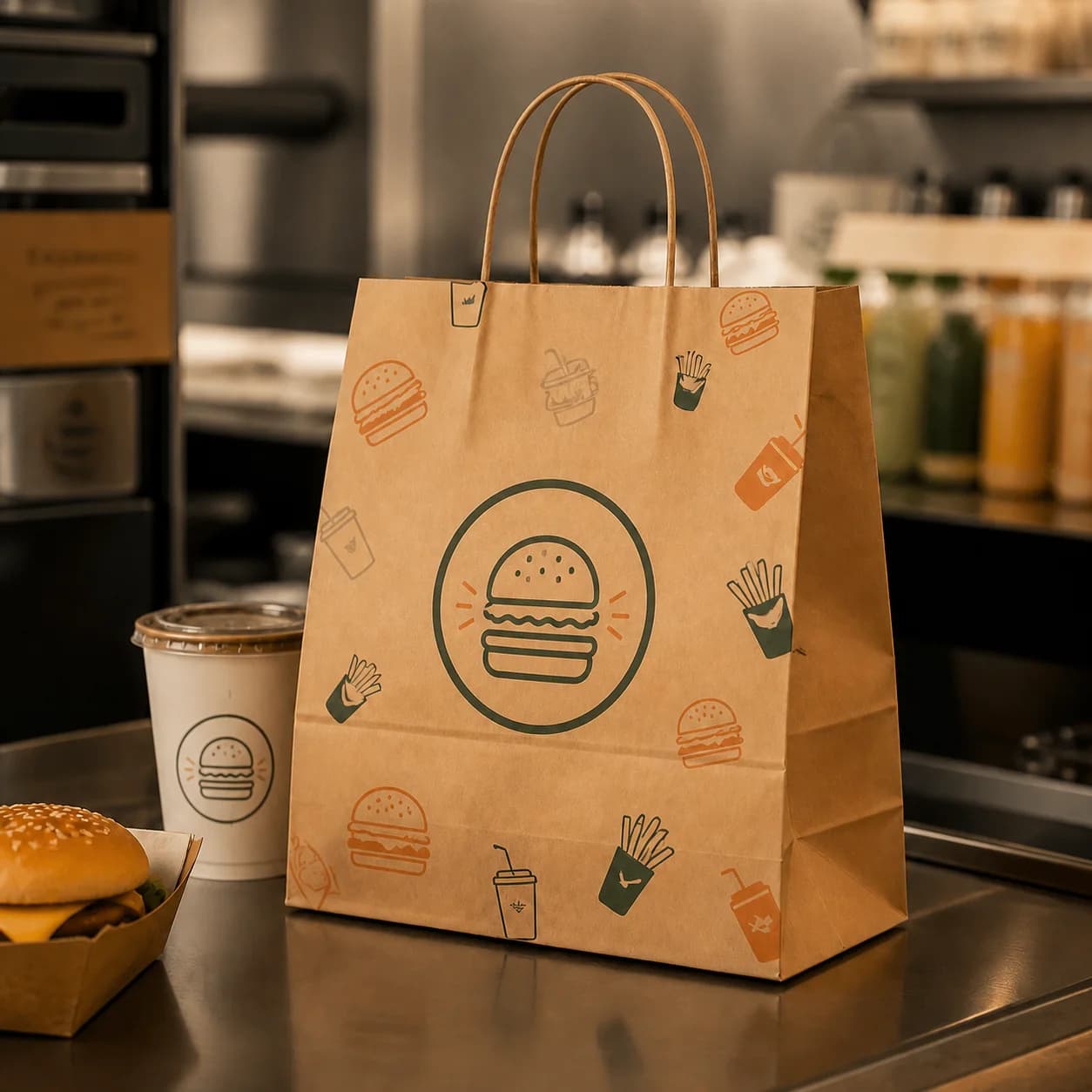
White or brown paper appearance affects the way colors look. A digital mockup helps review placement; a printed sample on the proposed paper helps review the actual color and fold appearance. The existing product image shows a brown, twisted-handle carrier with burger, fries and drink graphics. It is an illustrative print example, not a customer order, a fixed size or proof of a particular load capacity.
If you want an order identifier or an additional brand mark, packaging stickers and labels can be considered for the outer surface or intended top fold. The label size and adhesion need to suit the paper, fold and use. A label does not confirm tamper evidence, a sealed-food barrier or the carrying strength of the bag.
Give the complete order enough usable space
Place the largest regular container, any stacked packs and the rest of the order in their normal arrangement before settling the bag size. Base width and gusset need to allow the container footprint and practical loading clearance. Height needs to accommodate the stack and the intended top treatment; extra height cannot compensate for a base that is too narrow.
For café orders with drinks, include the closed cups and any separate cup carrier in the layout. A paper bag is not itself a cup holder or spill-control system. If the main project is a bag built around a drink order, review drink carrier bags with the actual cup setup rather than assuming the restaurant paper bag will perform the same role.
Avoid choosing paper strength by gsm alone. Fibre, paper direction, folds, glue, handle reinforcement, dimensions and the loaded arrangement affect the assembled bag. Hot, chilled, oily or moist packs can also change the conditions in which it is carried. Describe the intended use so the material question stays connected to the real order; the selected route still needs its own sample evaluation.
The existing paper bag specification guide covers measurement order, container layouts, paper grammage, handles and specification approval in more detail. Use it when you are ready to work through those decisions. You can contact Lynn before completing them.
From a first discussion to a quoted bag
The current guide for custom paper bags is from 2,000 pieces. Final MOQ and price depend on the bag size, paper, handle structure, print and packing. That guide does not mean every bag construction has the same production minimum or unit price.
For a quotation, the discussion develops around the format, width × side gusset × height, food or containers carried, maximum load, carrying time, print coverage and colors, packing and delivery market. A photo of the present pack or complete order is useful when available; an approximate application is enough to start. Food-contact or other required documents are checked for the selected construction and destination, not inferred from brown paper or a product name.
Xucheng coordinates specification, sampling and partner production. Paper, converting dimensions, printing and handle construction follow the agreed bag specification. A general roll-fed equipment image is process context and does not establish that a particular bag or order has been produced or tested.
A formed sample helps compare opening, loading, top-fold clearance, carrying and visible print with the actual order. Keep the approved dimensions, paper reference, handle arrangement, artwork revision and packing format together for repeat orders.
Custom printed samples are charged, with courier costs paid by the buyer; the custom sample fee is credited in full against the formal order. Available non-custom samples can be supplied free, with courier costs paid by the buyer. The first digital mockup target is within three hours during China working hours after usable artwork arrives. A custom sample targets dispatch within seven days after structure, material and artwork are confirmed and the sampling fee is paid. Most approved custom orders target factory dispatch within 30 days after payment and final artwork or sample approval; requested testing time is additional. Confirm the project schedule with Lynn.
Questions about choosing the bag
Can the same bag carry a loose pastry and a boxed meal?
Only if its format, usable space and material suit both jobs. Direct food contact and carrying a closed container are different conditions; assess each use rather than transferring suitability from one to the other.
Does a block-bottom bag always have handles?
No. SOS or block-bottom describes the bag body and base. Handles are a separate choice, and the intended carrying action should be confirmed with the assembled bag.
Can I use recycled kraft for a food bag?
Suitability depends on direct or indirect food contact, the final paper construction and destination requirements. A brown or recycled-paper description alone does not establish the required documentation or performance.
Can I enquire without artwork or a finished bag size?
Yes. Start with what you want the bag to hold and how you want it to look. Size, print files and order details can be developed after the first conversation.
Talk with Lynn about your paper bag
Chat on WhatsApp, choose an email option, or leave a brief web message as a backup. Tell Lynn whether you need a food bag or an outer carrying bag, and the details can follow as the project develops.