Printed labels built around the package and the job
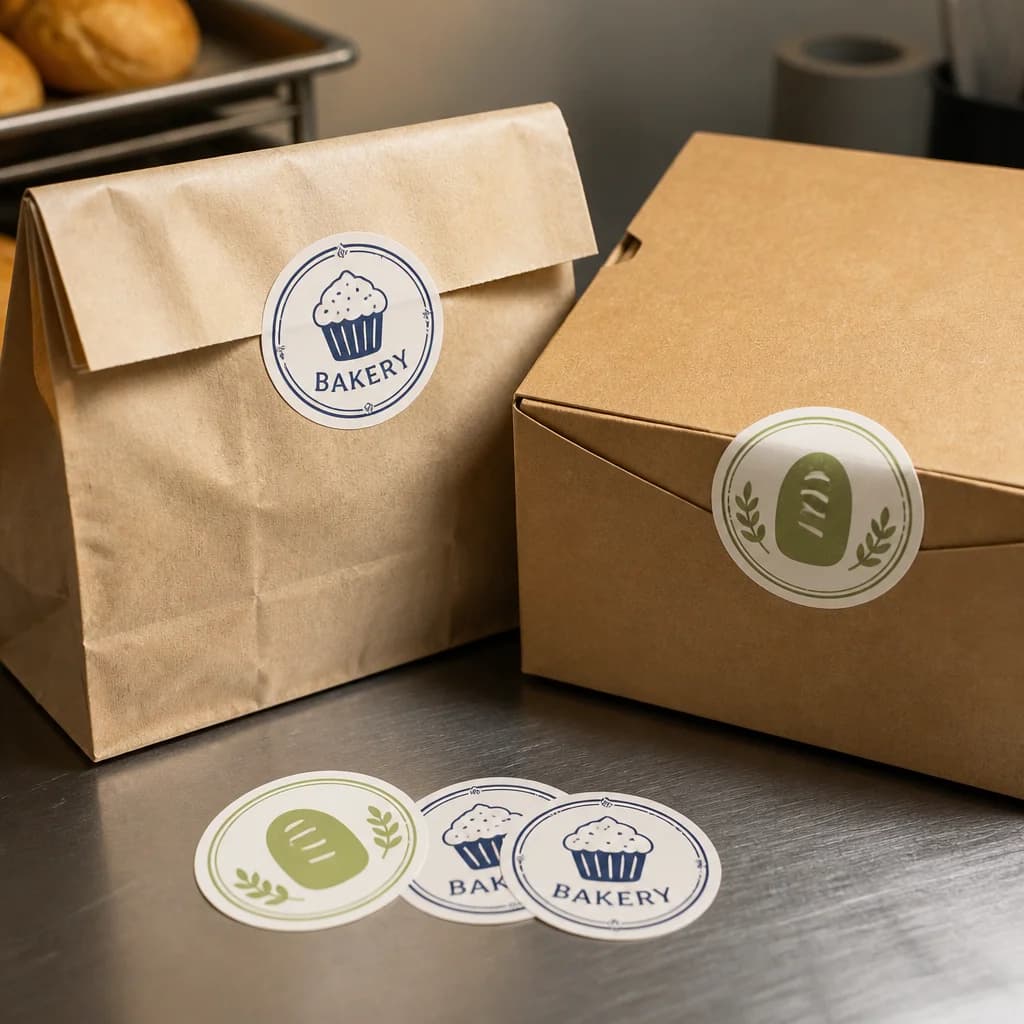
Xucheng Packaging coordinates custom printed stickers and labels for food-packaging projects, from brand identification on a box to a label placed across a paper-bag fold. Shape, dimensions, artwork, construction and supply format are reviewed together for your packaging and application process.
Start with what the label must do. A logo on one panel identifies the brand. An item label helps staff distinguish orders or product versions. A sticker bridging a lid or folded bag may help hold the intended closure. These tasks can look similar in a photograph but need different placement, printing and sample checks.
This page covers adhesive labels applied to packaging. It does not describe heat-sealing film for cup-sealing machines. A sticker across a cup lid is a different construction and does not automatically make the cup leakproof or tamper-evident.
Choose placement before fixing the shape
For branding or item identification, choose a panel that remains readable after filling, carrying and stacking. Size the printed information at its actual viewing distance. A large logo that folds around an edge may be less useful than a smaller label on a clear surface.
For a sealing position, close and fill the pack first. Mark both areas that the sticker will contact. A label on the empty bag may fit below the handles, while the same position above a tall meal box leaves too little top fold. On a carton, inspect the lid alignment and its own closing feature before relying on the sticker.
Compare the required contact area with nearby folds, steps and unsupported gaps. Making the label larger can introduce another bend or cover an opening feature; it is not an automatic cure for edge lift. Send a close photo of the proposed position as well as the complete package.
Decide how the customer should open it: peel the label, break it at an intended area or open the package elsewhere. Where visible evidence of opening is a requirement, specify the intended result and assess all relevant access routes. An ordinary adhesive description or a sticker crossing one flap does not establish that claim.
Match the label construction to the actual surface
Paper and film face materials, printed finishes, adhesives and release liners form a complete label construction. Send any existing successful specification or state your preferred appearance for review. A kraft-colored face, clear appearance or glossy finish does not by itself establish adhesion, removability or suitability for cold conditions.
Identify the surfaces the adhesive touches: for example, a printed board panel, an unprinted paper-bag fold or a container lid. Include coating, texture, curves and the state of the surface during normal packing. If a label bridges two finishes, both belong in the sample trial.
Separate the moment of application from later service. Applying a label to a dry package before chilling differs from applying it to an already damp, cold surface. Give the actual sequence and any temperature requirements so the proposed construction can be reviewed. We do not substitute a generic waterproof, freezer-safe or permanent-glue promise for a matched sample.
If the label or adhesive may contact food directly, identify that use and the destination market. Suitability for an external package panel is not evidence for direct contact. Required documents must be checked for the selected construction and intended use.
Sheets or rolls: follow how your team applies labels
For hand application, begin with the package, finished label, artwork and a practical peeling method. You do not need a machine sensor specification simply because the label is supplied on a roll. Check whether staff can remove a label without repeatedly touching the adhesive and position it in the normal packing space.
A sheet format can keep small batches or several designs together at a workstation. A roll can support repeated peeling or a dispenser-based routine. Compare the actual picking, replenishment and version-identification process. Confirm the proposed supply format with the quotation; the artwork alone does not specify it.
For a bench dispenser, add the holder's usable width, core opening and maximum roll diameter. For a printer or automatic applicator, provide the exact equipment model and its media requirements, including any unwind or rewind stand. A loose sample label cannot demonstrate that a complete roll will feed correctly.
Measure the core opening rather than the outside of the cardboard core. Keep liner width separate from finished label width. Mark dimensions along and across the feed direction to avoid reversing them.
For unwind direction, an arrow with a recognizable word or logo is more useful than an unexplained chart number. Show which artwork edge reaches the package first and attach the chart if you use a numbered convention. Roll count must also fit within the holder's space; asking for more labels per roll does not override the maximum diameter.
Make the artwork useful after application
Send a vector AI, PDF or EPS file where available, plus color references and the intended finished shape. A clear image can start the discussion while final production artwork is prepared. Keep the version, language and quantity attached to each design.
Review the print at actual size on the filled package. Avoid putting essential information over a fold or beneath another packaging component. A readable flat proof can become distorted when a label bridges a lid edge or curves around a container.
State whether labels arrive fully printed or receive dates, batch details or other information at your packing site. For overprinting, identify the equipment, process and reserved area. Check the sample with that process rather than assuming that any printed label face accepts every ribbon, ink or printer.
If a barcode or QR code is included, check the final printed and applied result with the intended reading method. Artwork approval and a successful scan from the design file are separate from performance on the actual package.
Sample the complete label-and-package combination
- Use the actual package finish and a fresh label. Apply it under normal achievable conditions, following the proposed construction's application guidance.
- Check the label at the moments that matter: immediately if the order leaves at once, at handover and after the intended hold or journey. Record elapsed time and surface conditions.
- Distinguish edge lift, a raised bridge over a fold, package-surface damage and rubbed print. These observations call for different reviews; increasing adhesive strength is not always the right response.
- Ask someone to open the package normally. Check access, residue or breakage against the opening result agreed at the start.
- If equipment is used, run a representative sample roll through the normal feed and printing process. Record feed errors separately from adhesion problems. Trained operators should follow the equipment instructions.
A sample that adheres to one paperboard finish does not approve every box or bag. Retain the label construction, packaging reference, placement photo, artwork and sample result together. For equipment-fed rolls, retain the approved roll drawing and operating reference too.
Review the affected checks when the adhesive, face material, liner, pack finish or service conditions change. A new graphic on the same functional specification may need print review without repeating unrelated work. Clear records make that distinction possible.
Pair labels with the packaging they need to support
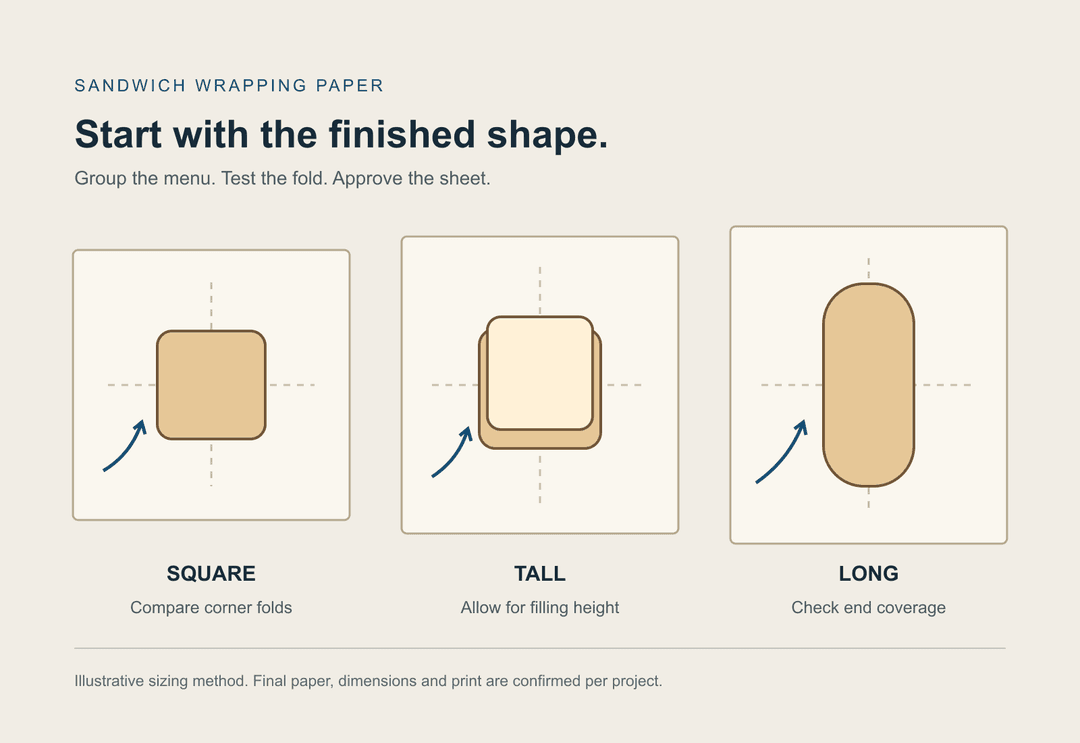
For a sandwich counter, sandwich wrapping paper provides the enclosing fold; a label can identify the menu item or hold a tested overlap. Confirm contact with the selected wrapper and the customer's opening action. A sticker cannot supply missing paper coverage.
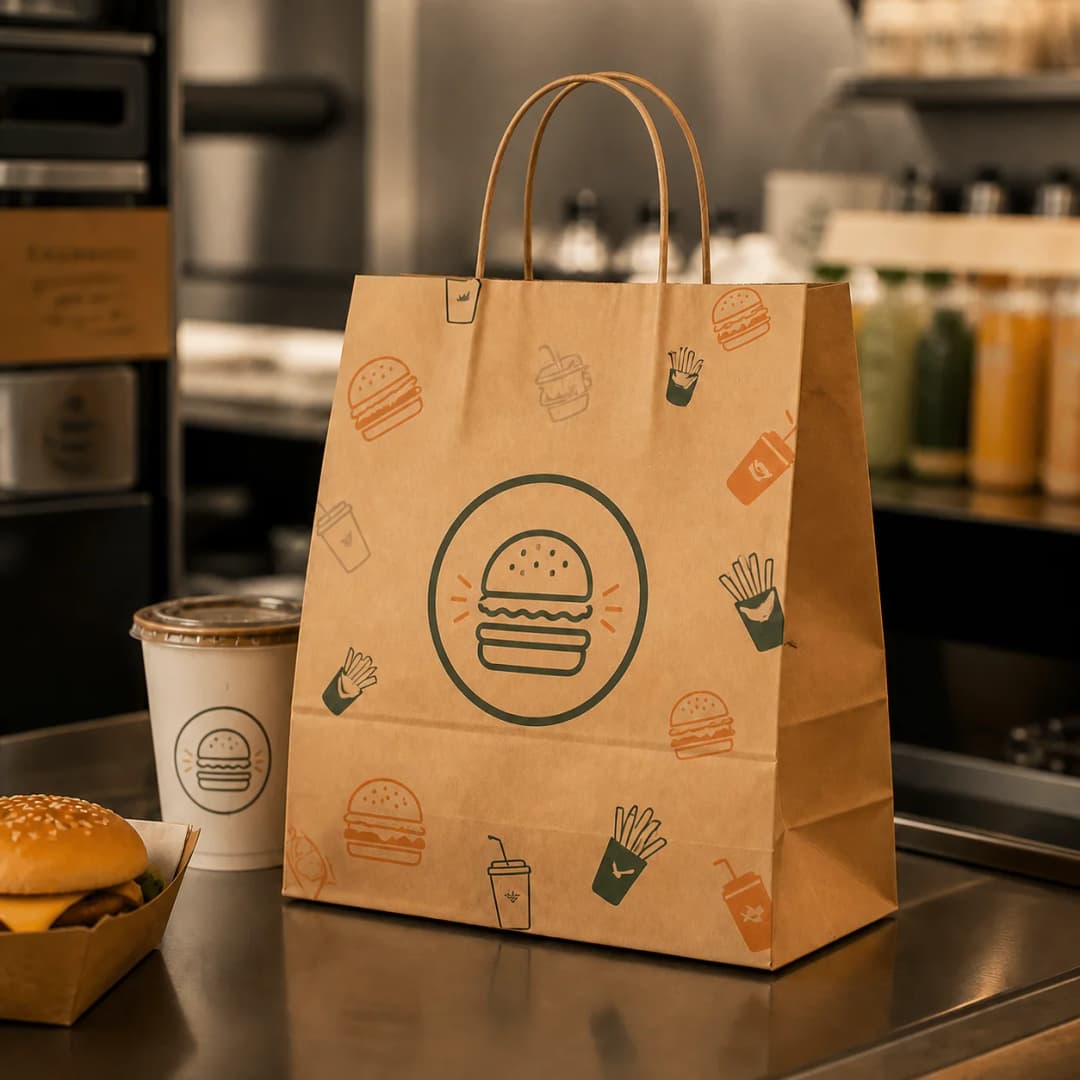
For a full takeaway order, paper carry bags provide the carrying structure. Test a fold-over label after loading the bag and keep the handles usable. The seal does not establish the bag's carrying capacity.
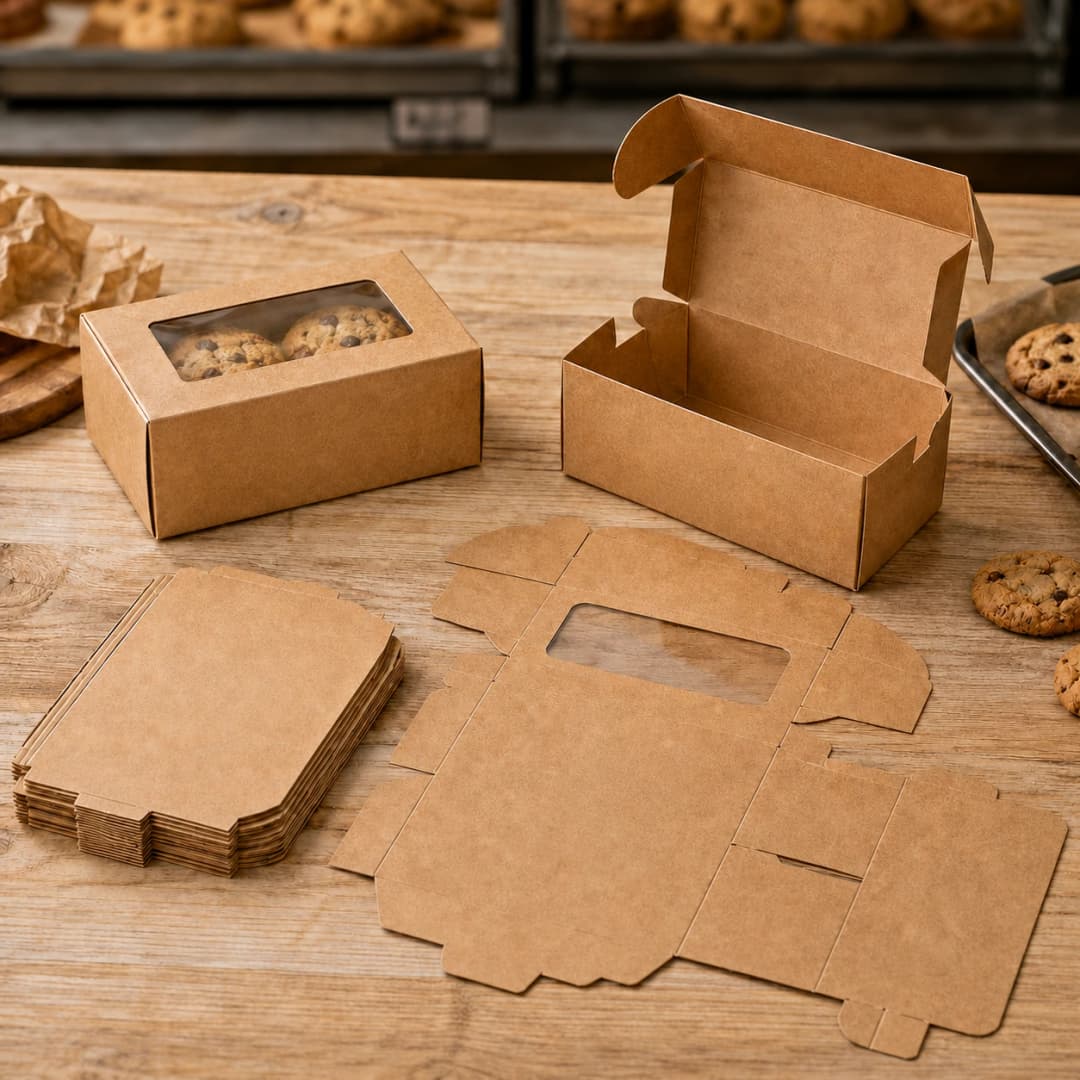
For bakery presentation, cake and pastry boxes provide the space and structure around the product. Position branding or a seal on a suitable panel, retaining any product-viewing area the operation needs. If a seal touches both board and a window, test both surfaces.
For a mixed meal, choose the appropriate takeaway food box structure first. Add the label for the agreed identification or closure job rather than asking it to compensate for an overfilled or poorly fitting lid.
Quotation, sample approval and replenishment
Send quantities by label size and artwork, your preferred sheet or roll supply, destination country and timing. MOQ and price are confirmed for the selected construction, printing and order split. The starting MOQ for wrapping paper is not automatically the MOQ for every paper or film label project.
Custom samples are charged, with courier costs paid by the buyer; the custom sample fee is credited against the formal order. After construction and artwork are confirmed, the custom-sample target is seven days. Any equipment or application trial should be allowed for before final production approval. Available non-custom samples can be free with buyer-paid courier costs, but they do not approve your final adhesive and package combination.
For reorders, send the approved label reference and artwork revision along with the required quantity. Identify changes to the package finish, roll format or application conditions even when the logo is unchanged. This helps the project review focus on the change that matters.
Questions about custom packaging labels
Are sealing stickers automatically tamper-evident?
No. Placement, construction and the package's possible opening routes must support the intended evidence of opening. State that requirement separately from ordinary branding or closure retention.
Can one label be used on boxes, bags and cups?
Possibly, but the contact surfaces, curves and conditions differ. Check each intended combination. Approval on a dry carton does not establish adhesion on a damp cup or flexible bag fold.
Do I need roll specifications for labels applied by hand?
Start with the label and package. Add holder limits if a dispenser is used. Machine-dependent sensing fields are unnecessary for loose-roll hand peeling; equipment compatibility needs an exact model and media requirements.
Can rolls and sheets use the same artwork?
The design may be retained, but the supply layout, peeling method and application process need review. Confirm the final orientation and format before ordering.
Can I begin without knowing the adhesive or material?
Yes. Send the packaging sample or photos, placement, application sequence and desired opening result. Those inputs are more useful than guessing an adhesive name. Final construction is agreed through quotation and sampling.
Send the package, placement and quantity
Show us the filled, closed package and where the label will go. Explain whether the priority is branding, item identification, closure retention or a specific opening result. Add artwork and quantity if available; identify unresolved equipment fields so the rest of the review can proceed.
Request a custom packaging label review.