A printed box for the burger you serve
A burger box gives the prepared burger a formed base, side walls and a closing lid. Open it for serving, or close it for the counter handover and the agreed takeaway journey. Xucheng Packaging coordinates box dimensions, folding structure, board selection and custom printing around your food and the way your team packs an order.
For a restaurant, the box can carry the same brand from the packing counter to the customer. A front-panel logo is visible when the lid is open; a lid design presents the brand on the closed pack. You can develop the colors, graphics and panel layout around both views instead of treating the empty flat artwork as the finished presentation.
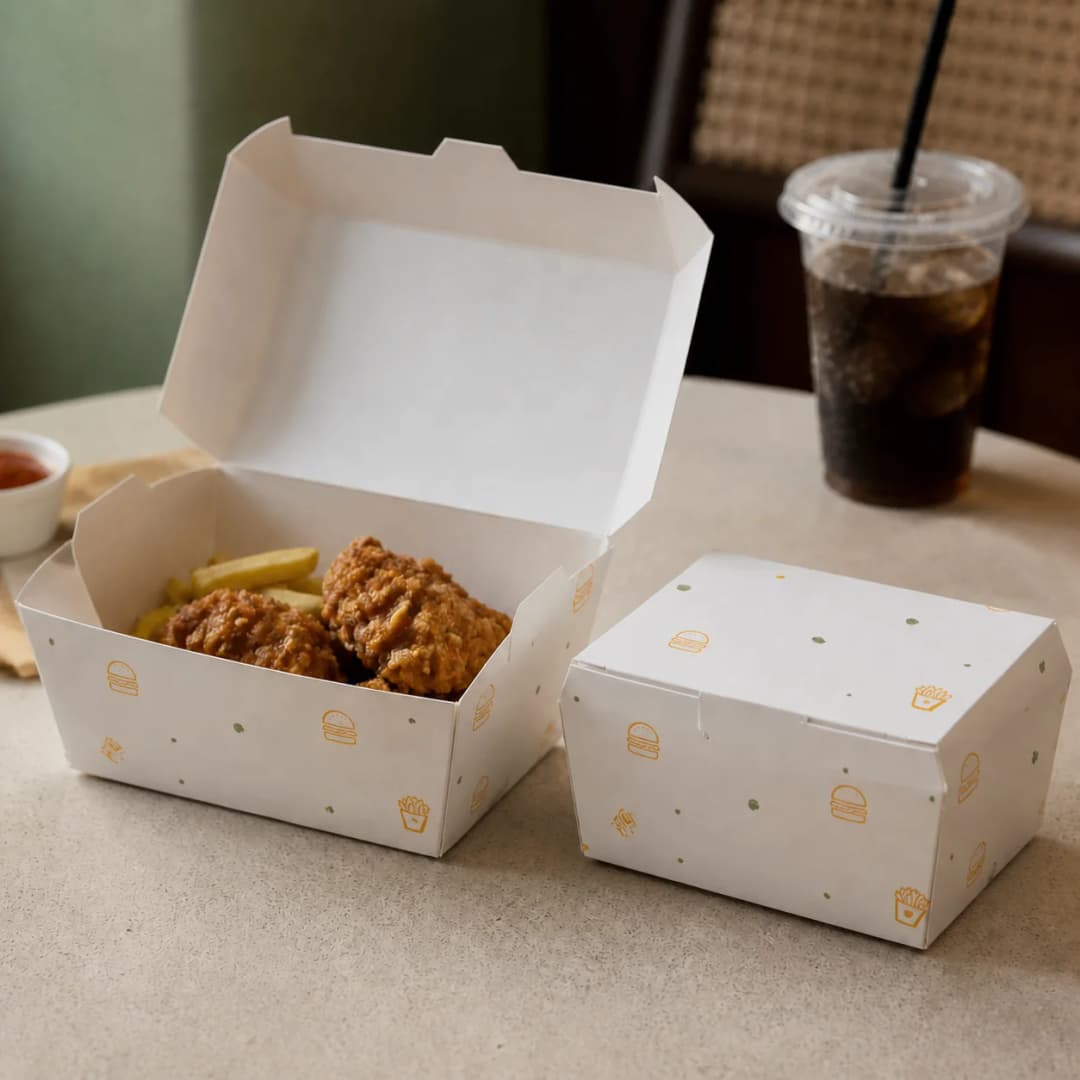
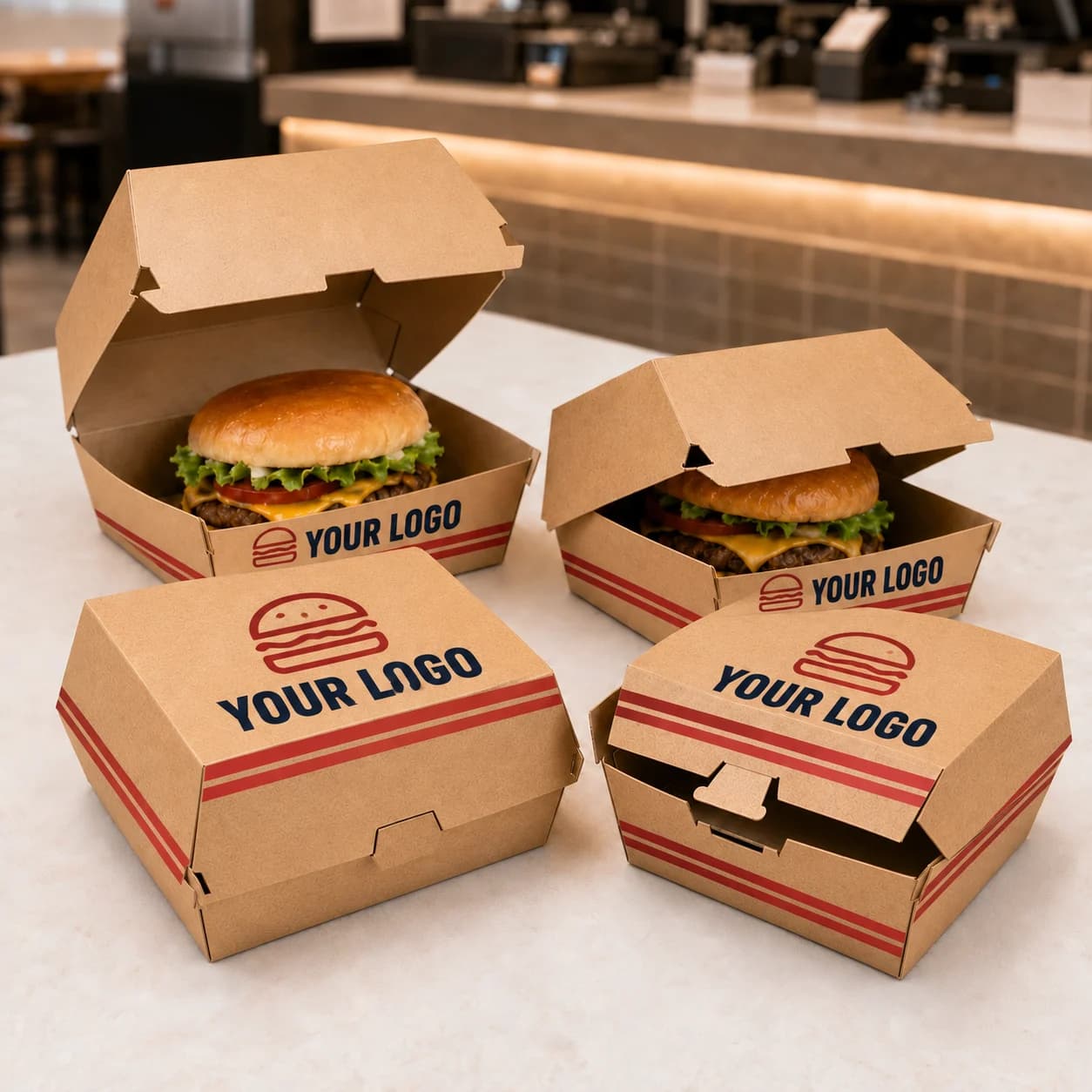
The illustrated kraft clamshells show open and closed boxes, with navy YOUR LOGO lettering and red burger graphics. They demonstrate an example print layout. Your finished dimensions, material, construction and artwork are agreed for your project.
Chat on WhatsApp, or choose an email option. Start with the burger or printed presentation you have in mind. A company name, exact dimensions, quantity, dieline and finished artwork are not required for the first conversation.
Choose the box around the serving and packing route
Loading the burger and closing the lid
A one-piece clamshell joins the base and lid at a fold. Staff open the pack, place the burger in the base, bring the lid down and engage the agreed closing feature. Other folded structures can be developed around a different opening, locking or packing arrangement. The useful choice is the one that works with the actual burger and the normal counter motion.
Consider where staff hold the box while loading, where the burger sits and how the front edge closes. A tall bun or loose topping can change the space needed below the lid. A closure that works on an empty sample still needs to be reviewed with the food inside.
Opening the pack for immediate eating
For a burger served soon after packing, the open box gives the customer access to the food while the base remains beneath it. The hinge direction and open lid affect the presentation on a counter or table. Keep the important front artwork visible in that orientation, and consider whether a separate wrap is useful for holding the burger while eating.
Burger and sandwich menu items can be discussed around their own shapes and serving needs. The same outer appearance does not establish that one box will fit every item. If several portions will share a format, compare them as filled packs rather than selecting from an empty-box photograph.
Closing and carrying a takeaway order
For takeaway or delivery, the burger box becomes one part of the packed order. Its outside dimensions need to work with neighboring cartons and the outer carrier. The intended arrangement, stacking and handling help define the box structure and what to check in the sample.
Oil, sauce, steam and the time before eating also affect that review. A closing lid does not by itself establish a particular holding temperature, grease barrier or delivery result. Discuss the actual journey so the selected board and construction can be evaluated for it.
Size the usable space around the finished burger
The bun, fillings and toppings define the filled profile. Allow usable space for the maximum burger width, depth and height, as well as loading and closing. A liner or partial wrap can take up some of that space. The lid and closing tabs should be considered as part of the filled pack rather than added after the dimensions are chosen.
Internal dimensions describe the space available to the food. External dimensions describe the box that sits in a carrier or master carton. Copying the outside measurements of a current box may give a different usable space when the board or folding structure changes.
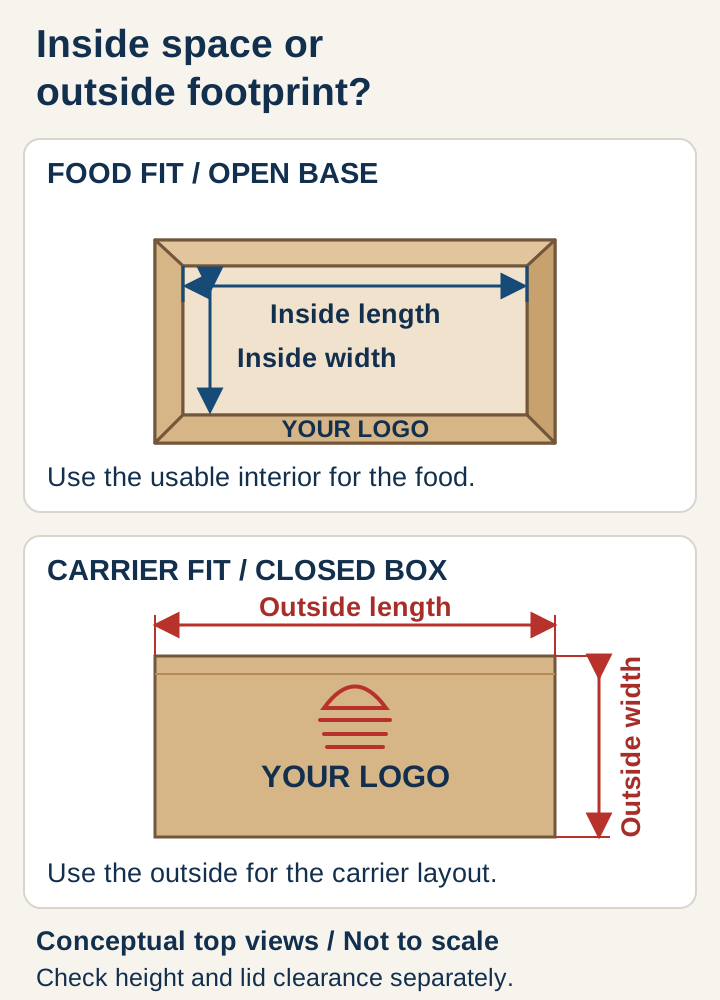
Keep inside and outside measurements labelled separately when discussing a box. These views compare footprints only; height, lid clearance and the filled pack still need their own review. You can start with the burger or your current packaging before the finished dimensions are settled.
A reference box can help start development. If you already use packaging that fits, an unused flat sample or clear photos and measurements can support the proposed layout. These are useful later inputs, not conditions for asking Lynn about the product.
For a menu with regular and larger burgers, one shared box may be practical, or separate proportions may give a better fit. Compare the assembled pack with each intended portion. The quotation can then distinguish the sizes and quantities without assuming every design uses the same structure.
Put the print where customers see the box
The front face with the lid open
The front panel is a useful place for a recognizable logo or graphic during serving. Keep it away from folds or closing features that interrupt the intended view. Side panels can continue a pattern or supporting message, while the main front artwork remains readable when the box is open.
The lid and sides with the box closed
The lid provides a different presentation for the takeaway handover. Review its orientation with the hinge, closing edge and normal packing direction. A design that looks upright on a flat drawing can face a different direction once the box is formed and placed in an outer bag.
You can coordinate lid, front and side artwork as a set. Where the same structure carries different menu designs, keep the versions clear in the artwork approval and order quantities. A printed sample helps review the design across the actual folds and edges.
Kraft and white board create different backgrounds for the artwork. Color, print coverage and any finishing follow the selected board and project specification. A digital mockup helps discuss position; a printed sample is more useful for reviewing the color and appearance on the proposed surface.
Build the complete burger order
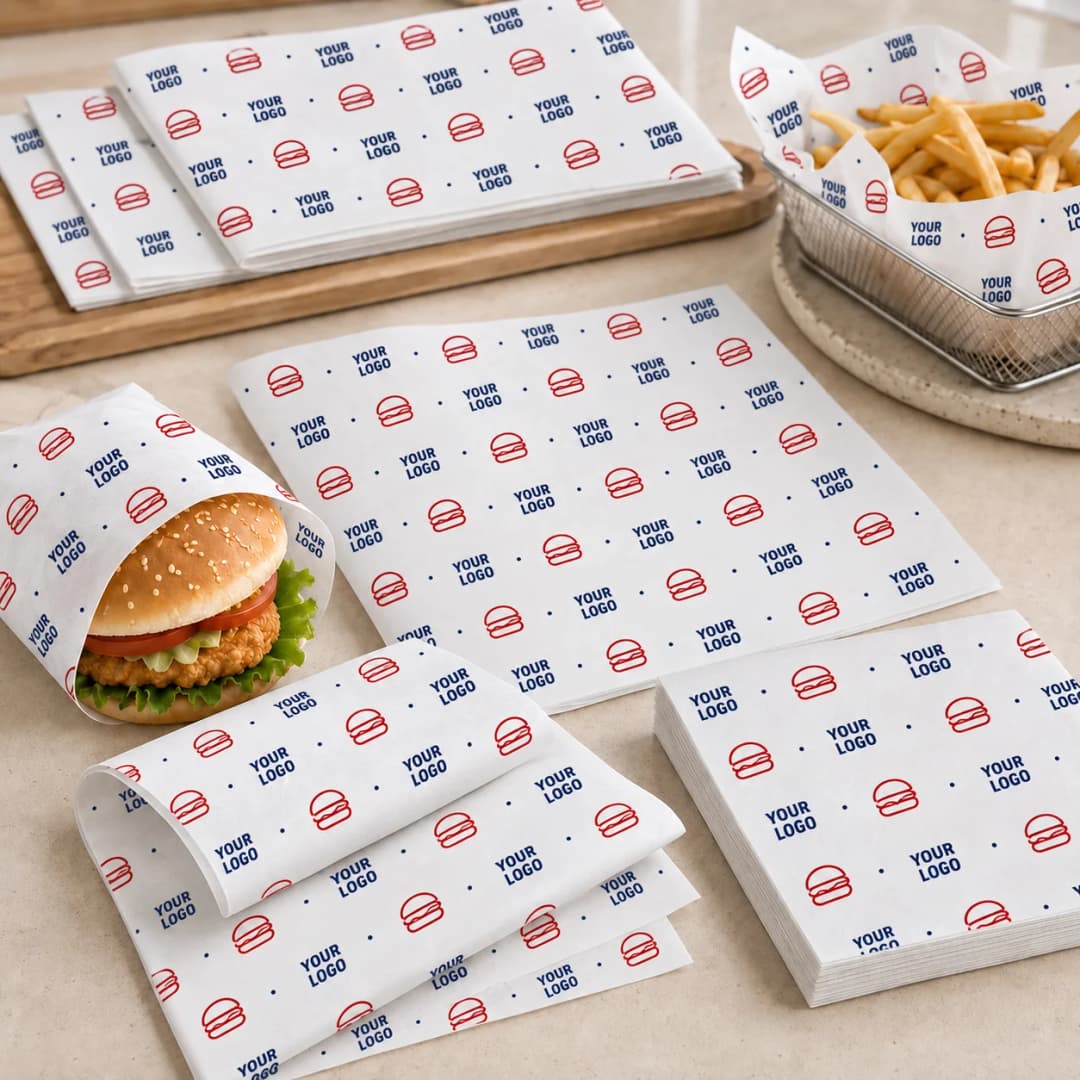
Custom burger wrapping paper is the flexible sheet staff fold around the burger or use in an agreed lining arrangement. It can give the customer a separate handhold and carry coordinated print. The box supplies the formed base and lid. Choose their roles together, with the proposed paper and board suited to the intended food contact.
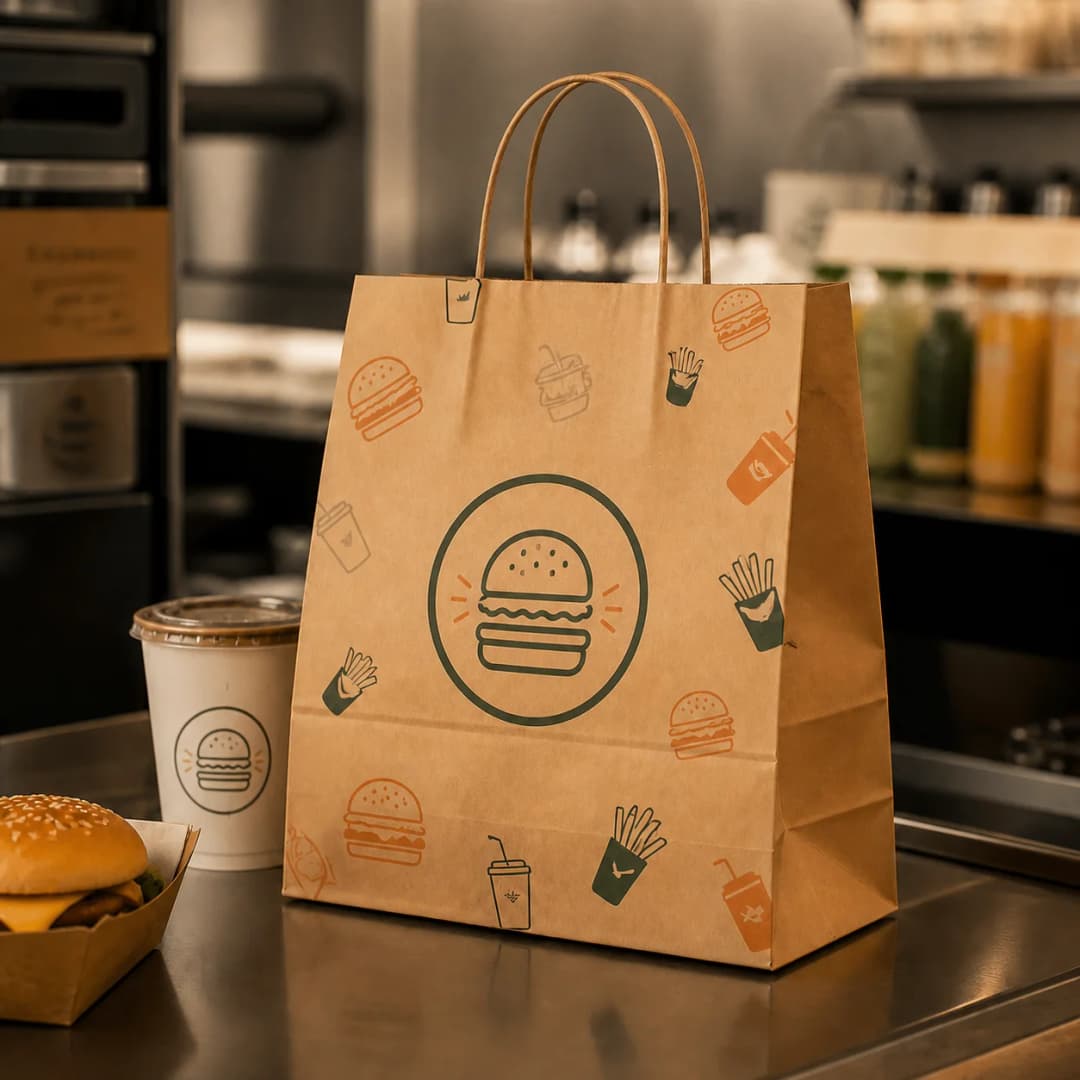
Paper bags provide the outer carrying format for the complete order. Their base, carrying arrangement and loaded layout are separate from the individual burger box. A burger box that fits its food may still need a different outer bag once drinks or side items are added.
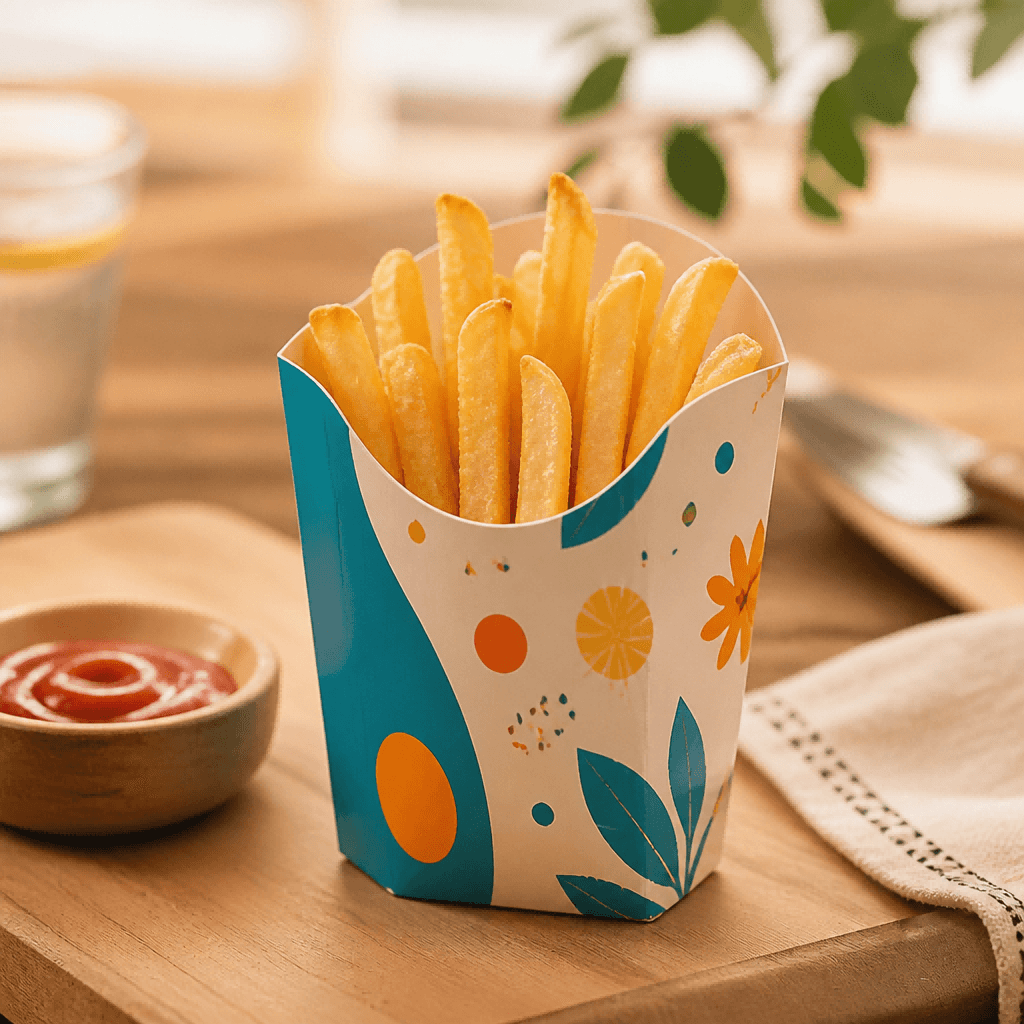
For fries served in a separate open carton, explore French fry boxes. When the order needs a broader closed food pack, consider takeaway food boxes. Match each pack to its contents rather than placing every item in the burger box by default.
Where a takeaway order needs an extra printed identifier, packaging stickers and labels can be considered for the agreed outer surface or closing arrangement. Confirm the label and its use separately; adding a sticker does not establish a tamper-evidence or sealing result for the complete pack.
Confirm the structure and board for the application
White folding paperboard offers a white printable surface; kraft paperboard offers a brown appearance. Fluted board can be evaluated where the project needs a different assembled structure or handling route. Board appearance alone does not establish grease resistance, stiffness or suitability for a particular service time.
The finished strength depends on the board construction, thickness, fibre and grain direction, folds, locks and any flute profile. A higher gsm alone is not a guarantee of a stronger loaded box. Review the assembled sample with the actual food and handling conditions.
Ventilation can be considered around steam and the intended journey. Its position and extent need to be reviewed with the box construction and the food. Grease or moisture protection is a separate material decision from structural stiffness. Special uses such as heating in the box require confirmation for the complete proposed pack.
The existing burger box materials and structure guide explains these technical comparisons in more detail. It helps develop the later specification and sample review after the serving format and printed presentation are clear.
Develop the quotation and sample with Lynn
MOQ is confirmed after the box structure, dimensions, board, printing and packing are reviewed. The quotation brings those decisions together with the quantity for each size or artwork version, delivery market and any required food-contact or performance documents. There is no fixed price for every custom burger-box specification.
Start with what the box needs to carry and how you want it to look. A current box, loaded-pack photo, reference artwork or burger measurements can follow when available. Lynn can help organize the next details instead of asking you to finish a dieline before the first conversation.
Xucheng coordinates specification, sampling and matched partner production. The proposed structure still needs a physical sample before bulk production. Review loading, closing, the open and closed views, the space above the burger and the complete order arrangement. Check the intended food conditions and documents for the selected material and production route.
Custom printed samples are charged, with courier costs paid by the buyer; the custom sample fee is credited in full against the formal order. Available non-custom samples can be supplied free, with courier costs paid by the buyer. Sample availability and the project schedule are discussed for the agreed version.
Retain the approved box dimensions, board reference, dieline and artwork revision for a repeat order. This keeps the next quotation connected to the agreed pack rather than only to a similar-looking burger-box image.
Common burger box questions
Can I begin without a dieline or finished artwork?
Yes. Tell Lynn about the burger, the packing route or the print you want. Photos, dimensions and artwork can follow as the project develops. The proposed construction is reviewed in a physical sample before bulk production.
Can one box work for several burger sizes?
It may, when each finished burger has workable loading clearance, lid space and movement control in the agreed structure. Compare the actual portions in the formed sample. A common bun diameter does not establish the same filled height or fit.
Can the front and lid carry different artwork?
Yes. Panel placement, print coverage and colors can be coordinated around the box construction. Review the open and closed views together so folds, the hinge and closing features leave the intended graphics visible.
Does a burger box replace wrapping paper and an outer bag?
They serve different roles. A box provides a formed pack with a lid; wrapping paper is a flexible sheet around or beneath the food; an outer bag carries the complete order. You can choose the combination around your service and coordinate the print across those components.
Talk with Lynn about your burger box
Chat on WhatsApp, choose an email option, or leave a brief web message as a backup. Begin with the food or printed presentation you have in mind; detailed specifications can follow in the conversation.