
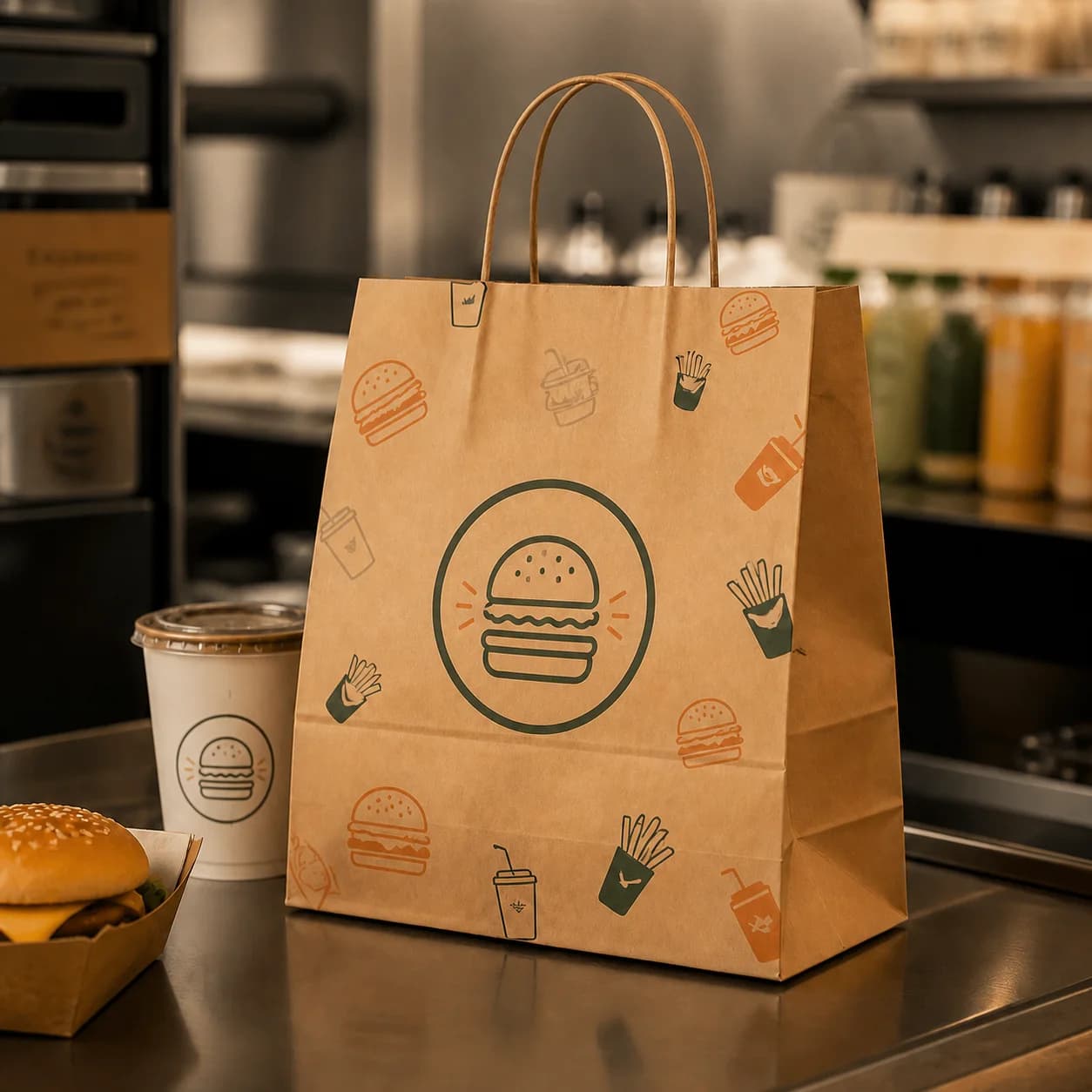
A takeaway paper bag should be specified around what it carries, how far it travels and how staff load it. Paper grammage matters, but handle reinforcement, bag dimensions, paper strength, folds and adhesive can be just as important.
1. Decide whether the bag touches food directly
A flat paper bag holding bread or a pastry may have direct food contact. A handled takeaway bag may only carry sealed boxes and cups. These jobs can require different paper, grease resistance and documents.
Tell the supplier:
- the food or containers placed inside;
- whether there is direct food contact;
- the maximum loaded weight;
- whether hot, oily, moist or chilled items are carried;
- the expected carrying time;
- the destination market and any required documents.
2. Select the correct bag format
- Flat or satchel bags: simple formats for bread, pastries and lighter items.
- SOS or block-bottom bags: stand more easily during loading and are common for takeaway orders.
- Flat-handle bags: stack efficiently and suit high-volume foodservice use.
- Twist-handle bags: provide a rounded paper handle for longer carrying or retail presentation.
- No-handle takeaway bags: suitable when customers support the bag from the base or the load is light.
The format should match counter operation as well as customer experience. A bag that is strong but slow to open can create unnecessary service delays.
3. Build the bag size from a container layout
Measure the longest container, total stacked height and widest footprint. Allow practical clearance so staff can load the order without damaging box corners or tipping cups.
Specify dimensions as width × side gusset × height and confirm the order of measurements. If multiple boxes are loaded side by side, provide a simple layout or photograph.
Use this approval sequence before choosing the finished bag size:
- Arrange the actual boxes, cups and wrapped items in the order staff will pack them.
- Record the maximum footprint, stacked height and any lid, handle or cup-carrier projection.
- Compare that load with the bag's usable base and opening—not only its outside dimensions.
- Load a formed sample, lift it by the intended carrying method and check corner pressure, movement and closing clearance.
A bag that is too wide allows products to move. A bag that is too narrow can tear at corners or make loading slow. Base size is often more important than overall height.
4. Choose paper by strength and use, not gsm alone
Do not choose from a generic gsm chart before the bag format, dimensions and load are fixed. Two papers with the same nominal grammage can behave differently after folding, gluing, handle attachment and loading.
Strength depends on:
- virgin, recycled or mixed fibre construction;
- tensile, tear and burst performance;
- machine and cross direction;
- bag width, gusset and bottom folds;
- handle attachment and reinforcement;
- adhesive and converting quality;
- the real load and carrying test.
Xucheng can coordinate project-specific paper grammage. Confirm the final selection with the proposed structure and a loaded sample test.
5. Match handles to the load and service process
Flat handles are compact and efficient for many takeaway operations. Twist handles offer a different carrying feel and retail presentation. No-handle SOS bags reduce components but require a suitable load and carrying method.
Do not publish a universal kilogram capacity without testing the exact paper, handle, glue, dimensions and load distribution. Test the assembled bag with the actual containers.
6. Plan printing around folds and handles
The printable area is interrupted by side gussets, bottom folds and handle attachments. Keep important logos and contact details away from these areas.
Confirm white or brown kraft appearance, number of colors, one-side or multi-panel layout, logo position relative to the handle, viewing position and color references.
A digital mockup checks panel placement. A physical sample checks color on the chosen paper, folds, opening, handle position and loaded strength.
Paper bag quotation checklist
- Bag format and handle type
- Width × side gusset × height
- Products or containers carried
- Maximum loaded weight
- Direct or indirect food contact
- Hot, cold, greasy or moist conditions
- Paper appearance and preferred grammage if known
- Printing colors and artwork
- Estimated quantity
- Delivery country and required documents
Frequently asked questions
Which is better: flat handles or twist handles?
Neither is universally better. Flat handles suit efficient stacking and many foodservice operations. Twist handles may suit longer carrying and a different presentation.
Is recycled kraft always suitable for food bags?
Suitability depends on whether food contacts the paper directly, the final material structure and the destination market. Confirm required food-contact documentation instead of relying on appearance alone.
How should I measure a bag for stacked takeaway boxes?
Arrange the actual boxes in their normal loading order, then record the maximum footprint and total height. Share the layout with the supplier so the usable base, gusset, opening and loading clearance can be checked in a formed sample.
What is the current MOQ guide?
The current guide for custom paper bags is from 2,000 pieces. Final MOQ depends on bag size, paper, handle, printing and packing method.
Discuss your paper bag project
View our custom paper bags, sandwich paper bags and custom takeaway food boxes, or send Lynn the bag dimensions, load, quantity, artwork and delivery country.