A printed food bag for the sandwich you hand over
A formed sandwich paper bag receives the prepared food through its opening. It can cover the lower part of a sandwich while leaving the top visible for serving and eating. Xucheng Packaging coordinates custom bag proportions, paper selection, opening and print layout around your sandwiches and the way your team packs them.
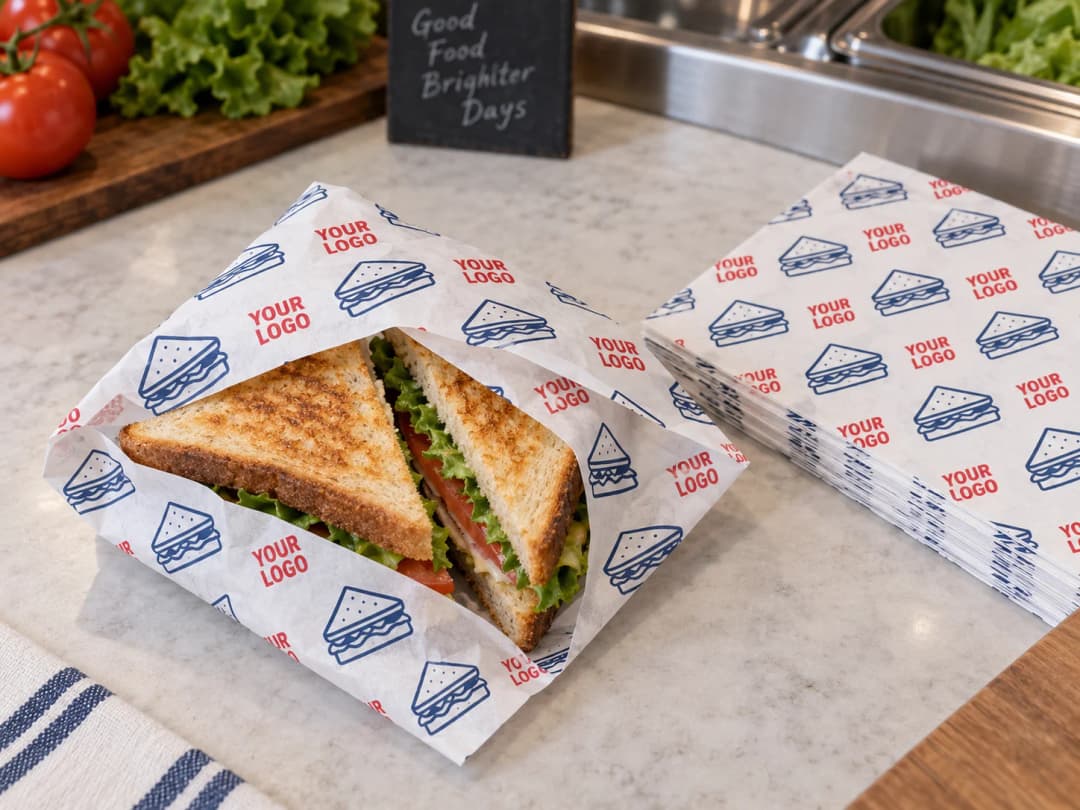
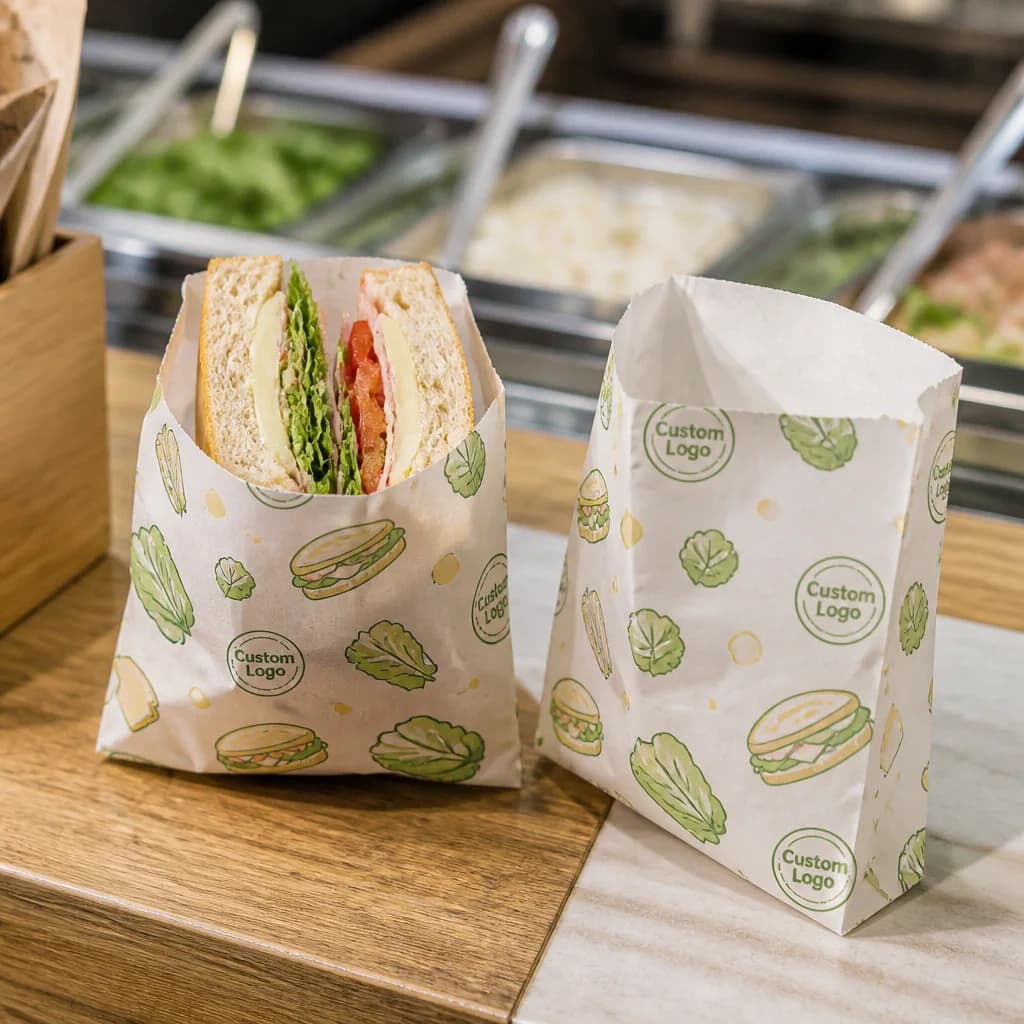
For a café counter, that may mean two cut sandwich halves presented together. A panini or filled roll can need a different opening, usable depth and amount of exposed food. Bakery savouries can also be discussed around their shape and handling. The product image shows an open bag holding sandwich halves beside an empty printed bag; the finished size and construction are developed for your project.
The bag's front and rear panels give your artwork a place to remain visible as the food is handed over. You can coordinate the logo, colors and repeat pattern with the rest of the order, while choosing how much of the sandwich the bag should cover.
Chat on WhatsApp, or choose an email option. Tell Lynn what you serve or the presentation you want. Finished dimensions, company details, quantity and artwork are not required for the first conversation.
Choose the pack for the way the sandwich is served
Top loading with part of the food exposed
With an open-top bag, staff place the sandwich through the opening and settle it into the formed pack. The usable height determines how much food remains above the front edge. A shorter front can leave access for eating; greater coverage can suit a different handover or display arrangement. Coordinate the front and rear edge direction with the intended viewing side.
For sandwiches packed shortly before handover, consider where staff hold the bag while loading and where the customer grips it afterwards. For prepared counter display, consider the filled orientation, exposed food and normal holding period as well. The open format gives visibility and access; the intended food-handling conditions still need to suit that service.
Folding a sheet around the food
Sandwich wrapping paper is a flat sheet that staff fold around the sandwich. It offers a different way to cover varying shapes, close a wrap or create a partial handhold. A formed bag supplies an opening and an already joined structure. Choose between them around the food and packing motion rather than expecting one specification to describe both products.
When several menu shapes share a wrapping sheet, the sandwich wrapping paper size guide helps group those sheet-size decisions. It remains a guide to flat paper; this page covers the formed sandwich bag.
Carrying the complete takeaway order
An individual sandwich bag covers one food item or the agreed sandwich arrangement. For a larger order, paper bags provide a separate outer carrying format for the packed food and other containers. Their base, handles and loaded layout are different decisions from the sandwich bag's opening and food coverage.
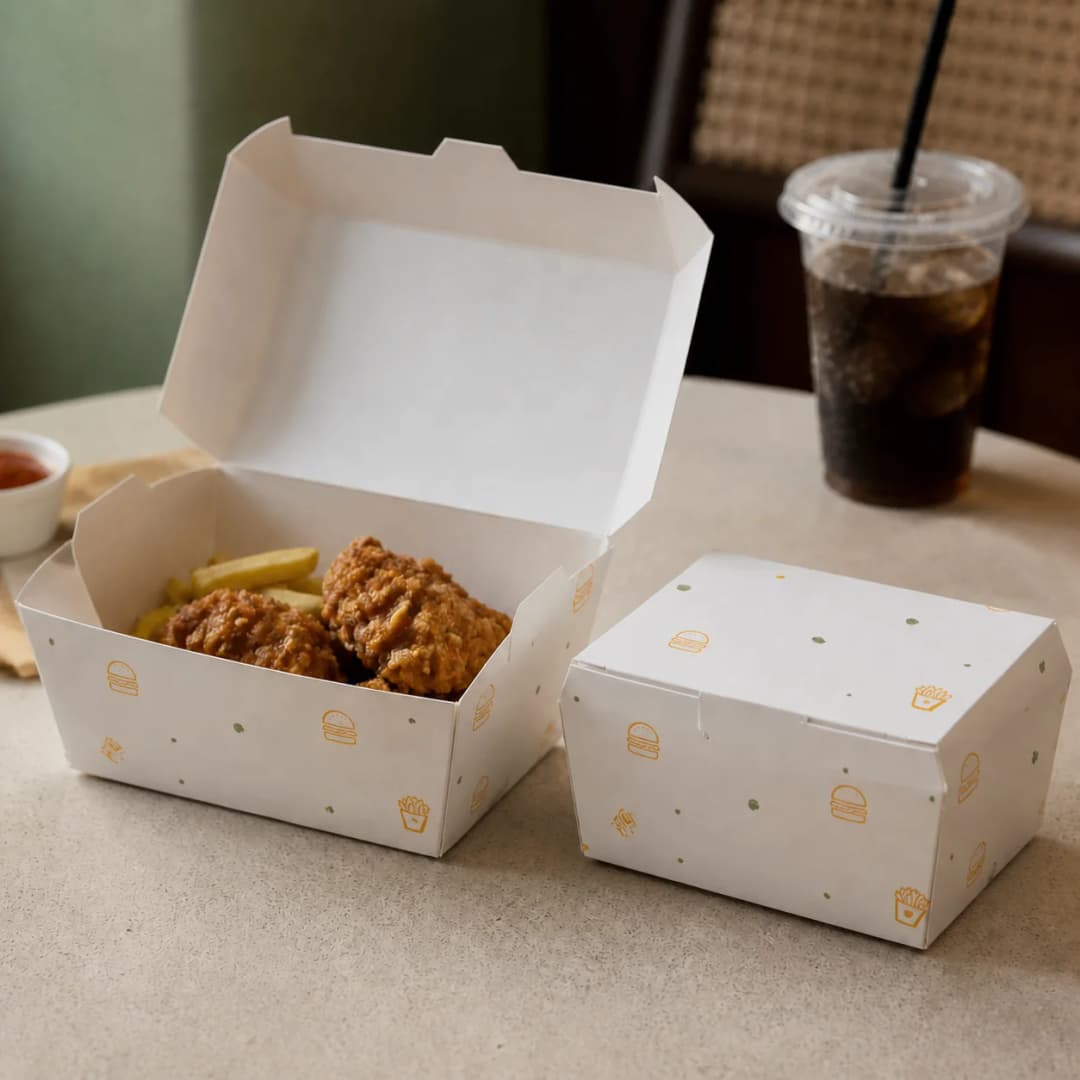
If the sandwich needs a closed outer structure or more space around neighboring items, discuss takeaway food boxes. An open sandwich bag, a folded sheet and a closed box answer different serving needs; the choice can begin with how the order reaches the customer.
Fit the filled sandwich and the loading motion
Start with the sandwich as served, including its bread, fillings and cut arrangement. Two halves placed side by side can create a wider opening requirement than a single filled roll. Thick fillings can need more expansion even when the bread width appears similar. Shape and loading clearance matter alongside the portion size.
A flatter bag format can be considered for a slimmer sandwich and compact counter storage. A side gusset adds expansion for a thicker profile. Review the opening and the space available once the bag is opened, rather than selecting only by its width when laid flat.
The bag needs usable height below the intended top edge and enough room to load the food without compressing the fillings. Excess space can also change the way the food sits and the artwork appears. A formed sample helps compare the actual fit with the normal staff packing motion and customer grip.
For a mixed menu, compare the regular sandwich shapes that would share the same bag. One format may work for several items, or a second proportion may make sense for a thicker or longer item. The quotation can separate each size and print version so the order follows the way the packs are used.
Keep the custom print visible after loading
The front face is often visible at the counter and in the customer's hand. Place the main logo or graphic where the sandwich, the grip and any intended top fold leave it exposed. A repeat pattern can continue around the bag, while a fixed logo needs a predictable panel and orientation.
Side gussets change shape as the bag opens. Artwork near a gusset, bottom fold or joined edge can appear differently on the filled pack. Review the design on the formed bag as well as on a flat layout, especially when a graphic continues across several panels.
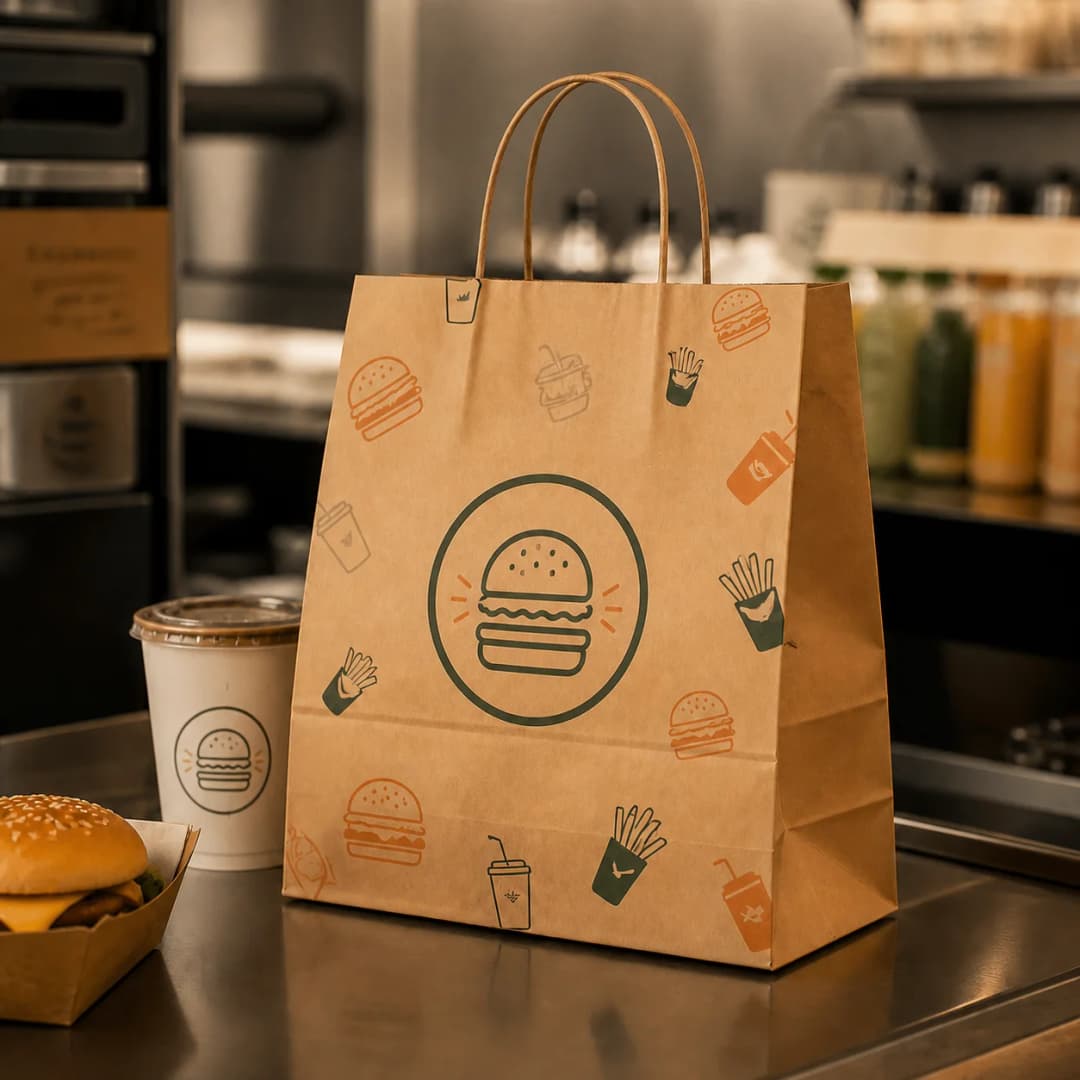
White and kraft appearances create different print contrast. A digital mockup helps discuss placement; a printed sample on the proposed paper helps review the actual color and folded appearance. The illustrated bags carry a Custom Logo example and food graphics. They show a print direction, without defining a stocked design, a customer order or an approved material specification.
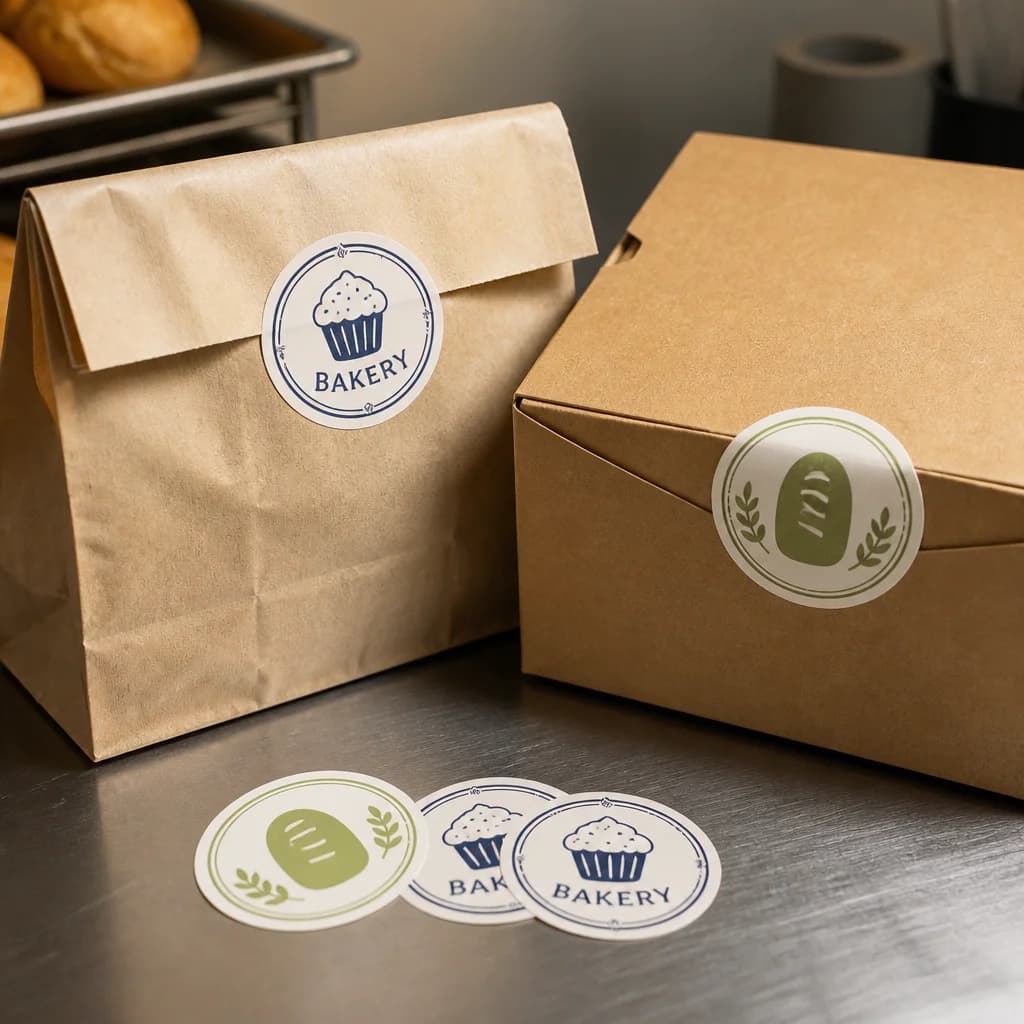
Where an order needs an additional identifier, packaging stickers and labels can be considered for an outer carrying bag or closed pack. Match the label to that surface and use. A label is a separate component; any intended closure or tamper-evidence requirement needs its own agreed solution.
Match paper and grease conditions to the actual food
A grease-resistant paper route can be evaluated for sandwiches, panini and bakery savouries around oil, sauces, moisture, temperature and holding time. The selected construction and the finished food determine what needs checking. Paper appearance and the word greaseproof alone do not establish a particular barrier result.
Describe whether the food is handed over soon after packing, held for display or carried with a takeaway order. Those conditions help keep paper selection connected to the application. The food-contact requirements and supporting documents must cover the proposed paper, print, intended use and destination market.
Special uses such as heating in the pack require separate confirmation for the complete construction. An open bag does not establish microwave or oven suitability, and the bag format does not guarantee temperature retention or a particular shelf life. Those results cannot be taken from an illustrative product image.
The existing greaseproof paper selection guide explains food and contact conditions for paper evaluation. Its examples concern wrapping paper; it can help frame the material discussion while the formed bag's opening, seams and dimensions are reviewed separately.
Develop the quotation and sample after first contact
The quotation brings together the bag's format and opening, width, gusset or depth, usable height, paper route, print coverage and colors, quantity, inner packing and delivery market. MOQ is confirmed per project; a general paper-bag minimum is not a fixed minimum for every formed sandwich bag.
A photo of the normal sandwich, a current pack or a reference design is useful when available. You can begin with the application and work toward the details with Lynn. If several bag sizes or designs are needed, identify the quantity for each version as the quotation develops.
Xucheng coordinates specification, sampling and partner production. The selected paper, bag-forming arrangement and print follow the agreed project specification. A formed sample can then be used with the actual sandwich to review loading, food coverage, the opening, customer grip and visible artwork. Material performance and the required documents are confirmed for that version.
Custom printed samples are charged, with courier costs paid by the buyer; the custom sample fee is credited in full against the formal order. Available non-custom samples can be supplied free, with courier costs paid by the buyer. The first digital mockup target is within three hours during China working hours after usable artwork arrives. A custom sample targets dispatch within seven days after structure, material and artwork are confirmed and the sampling fee is paid. Most approved custom orders target factory dispatch within 30 days after payment and final artwork or sample approval; requested testing time is additional. Confirm the project schedule with Lynn.
For repeat orders, retain the agreed dimensions, paper reference, opening direction, artwork revision and packing arrangement. This keeps the repeat quotation tied to the approved bag rather than just a similar-looking print.
Common sandwich bag questions
Can I start without a finished bag size or artwork?
Yes. Start with the sandwich and how you want to serve or present it. Dimensions, a reference layout and production artwork can be developed after the first conversation.
Can one bag fit several sandwich shapes?
It may, if each filled shape has workable opening clearance, usable space and food coverage. Compare the actual menu items in the formed sample; the same bread width does not establish the same fit once fillings are included.
Can the top edge and print layout be customized?
Bag proportions, opening direction, top-edge treatment and artwork placement can be coordinated subject to the confirmed converting route. Review where the food and grip sit so the selected edge and print work together.
Does this bag replace an outer takeaway carrier?
The sandwich bag is the individual food pack. An outer carrier handles the complete order and has its own base, carrying arrangement and load requirements. You can discuss both as coordinated parts of the order.
Talk with Lynn about your sandwich bag
Chat on WhatsApp, choose an email option, or leave a brief web message as a backup. Begin with the food or printed presentation you have in mind, and the remaining details can follow.