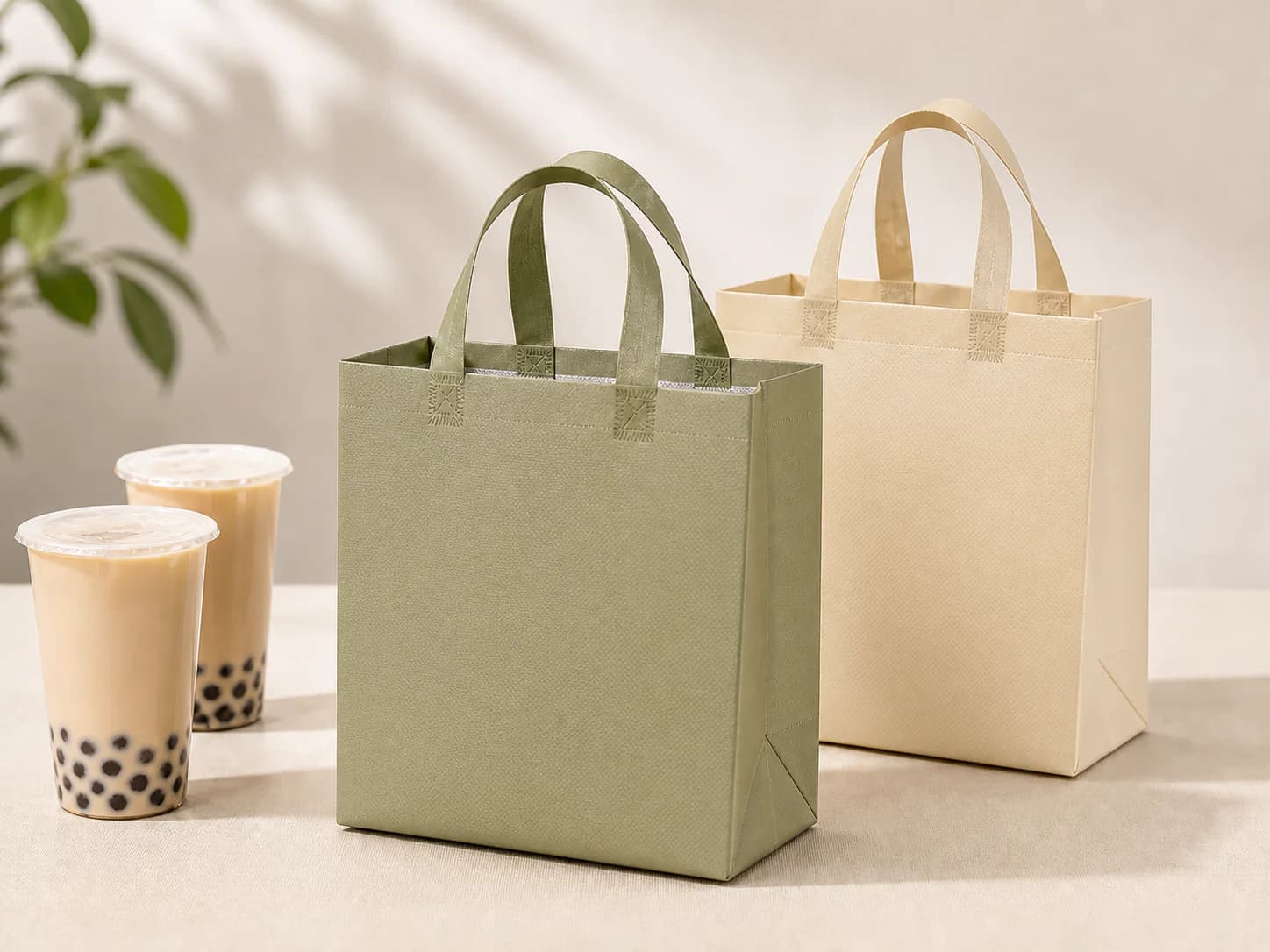
Give takeaway drinks a bag specified around the cups, the order and the way customers carry it. Xucheng Packaging coordinates custom drink carrier bags for bubble tea shops, cafés and beverage brands, with bag dimensions, handles, printing and the required construction reviewed for each project.
Start with your actual cups and the number packed together. A cup's stated volume alone does not tell us whether its lid, base or overall height will fit. Send a filled-pack photo, cup measurements and your preferred bag style; we can use these details to discuss the bag specification, sampling and quotation.
A carry bag specified for your beverage service
This product is the outer handled bag used to hand over packaged drinks. The cup and its lid or sealing film contain the beverage; the bag carries the assembled order. A bag that looks neatly fitted does not by itself prevent a loose lid from opening or keep an unsupported cup upright.
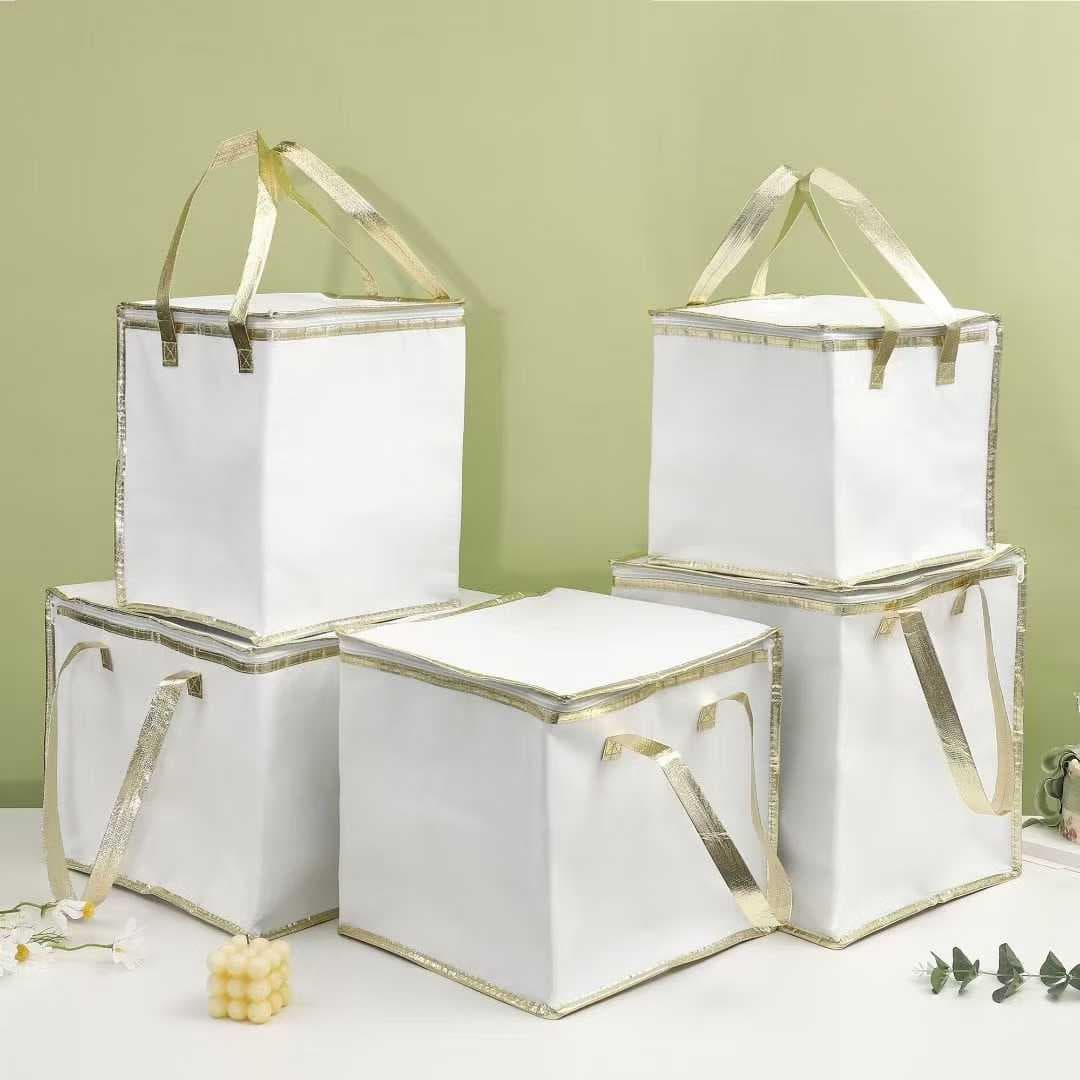
Non-woven carry-bag constructions and insulated bag requirements should be specified separately. If your brief is mainly branded handover from counter to customer, begin with the required footprint, handles and presentation. If it includes temperature control during a journey, identify that requirement at the start so that the proposed construction and sample test address it. A non-woven exterior alone does not establish insulation.
For a takeaway set that includes sandwiches or snacks, describe the complete load rather than adding a food box after the drink bag has been approved. Cup height, box corners and the position of the handles can change how the order sits and lifts.
Measure the closed cup and the complete order
Measure each cup with its normal lid fitted. Record the maximum outside diameter, the base diameter and the total closed height, including a raised lid. If your menu uses several cup families, identify the largest and smallest as well as the most frequently ordered combination.
Arrange the cups as staff will pack them. Measure the full footprint of the group, including any cup tray or holder already used in your operation. A bag sized from two cup diameters may still fail if the tray corners extend farther or if the lids overlap when the bag sides pull inward.
Distinguish the supplier's bag width, depth or gusset, and height from the usable space inside the formed sample. State whether height is measured to the top edge or to the intended closure line. The handle rise is a separate dimension. Allow room to place and remove the cups without forcing the bag over the lids, then check the actual sample rather than relying only on a drawing.
When you do not yet know the bag dimensions, send the cup set and a top-and-side photograph with a ruler in view. Include any tray and the intended top closure. That gives a more useful starting point than selecting a stock size that looks close.
Decide which order combinations one bag must serve
A single bag size is convenient for staff and storage, but test it against both its fullest and lightest intended loads. A bag that fits several cups may leave one cup free to move. A close-fitting smaller bag may be difficult to load when the lid shape changes.
Use a simple order matrix: cup type, number of cups, support used and any accompanying item. Mark the combinations you intend to accept. Do not extend an approval for one arrangement to every drink on the menu without checking the others.
If you already use a cup holder or divider, provide its outside dimensions and a sample or drawing. We can review the bag around that assembly. The bag quotation should identify whether a support component is included or supplied separately; it should not appear in a packing illustration and then be assumed to come with every bag.
Different order groups may justify more than one bag size. That is a purchasing decision based on fit, handling and stock control, not a reason to create a different product for every drink name or print design.
Review handles, opening and closure together
Handle length affects how easily staff load the bag and how a customer lifts it. Check the attachment positions, the space between the handles and whether lifting draws the sidewalls against the cup lids. Assess the fully loaded bag, including the actual support insert where used.
An open top may suit quick counter handover. A folded or closed top changes the available height and the loading sequence. Send the closure style you want so that it can be reviewed with the proposed construction. Do not choose an adhesive closure purely from its appearance in a photograph; the surface, fold and handling conditions affect whether it works as intended.
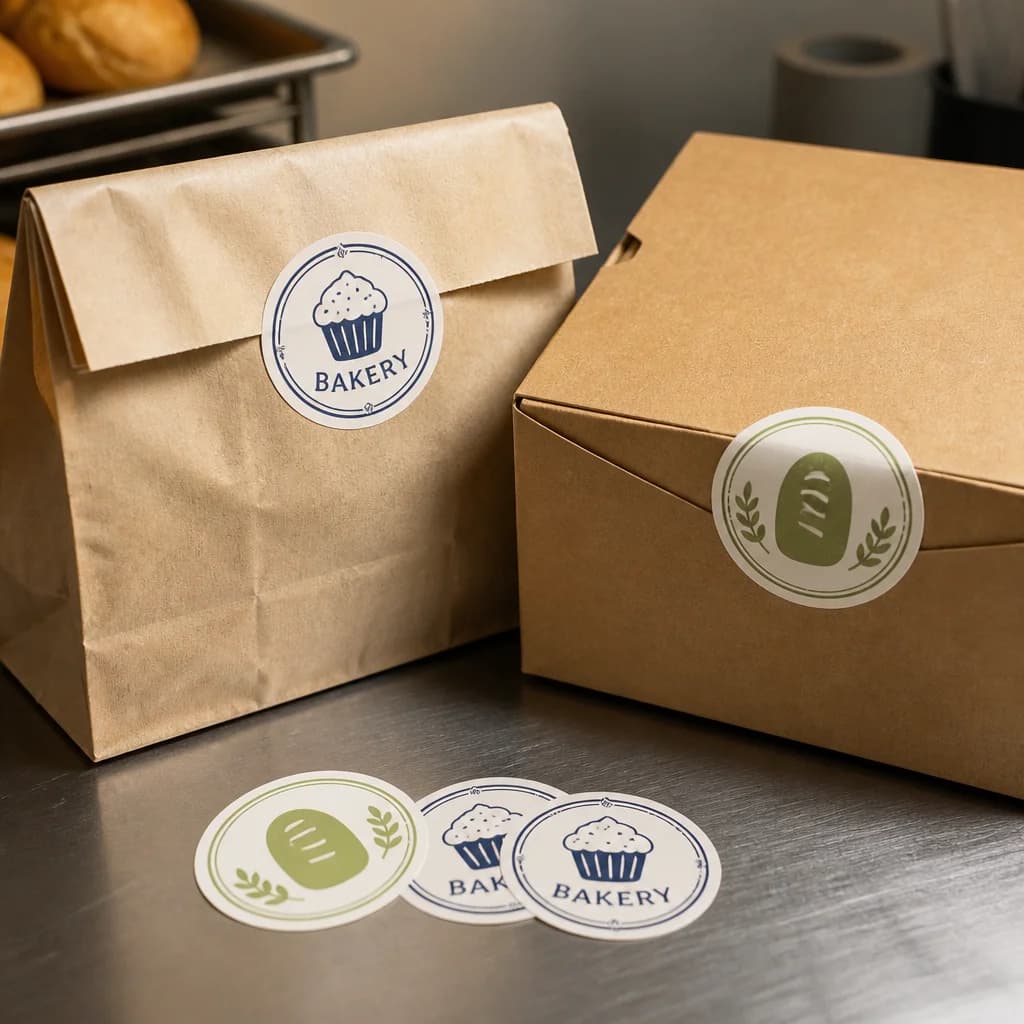
Keep order-identification labels clear of the handle path and opening area. If a sticker bridges the closure, agree how the customer should open the bag. Ordinary branding labels do not automatically provide tamper evidence. Our packaging stickers and labels page explains how to specify the placement and test the label on the actual package.
Separate carrying requirements from temperature requirements
For cold drinks, describe the expected condensation, whether ice is inside the cup, and the interval between packing and handover. Check how moisture affects the cup support, bag base, print and any closure label. A lined appearance is not proof that every seam will contain a spill.
For an insulated brief, state the starting drink condition, expected journey, ambient conditions, opening frequency and the acceptance criterion. Review the proposed layers and closure, then assess a representative loaded sample under the intended conditions. The finished assembly matters: a closed bag carrying several drinks behaves differently from an open bag with one cup and a large empty space.
We do not assign a universal hot-or-cold holding time to a custom bag from its photograph. Any performance requirement belongs in the project specification and test arrangement. The bag also does not replace the temperature controls required for the drink itself.
Prepare print artwork for the formed bag
Send the logo or artwork file, required colours and the panels to be printed. Identify important text that must remain readable when the bag is filled and held by its handles. Keep the intended logo position clear of folds, attachment zones and closure areas shown on the agreed layout.
Review the front and back as separate customer views. A design that reads clearly when an empty bag is flat may disappear into a side fold or become partly hidden when the handles are held together. Ask for the artwork to be shown on the agreed bag layout before approving its position.
Where colour matching is important, provide the reference and discuss the proposed material and print process. Screen previews help approve layout; they do not establish the finished colour or surface feel. Confirm these on the agreed physical sample when they are important to the order.