Bakery boxes made around what you sell
Custom cake and pastry boxes bring your bakery product, presentation and printed brand together for counter collection, takeaway orders and seasonal gift ranges. Xucheng develops the box dimensions, windowed or solid-board structure, board selection, printing, finishing and packing method around your project. A whole decorated cake, a row of cupcakes and a mixed pastry selection need different usable space and different ways of keeping the arrangement in place.
Start with the bakery items and the way customers receive them. You can Chat on WhatsApp or choose an email option to speak with Lynn before you have measurements, photos, quantity or finished artwork. A short description of your cake or pastry range is enough to open the conversation; the details for quotation and sampling can follow.
Fit the finished cake, its base and its decoration
The cake diameter alone does not describe the space a box needs. The baseboard or serving tray may extend beyond the food, while icing, fruit, piped edges or a topper may extend above or beside it. Consider the complete product as it will leave the bakery, including any board, cup or tray that stays with it.
For a whole cake, distinguish the board footprint from the decorated cake footprint. The usable box base must accommodate the board, and the walls and lid need clearance around the finished decoration. For pastries, the relevant outline may include a paper case or individual tray. These are different fit decisions even when the food itself has a similar width.
Useful clearance also depends on how the item enters and leaves the box. A fit that looks tidy when closed may leave too little room to lower a decorated cake into place or lift out its board. Excess space can allow unwanted movement. The right balance is developed with the proposed structure and a sample of the actual cake or pastry arrangement, rather than a universal clearance number.
Choose the arrangement before choosing an insert
One cake or one large pastry
A single item makes the relationship between its base, surrounding walls and lid especially important. Discuss whether it travels on a separate board and how the customer will remove it for serving. The box should be considered in its loaded state, with decoration and the opening action included, rather than as an empty carton.
A repeated pastry or cupcake selection
For several similar items, the count and arrangement determine the space used inside the box. A cupcake grid may need an insert matched to the cups and the height of the decorated tops. A row of pastries may need a divider or another agreed layout. An insert opening is a fit feature, not a substitute for checking the complete loaded box.
A mixed bakery selection
Mixed items can have different heights, widths and surfaces. Decide whether each item needs its own position or whether the selection can sit together on a tray. The tallest item affects lid clearance; the arrangement affects the outer footprint and the placement of any window. If the mix changes seasonally, discuss which combinations the proposed box must accommodate. One sample arrangement does not establish fit for every future assortment.
Custom inserts and dividers can be discussed subject to structure and production feasibility. Develop them with the outer box so the insert, food and lid work together. There is no fixed cavity count or standard insert dimension implied by the illustration.
Windowed, solid or fitted with an insert
Solid paperboard: A window-free format offers broad printable panels and straightforward product protection. It gives artwork an uninterrupted lid area and suits a presentation where the customer opens the box to see the bakery item. Board selection and the final structure remain project decisions.
Windowed carton: A viewing window can support display of the actual cake or pastry selection. Its position matters: a window over an empty gap or a divider may show less of the product than intended. Window material, attachment and destination-market requirements need confirmation for the intended use.
Carton with insert: A board insert or divider can control movement for pastries, cupcakes or mixed bakery selections. It occupies space inside the carton, so its height and layout need to be considered with the product and lid. An insert can be discussed alongside a solid or windowed presentation where feasible.
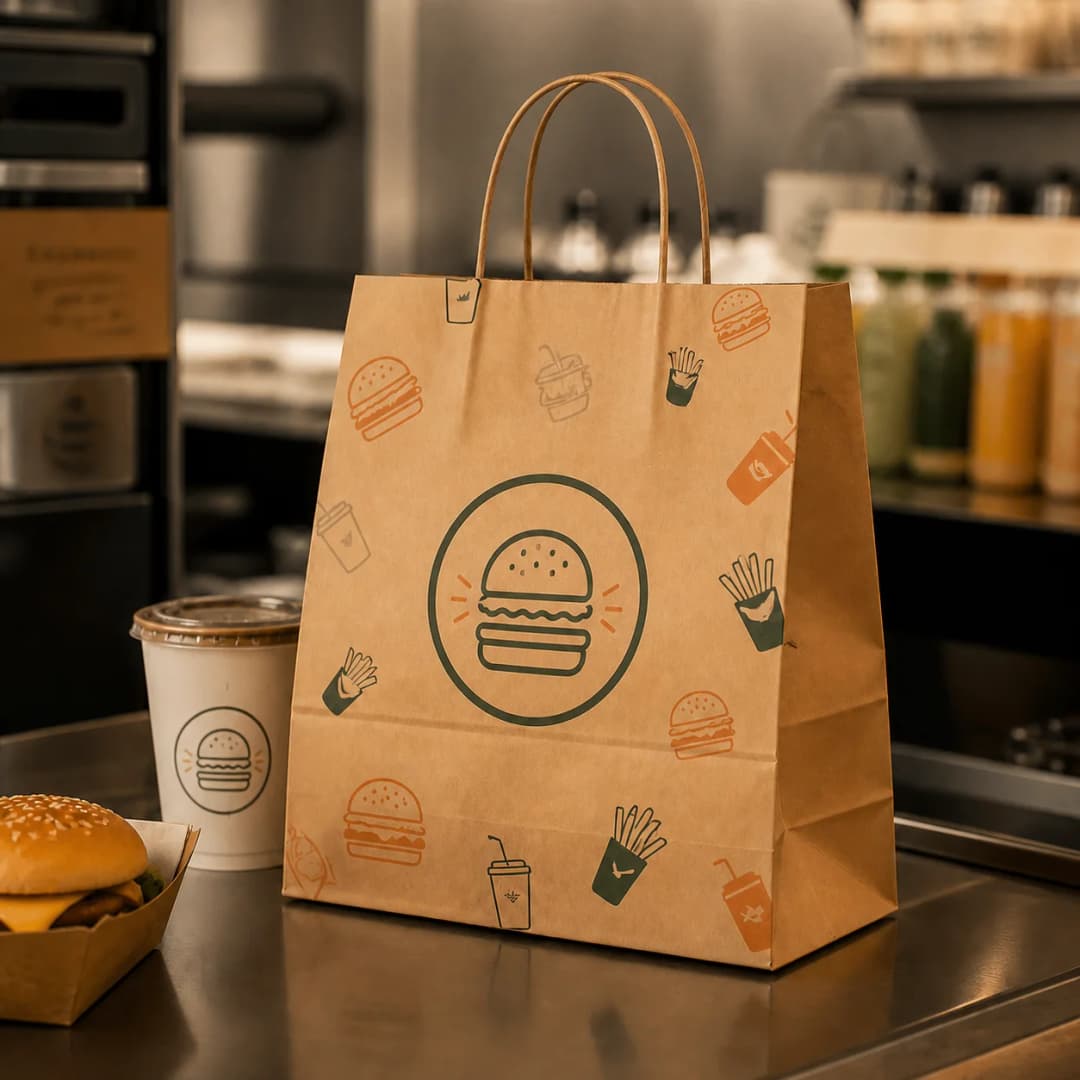
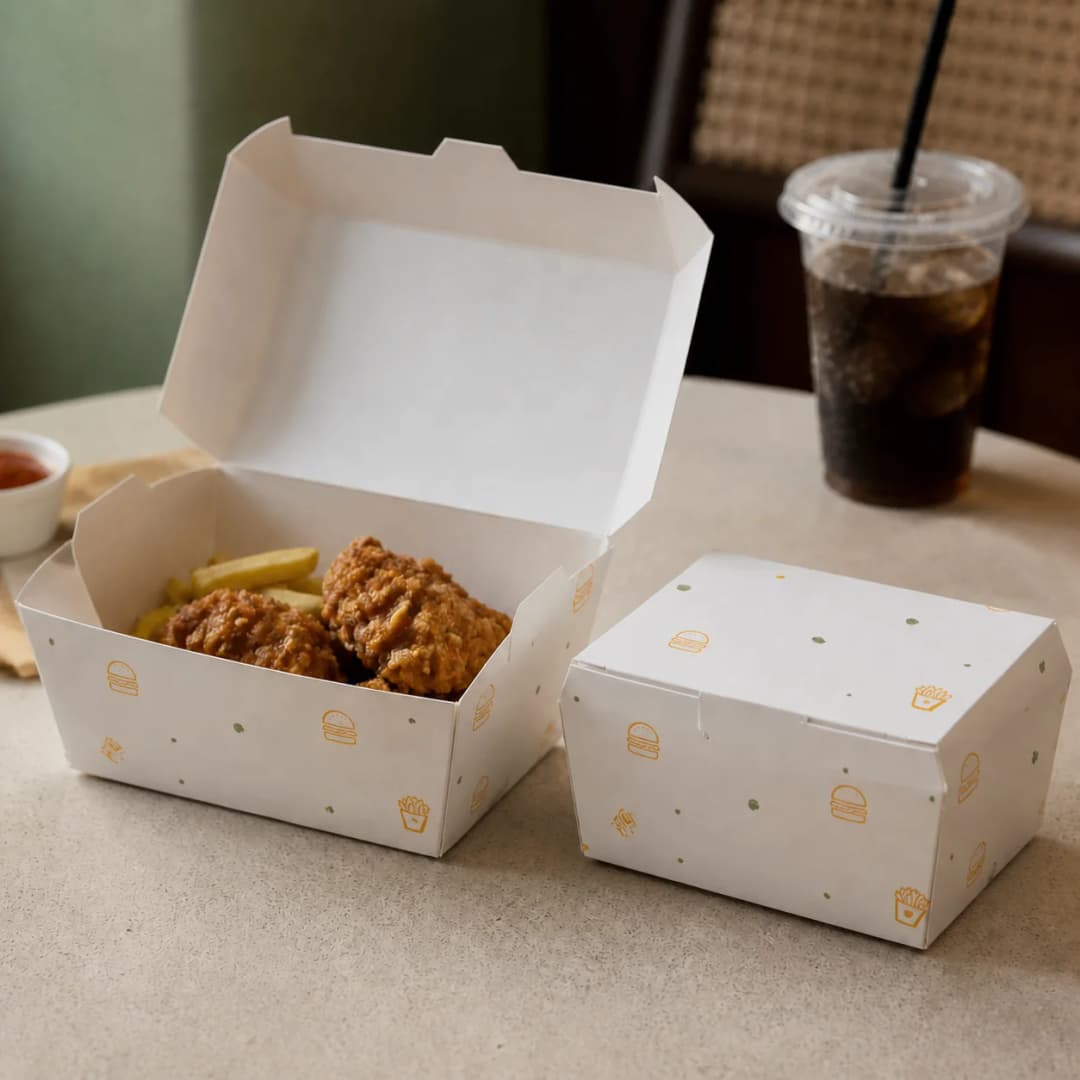
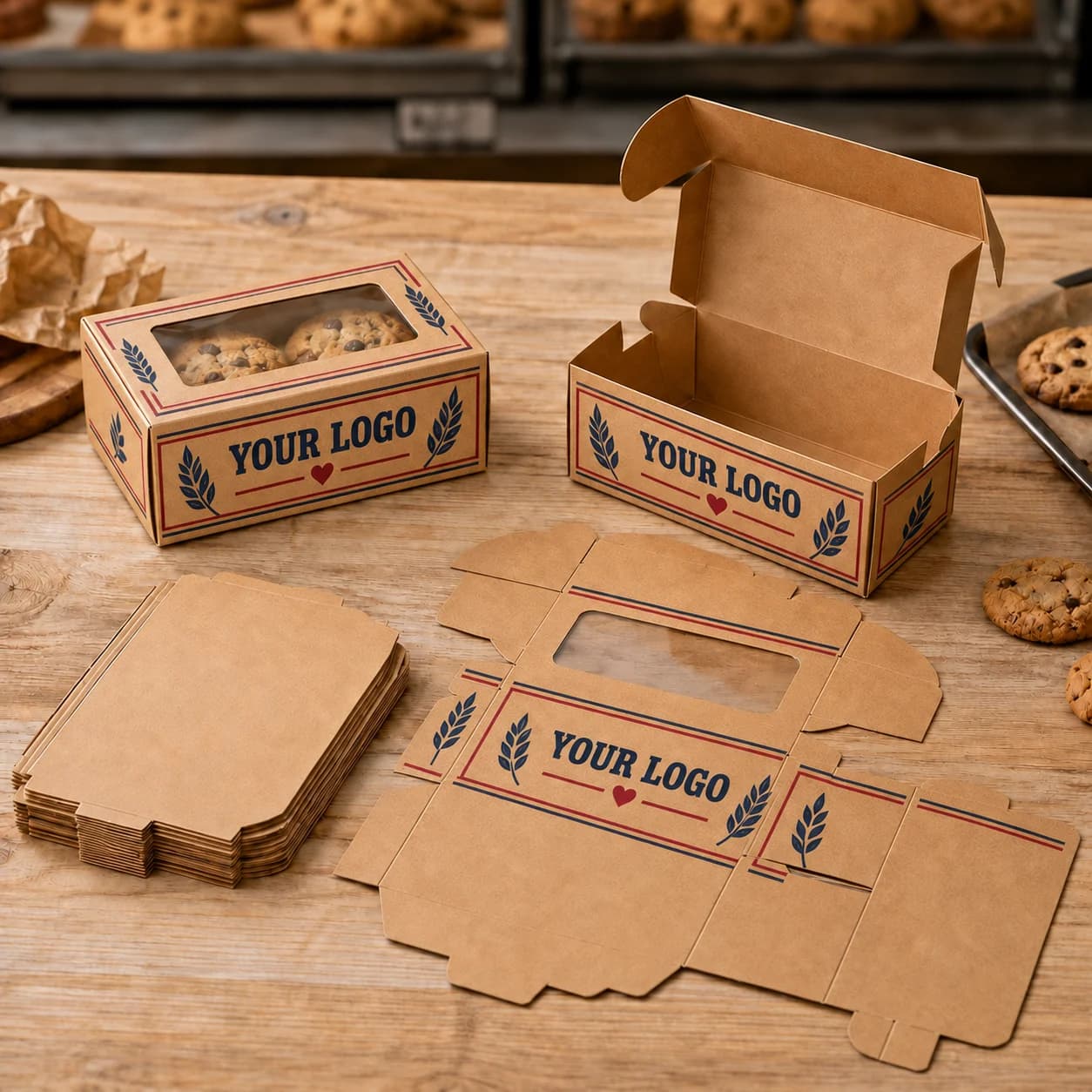
Choose the route around what must be visible, the food arrangement and the way the package is handled. The kraft-look boxes in the main image are custom-print illustrations; they do not define a fixed board grade, stock size, window material or tested performance.
Loading, closing and removing the product
Think through the short sequence at the bakery counter: prepare the agreed box structure, place the finished item or tray, close the lid without touching the decoration, then hand over the order. The loading route and closure should be practical with the actual product, including the board edge and any insert.
The opening experience matters too. A customer may need to lift a board, remove individual pastries or take out a tray for serving. Discuss where the hands can reach and which parts of the box open. The sample should show whether removal is possible without brushing the decoration against a wall or lid. A drawing of the closed carton cannot answer that question by itself.
For bakery staff, the supply and packing method should suit the intended routine and storage space. Folding, cutting and creasing follow the agreed structure. Window and insert options are sampled with the actual bakery product before bulk production. Xucheng coordinates the project with suitable production partners.
Show your print on the formed box
The lid, front and side panels offer different views of the brand. A logo on the front can remain visible when a window occupies the lid, while a solid lid allows a broader top-panel design. Decide which face customers see at the counter, during handover and when the box is opened.
Review the artwork on the formed box as well as on the flat layout. Folds, creases, closure areas and the window interrupt the printable space. A border or logo that looks centered on a flat blank may read differently after folding. Coordinate panel orientation, print coverage, colors and finishing with the selected structure before final artwork approval.
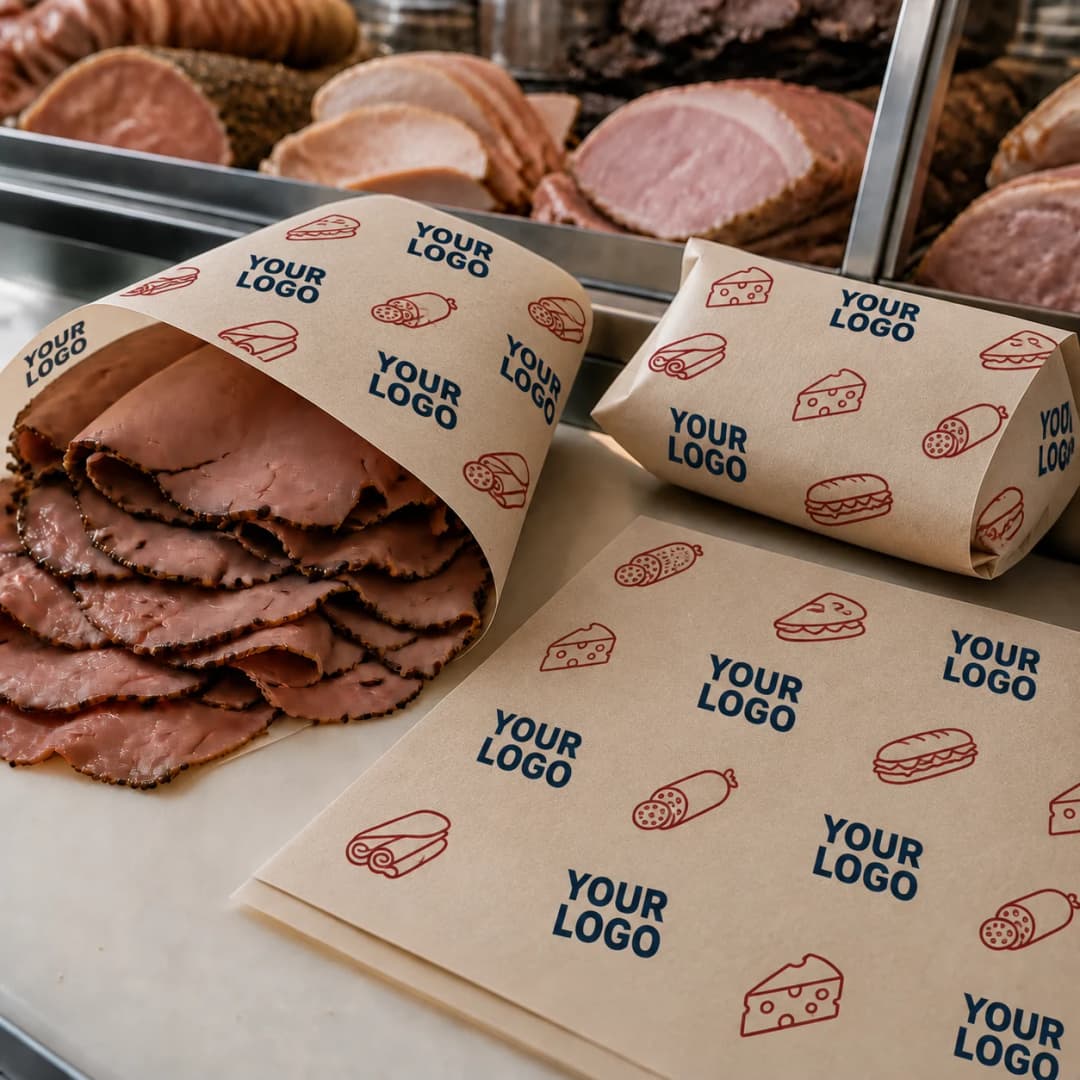
The existing illustration shows visible YOUR LOGO printing on formed bakery boxes and a flat blank. It helps explain print placement; it is not a customer-order photograph, certification record or proof of a particular food-contact construction. Your dimensions, board, window and artwork are agreed for your own project.
Carry the boxed order in a suitable outer bag
A bakery box holds and presents the food; an outer bag carries the closed package. For collection and takeaway handover, custom paper carry bags can be developed around the box footprint, bag opening, gusset, handle and packed order. Check both placing the box into the bag and removing it again without squeezing the sides or tilting the arrangement.
Where a journey raises temperature-related requirements, discuss custom insulated food bags around the closed box, packed load, closure and intended trip. An outer bag does not establish the cake box's suitability for chilled storage or delivery. Temperature performance and the proposed combined package need their own project review; no holding time or temperature range is promised here.
If the order includes another box or several bakery items, use the complete packed combination when discussing the carrier. The bag and bakery box should be sized together without treating the outer bag as an insert or as support for an unverified stacking load. The paper bag specification guide explains the separate carry-bag decisions.
Material and handling details follow the use
Once the product and arrangement are clear, the board and any window can be selected for the intended food, contact surfaces, storage and destination requirements. A cake carried on a separate board can have a different contact arrangement from pastries placed directly in a box. Include any liner or individual tray when describing the package.
Chilled use, moisture, carrying time, stacking and delivery-bag conditions are useful parts of that discussion. They are requirements to review, not performance claims attached to every bakery box. If stacking is part of the workflow, assess the proposed loaded structure and actual handling conditions rather than assuming that a similar-looking carton can support the order.
Material documents and any required checks must relate to the agreed construction and destination. The appearance of kraft-colored board or a clear window does not establish a material grade, barrier property, certification or disposal claim. Discuss any specific material or documentation requirement with Lynn alongside the proposed box construction.
Details that help Lynn prepare a quotation
You can start the conversation first and build the specification together. As the project develops, these six topics make the proposed boxes and quotation easier to compare:
- Product dimensions: The maximum finished width, depth and height, including decoration, plus the baseboard or tray where used. Distinguish product measurements from the proposed usable inside space.
- Product arrangement: One cake, pastry count, cupcake grid or mixed selection. Include which combinations the box and any insert need to accommodate.
- Window or solid lid: What should remain visible, the preferred lid presentation and whether an insert or divider is required.
- Handling: Chilled use, carrying time, stacking and delivery-bag conditions. Explain the intended routine so the proposed construction can be reviewed for it.
- Brand presentation: Available artwork, colors, print coverage and finishing preferences. Artwork can follow the initial discussion; it is not a condition for contacting Lynn.
- Order and market: Quantity, destination, packing method and required material documents when known. These help define the project quotation rather than a universal catalogue price.
The current commercial guide is From 1,000 pcs. Final MOQ depends on dimensions, structure, window or insert, board, printing and packing. It is a project guide, not a claim that every combination is available at the same quantity or price.
Samples before the production decision
A physical sample brings together the structure, finished product, insert and print placement. It can help you review loading, lid clearance, closing, removal and the relationship with an outer carry bag. A visual artwork proof serves a different purpose: it shows the design and panel layout, while fit and handling need the proposed physical package.
Available non-custom samples can be free, with courier costs paid by the buyer. Custom samples are charged, and the buyer pays courier costs; the custom sample fee is fully credited against a formal order. Availability and the sample arrangement are discussed for the project.
The agreed structure controls cutting and creasing, and window and insert options are sampled with the actual bakery product before bulk production. Final production decisions follow confirmation of the structure, materials, artwork and packing. You do not need to complete this technical review before asking Lynn about your idea.
Cake and pastry box FAQs
Should I choose a windowed or solid box?
A window improves product visibility; a solid lid offers an uninterrupted print area and simpler material construction. Choose around display, protection and destination requirements.
How much clearance should the cake box have?
Allow enough room for decoration and safe loading without excessive movement. Provide the maximum finished product dimensions and test the sample with the real cake or pastry tray.
What is the current MOQ guide?
The current guide is from 1,000 pieces. Final MOQ depends on dimensions, structure, window or insert, board, printing and packing.
Can inserts and dividers be customized?
Yes, subject to structure and production feasibility. Send the product arrangement and dimensions so the insert can be sampled with the outer box.
Can I start without measurements or final artwork?
Yes. Tell Lynn what you sell and how the customer receives it. Photos, finished-product measurements, quantity and artwork can follow as the project develops; none is required to make first contact.
Talk with Lynn about your bakery range
Discuss a whole cake, a pastry selection or a seasonal range through Chat on WhatsApp or choose an email option. Email Lynn at lynn@aurovopack.com using the visible email choices and copy option on this page. No website fields are required for either direct route. You can also leave a brief web message as a backup.