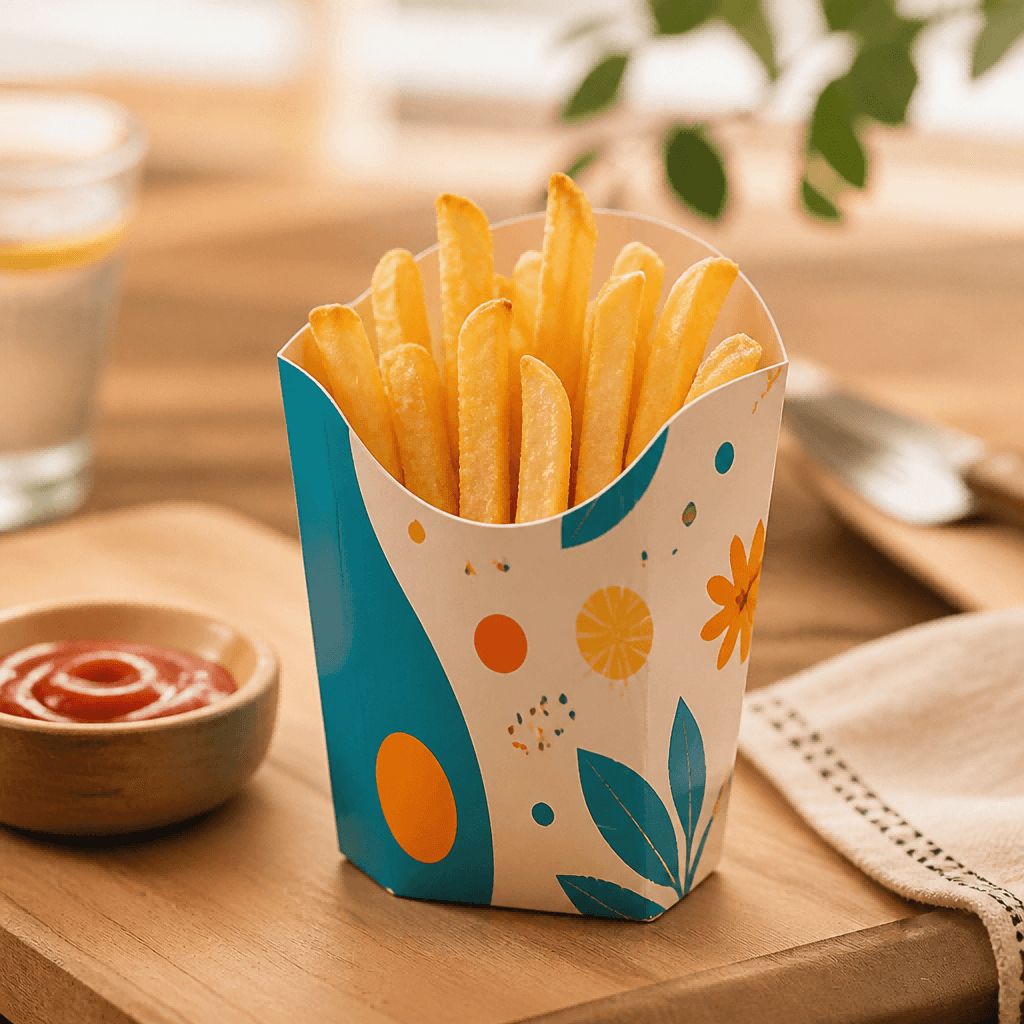
A printed carton for fries served ready to eat
An open-top French fry carton puts the portion within easy reach and gives your counter order a visible printed face. It can serve fries and fried sides at fast-food counters, food trucks, concessions and events, or sit alongside a burger in a takeaway meal. Xucheng Packaging coordinates the carton dimensions, formed profile, supply format, artwork and packing around the food and your service routine.
Choose the carton for the way the portion is handed over. A low front gives access to the fries; a higher rear panel provides another area for the print and the loaded presentation. The base and opening need to accommodate the cooked portion without relying on the name "small", "medium" or "large". Dimensions and prices are confirmed for your project rather than selected from fixed stock sizes.
You can start with the product you serve and the look you want. Chat with Lynn on WhatsApp, or choose an email option. A finished specification, artwork file or quantity is not required for the first conversation.
Choose the format for the serving occasion
Open-top upright cartons
An upright carton keeps the portion together while leaving the top open for eating. It suits a fries side handed across the counter or presented with another item on a serving tray. The front cutaway, side walls, rear panel and usable base form one profile: changing one panel can change how the portion looks and how comfortably the customer holds it.
The retained image shows fries in a printed upright carton with a curved front and higher rear. It is an illustration of the format and artwork placement, not a customer order, a fixed portion size or proof of a particular board or coating.
Folded scoop-style cartons
A flat-packed scoop-style route can be reviewed where storage and opening at the counter are part of the decision. Staff need to separate a blank, open it, secure the intended bottom and fill it without the structure getting in the way. Confirm the proposed folding and locking arrangement with a formed sample; an unused flat blank alone does not show the usable capacity or handling.
The supplied format belongs in the quotation. A carton that saves storage space may require an extra opening action during service. Compare that action with the actual counter routine before selecting the pack arrangement.
A closed pack for a different journey
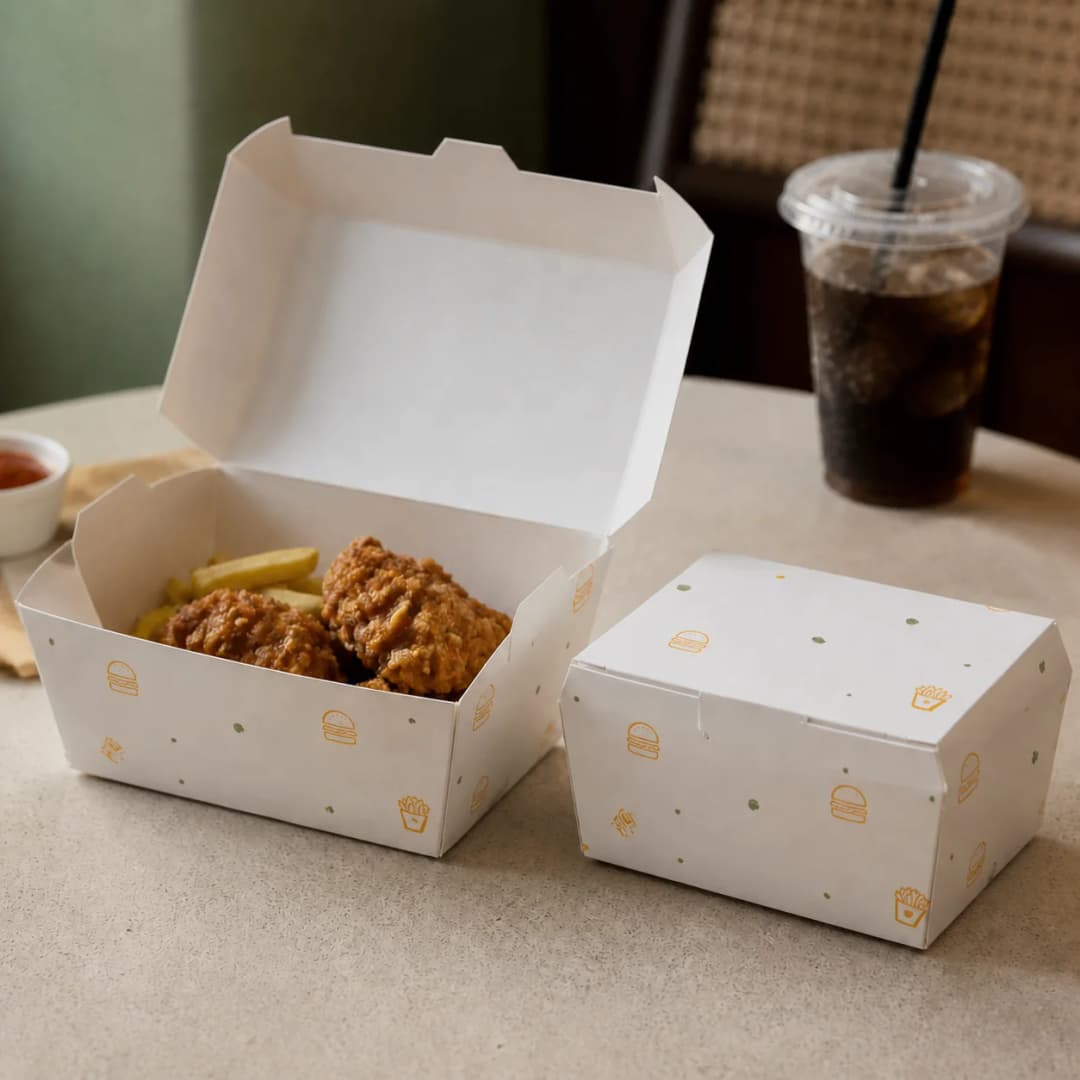
An open fry carton leaves food accessible and visible. When an order needs a closure or more containment during transport, review takeaway food boxes as a separate route. An outer carrying bag does not turn an open carton into a sealed pack. Choose around the complete meal and intended journey, including how the portion is carried, placed down and opened for eating.
Fit the cooked portion, not just its weight
Two portions with the same weight can occupy different space. Long fries, short cuts and other fried sides sit differently; the way staff scoop and fill also changes the height and distribution. A nominal volume does not tell you whether the normal portion sits below the rear edge, crowds the opening or hides the intended artwork.
Use the lightest and heaviest normal cooked fills when comparing a proposed carton. Look at the usable base, opening width and front and rear heights together. The smaller portion should still look intentional, while the larger portion needs practical access and support. If different menu portions need different cartons, retain each formed profile as its own project specification; do not assume that scaling one drawing gives the same result.
A current carton, loaded photo or approximate dimensions can help the discussion when available. The finished size should refer to the formed carton, with the front and rear profile identified. A flat dieline is useful for development, but it does not replace checking the erected sample with the food.
Put the custom print where customers will see it
The front face is often the first view at handover. A logo or main graphic can sit there, with colors or a repeat pattern continuing around the sides. A taller rear panel may remain visible behind the fries, but the food and the customer's grip can cover parts of the design. Plan the artwork on the filled carton as well as on the flat drawing.
Fold lines, cutaways and bottom panels divide the printable area. Keep essential wording and the main logo readable across the intended viewing direction, and review how the design joins at panel edges. A design that looks centered on a flat blank may appear low or partly hidden once the carton is opened and filled.
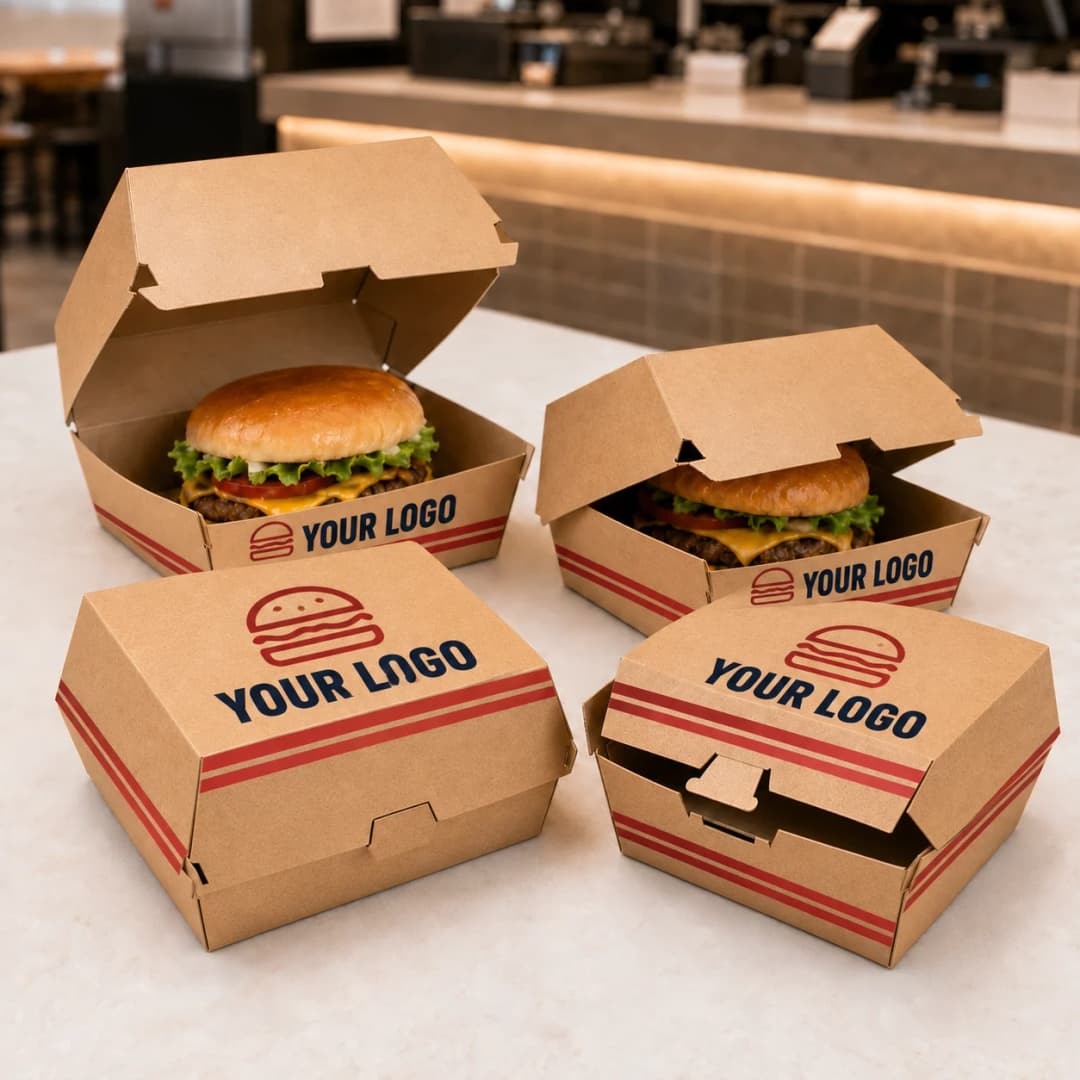
For a meal sold with a burger, custom burger boxes or burger wrapping paper can carry related artwork. Matching colors can help the order look consistent without requiring every component to use the same construction or print layout. Packaging stickers and labels can identify or brand an outer bag or closed box; they are not a lid for an open fries carton, and adhesion is reviewed for the actual surface.
Consider the complete tray or takeaway order
At the counter, cartons need a practical place to be stored, opened and filled. Check whether the proposed supply format fits the working space and how staff replenish it during a busy period. The front profile should allow filling and eating while the formed base remains workable for setting the portion down.
For a combination meal, consider the fry carton beside the burger box, drink and sauce container. A serving tray may offer space that a narrow takeaway bag does not. Review the loaded arrangement so the carton is not squeezed by a neighboring pack or placed where another item can tip into it.
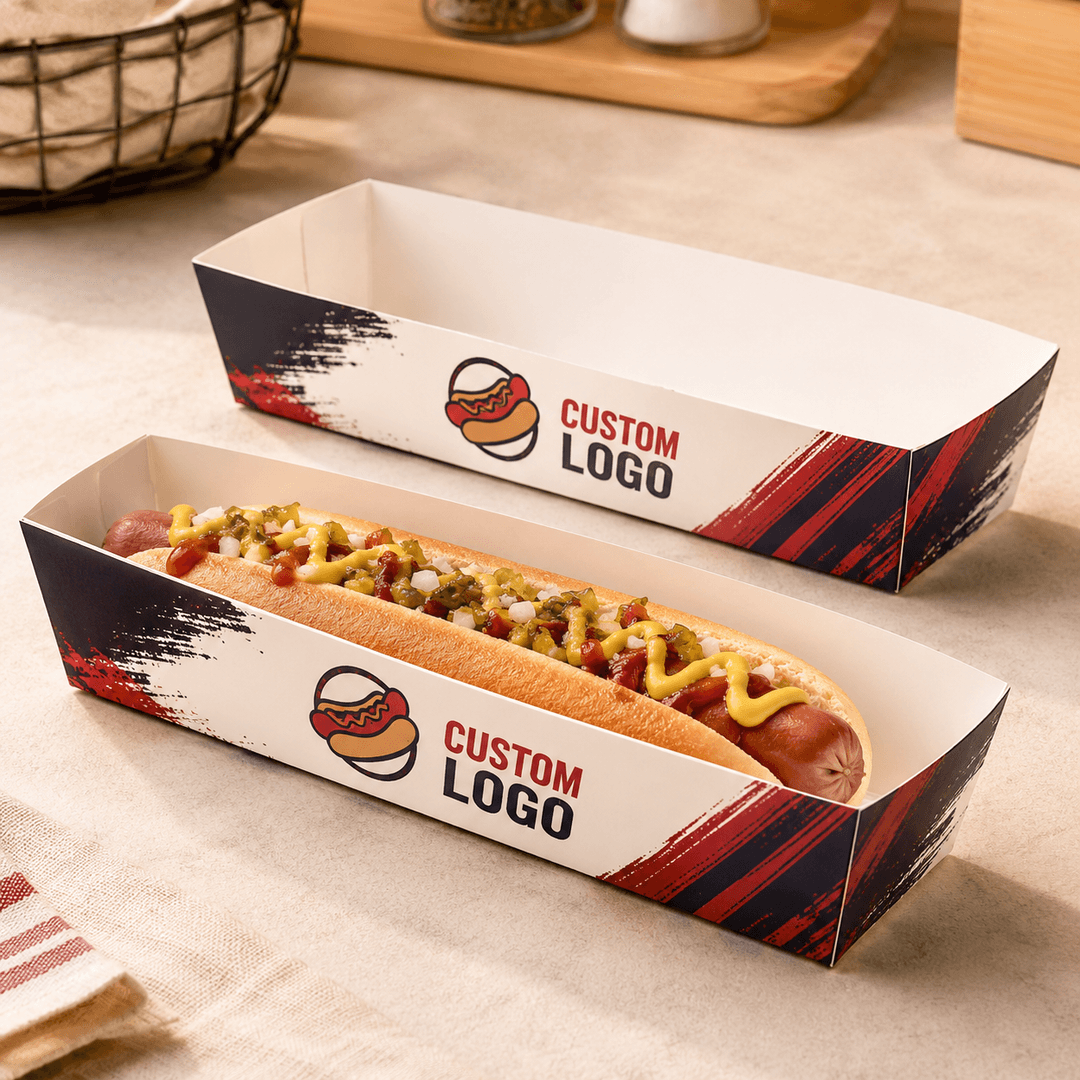
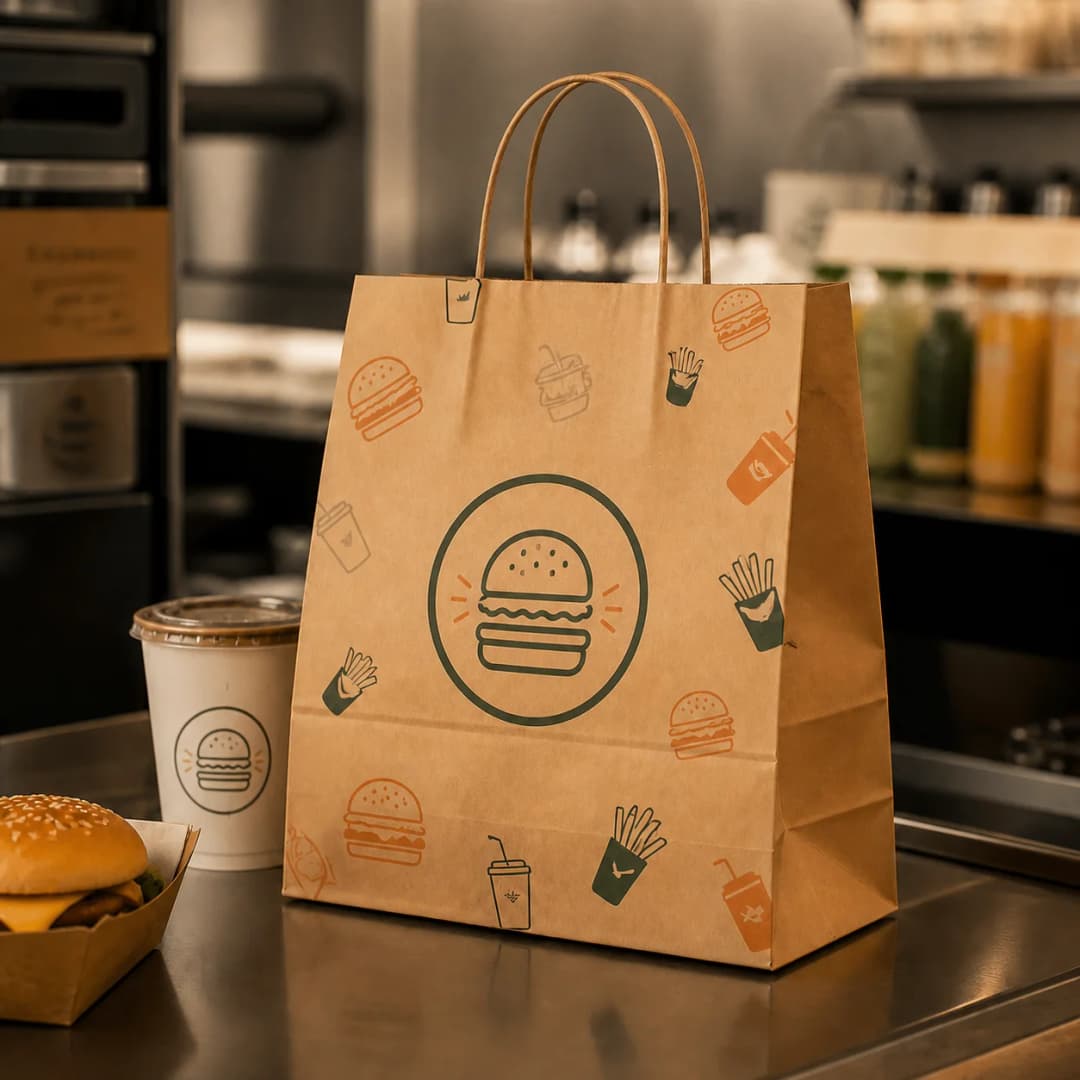
Use paper bags when the order needs an outer carrying format, with dimensions and the carrying arrangement reviewed for the complete load. For a separate hot dog item, hot dog trays have a different long, narrow food fit. These are optional companion products for an actual menu, not a required packaging bundle.
Select board and food-side requirements for the actual fries
Paperboard and any grease or moisture barrier are project choices. The food temperature, oil, moisture, contact time and expected appearance help determine which route should be evaluated. A printed carton or a kraft-colored surface does not establish grease resistance, leak resistance or food-contact compliance.
An open top does not guarantee crispness or heat retention. Evaluate the proposed carton with the normal cooked food and holding or carrying period. If oil marks, softening or an uncomfortable grip occur, describe when and where they appear so the material and structure can be reviewed separately.
Any required food-contact documents must cover the selected board, treatment, print, intended use and destination market. Oven, microwave, freezer or other special-use suitability needs its own confirmation. Do not infer it from the product name or the serving illustration.
Quotation and samples as the project develops
The quotation brings together formed dimensions, panel profile, board and barrier route, print colors and coverage, supply format, quantity, inner packing and destination. MOQ is confirmed per project. There is no single minimum or unit price covering every structure and specification.
After the initial conversation, useful details can include:
- Food and portion: normal cooked fills, cut or side-food type, temperature and intended contact time.
- Carton reference: a current pack, formed dimensions, photos or a dieline if one already exists.
- Service: how cartons are stored, opened, filled and combined with the rest of the order.
- Print and order: available artwork, intended viewing direction, estimated quantity, packing and delivery market.
None of these is a condition for asking Lynn about the product. We can begin with the application and work toward the quotation details in the conversation.
Once a profile is selected, cutting and creasing follow the agreed panels, fold lines and supplied format. Xucheng coordinates specification, sampling and partner production; a general equipment photo does not show that your carton has been produced or tested. A formed sample then helps check opening, bottom closure, real-food fit, carrying and print visibility. Keep the approved dimensions, material reference, artwork revision and packing arrangement for repeat orders.
Custom printed samples are charged, with courier costs paid by the buyer; the custom sample fee is credited in full against the formal order. Available non-custom samples can be supplied free, with courier costs paid by the buyer. The first digital mockup target is within three hours during China working hours after usable artwork arrives. A custom sample targets dispatch within seven days after structure, material and artwork are confirmed and the sampling fee is paid. Most approved custom orders target factory dispatch within 30 days after payment and final artwork or sample approval; requested testing time is additional. Confirm the project schedule with Lynn.
Common French fry carton questions
Can the carton be customized before I have a dieline?
Yes. Start with the portion, current pack or intended appearance. A dieline can be developed as the structure is agreed; it is not required for the first enquiry.
Can one carton cover several portion sizes?
It may, if the normal fills all have workable access, support and presentation. Compare each actual cooked portion in the same formed sample rather than treating a weight range as proof of fit.
Is the illustrated carton a fixed stocked product?
No. It shows an open-top printed format. The final dimensions, artwork, board, supplied arrangement and quotation are confirmed for your project.
Will the carton keep fries crisp during delivery?
That result is not guaranteed by an open top or a material name. The food, holding time and complete carrying pack need evaluation together. If closure is important, discuss a closed takeaway structure separately.
Discuss your fries packaging with Lynn
Chat on WhatsApp, choose an email option, or leave a brief web message as a backup. Tell Lynn what you serve or the presentation you want; the remaining details can follow.