Custom printed hot dog trays present the complete serving in an open paperboard pack. Xucheng coordinates formed dimensions, wall and end profiles, board appearance, artwork and packing for food trucks, concessions, fast-service counters and takeaway meals. Develop the tray around the bun, sausage and normal toppings, together with the way staff load it and customers carry it.
Begin with your menu, a current pack or the printed presentation you want. Chat on WhatsApp or choose an email option. You can start without a finished dieline, complete artwork, exact dimensions or a confirmed order quantity; those details can develop with Lynn.
An open tray for visible counter service
An open hot dog tray supports the food from below and leaves the serving accessible from above. It suits a service brief where staff load the finished hot dog and hand it over for direct eating, or place the loaded tray into a larger order. The bun and toppings stay visible, so the pack's profile and printed outer walls form part of the presentation.
For a concession or event counter, consider the movement from preparation to handover. For a food truck, consider the available packing space and the customer's first grip on the tray. These are ways to define the structure you need; a finished sample connects the proposed format to your own service.
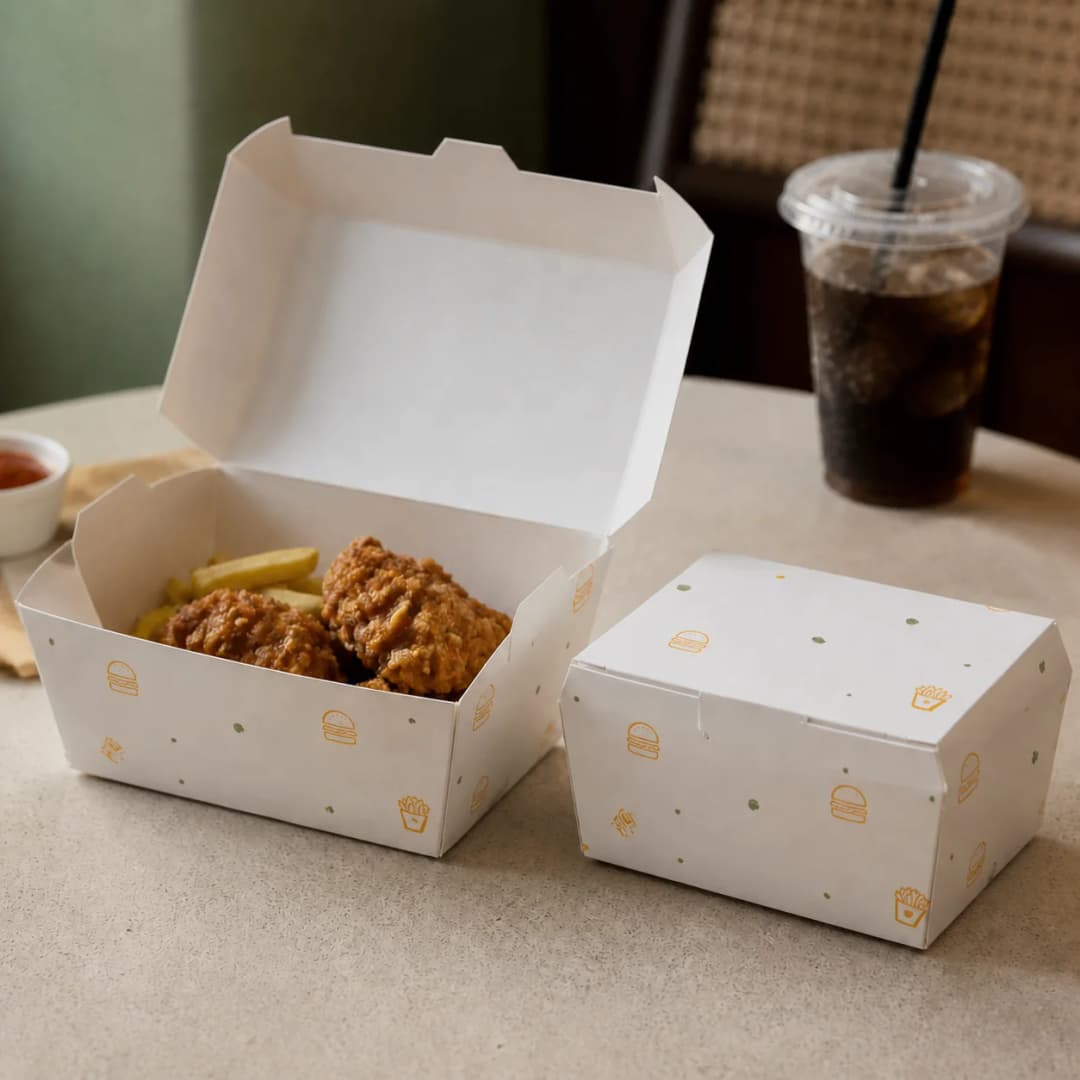
This product is an open serving tray. It has no hinged lid and should not be treated as a fully enclosed hot dog box. If your order requires a closing pack, discuss that separate structure with Lynn. The takeaway food box family helps identify the existing open and closed product routes.
Fit the bun, sausage and toppings together
Bun length is a useful starting point, but it does not establish the whole fit. A longer sausage can extend beyond the bun, while toppings can add width and height. Develop the tray around the complete portion that customers receive, including the usual finishing ingredients.
The usable base should accommodate the bun's loaded shape. Side walls should be reviewed against that width and the way the food is placed into the tray. A narrow base with tall walls and a wider base with lower walls can present a similar food length differently; the formed sample shows whether the proposed space suits your serving.
Leave space for the intended topping arrangement
Onions, relish or other toppings change the outside profile of the finished hot dog. Consider where staff add them and whether the wall or end profile interferes with that step. The tray should be reviewed with the normal topping arrangement, rather than only with an empty bun.
If one printed format is intended for several menu choices, compare the largest and smallest completed servings. A shared sausage length does not mean that each bun and topping combination occupies the same width or height. An existing loaded photo can help the discussion, but providing one is optional at first contact.
Choose the wall and end profile around access
Side-wall height affects the visible food, the printable area and where customers grip the pack. A lower profile leaves more of the serving exposed; a higher profile changes the space around the bun and toppings. Select the profile together with usable base width and the intended handling route.
Open ends and supported end-wall profiles are project decisions. They change the access around the bun and the room available at its ends. End clearance should be reviewed with the complete hot dog, including any sausage overhang, rather than assumed from the outside tray length.
Neither a taller wall nor an end panel makes an open tray a sealed container. The aim is to coordinate the serving, access and formed shape. Loaded handling and the food-side requirements are reviewed with the proposed sample before the final route is agreed.
See the formed tray before judging usable space
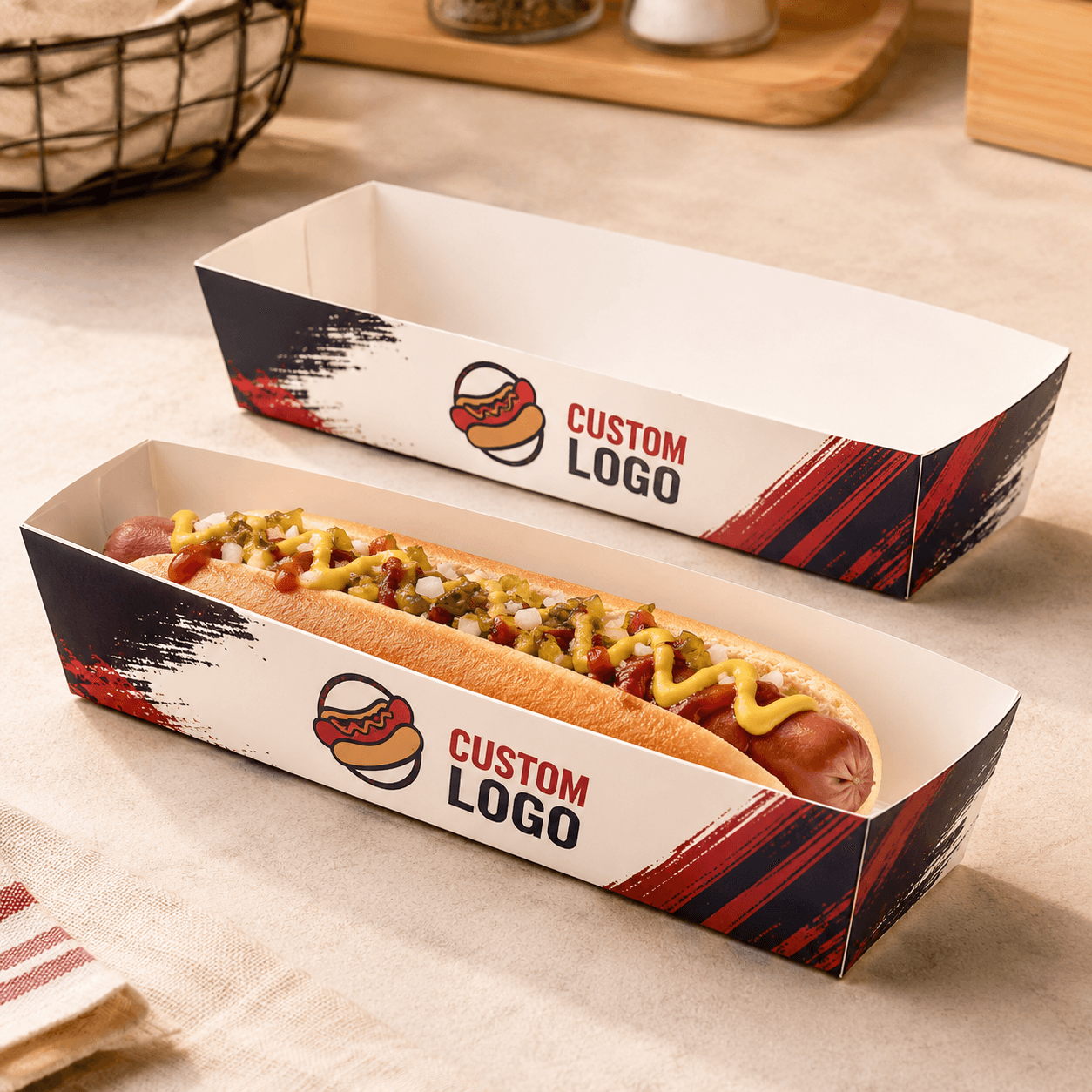
The illustration below shows an empty and a loaded printed kraft-look tray. It makes the base, side walls and end treatment easier to discuss. The shape and print shown are examples for planning, with final dimensions, board and artwork confirmed per project.
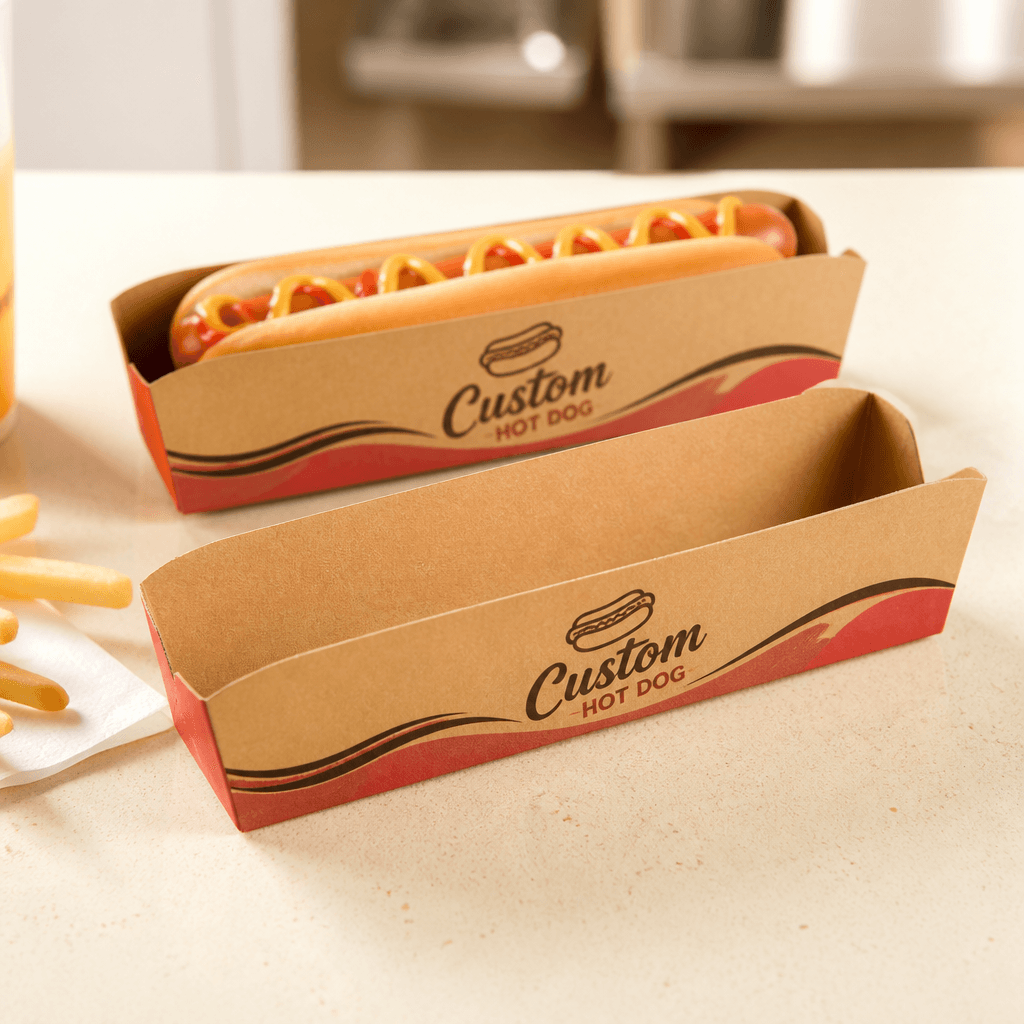
A formed sample gives a more useful fit reference than a flat blank or an outside measurement alone. Folded corners and wall angles can change the usable space. Review how the bun sits in the base, how staff load it, whether the toppings have appropriate clearance and how the loaded tray is held.
If you have a current tray, it can provide a starting direction for the structure and print. Xucheng can review that reference while developing the proposed dimensions. The illustration is not a measured catalogue specification, customer order or evidence of a carrying load.
Make the outer print work with the loaded serving
Custom artwork can identify your restaurant, food brand or distributor range on the outer side and end panels. Decide which surface customers see at handover and which remains visible while they hold the tray. The long side often offers a different viewing direction from an end panel; review both on the formed shape.
Place key branding where the artwork will remain legible around the intended grip, folds and corners. A design viewed flat can change when the walls are erected and the food is loaded. The available area depends on the selected wall and end profile, so approve the layout against the agreed construction.
The main illustration shows red and black CUSTOM LOGO artwork on printed open trays, while the supporting illustration shows a different printed kraft-look example. They demonstrate outer-panel presentation. Neither establishes a fixed finish, ink system, board grade or approved customer design.
White or kraft appearance and print placement
White and kraft appearances can be discussed with the board route and print colors. A lighter background and a brown background give different contexts for the artwork. Review the proposed color presentation and coverage on the selected board rather than assuming that the same design will appear identical on both.
Inside and outside print positions can be reviewed, with the final route depending on the board, food-contact side, artwork and converting method. Food-side printing is a separate confirmation from an outer logo. Artwork approval does not by itself establish the destination's food-contact documentation.
Pair the hot dog tray with the rest of the order
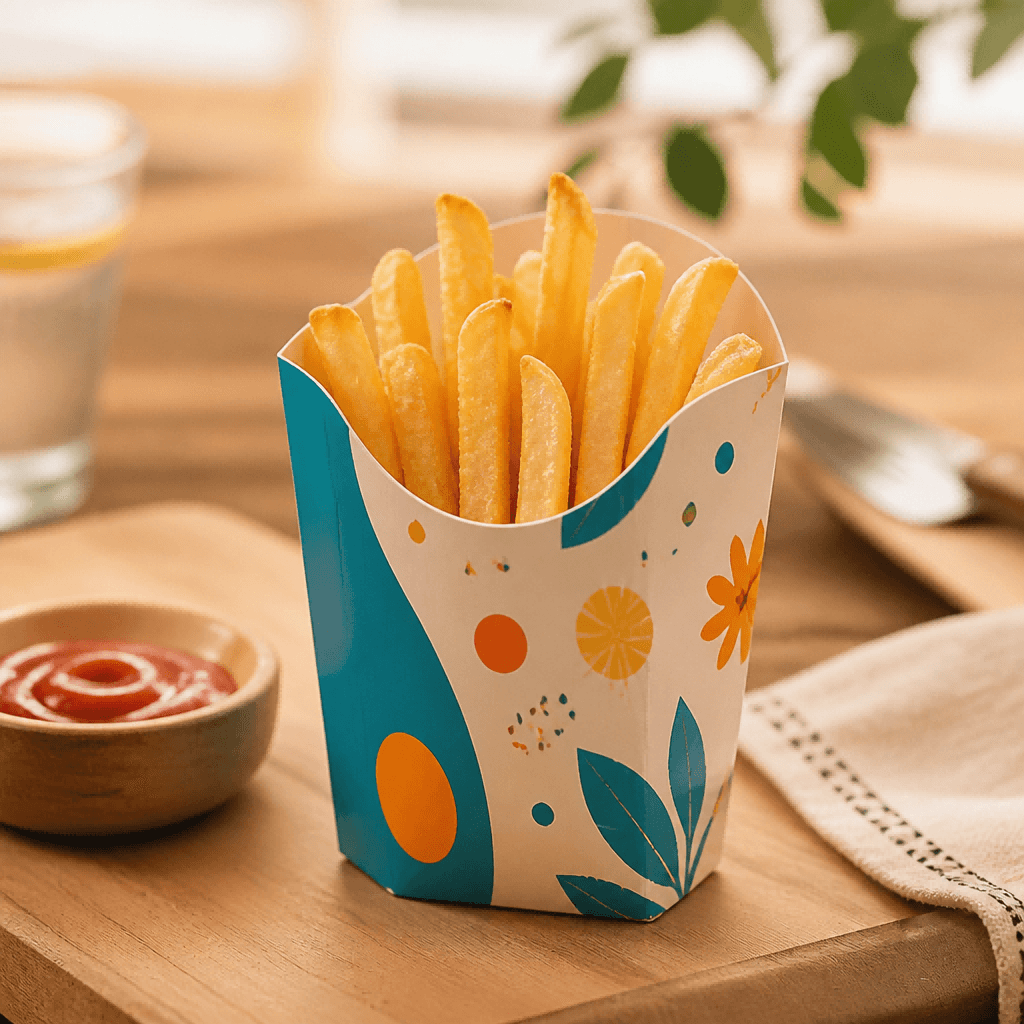
When fries are served separately, custom French fry cartons offer an open carton route for that component. Coordinate their printed appearance with the hot dog tray while developing each pack around its own food. A fry carton is not a size specification for a hot dog tray, and a shared print design does not require a shared structure.
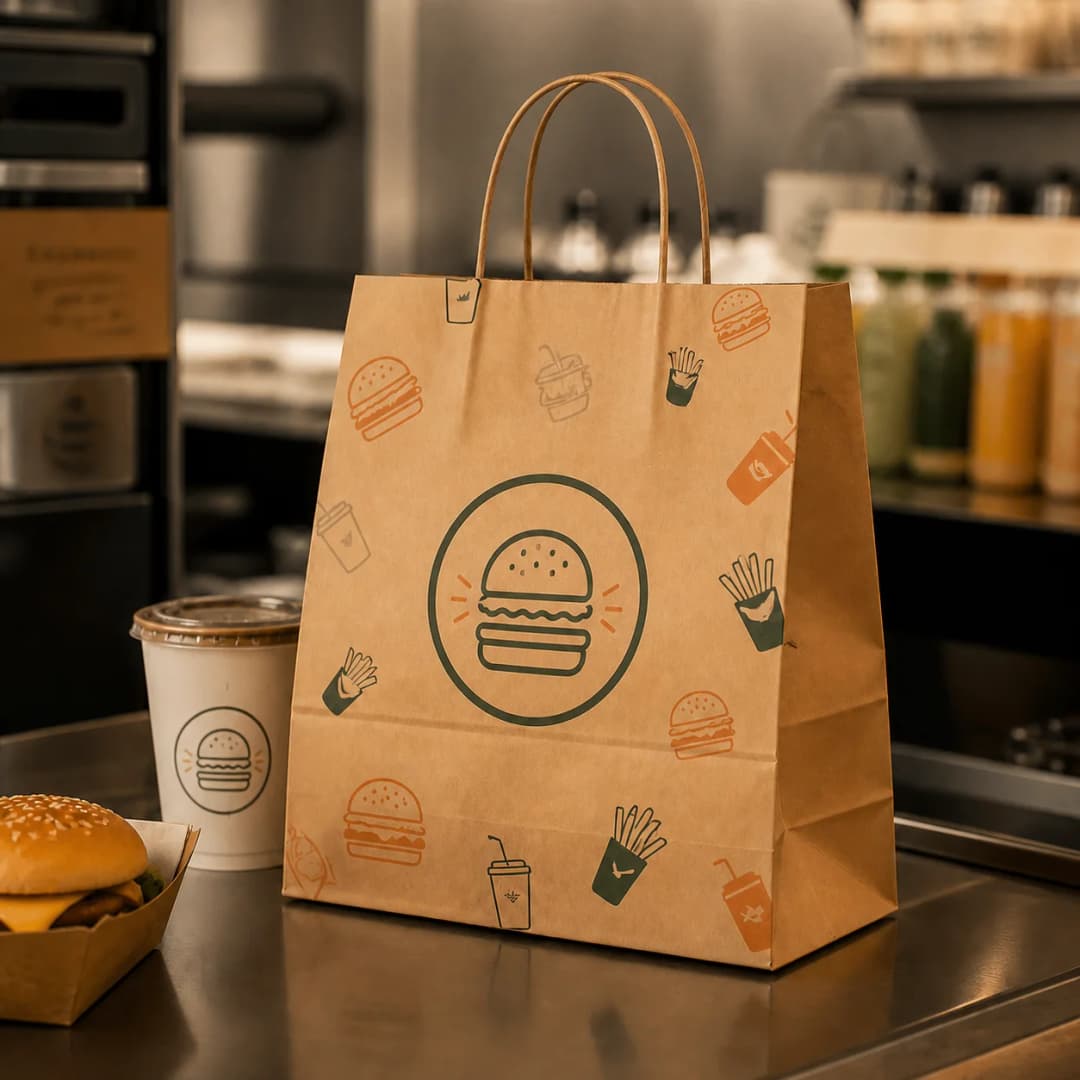
Paper bags can carry a loaded tray with separately packed sides or other parts of the takeaway order. Compare the formed tray footprint with the usable bag base and opening. Consider the height of the completed hot dog and where other items sit, so the bag's proposed shape is reviewed around the actual arrangement.
Putting an open tray into an outer bag does not convert it into an enclosed food box. If transport, topping coverage or the menu requires a different containment route, discuss that requirement before choosing the combination. The food container and whole-order carrier should each have a clear role.
Plan storage, erecting and handover together
The supplied format affects how staff store and prepare the empty packaging. Discuss flat-pack preferences, how the tray is erected and where loading happens in your counter workflow. These details follow the selected construction and should be reviewed alongside formed fit.
For handover, consider whether the tray goes directly to the customer, onto a serving tray or into a larger takeaway order. The proposed grip area, wall profile and end clearance can then be reviewed with the finished food. This discussion does not establish a universal stacking height, carrying load or assembly speed.
Packing quantity and case arrangement are confirmed for the order. Where a distributor is coordinating the printed range, keep formed tray dimensions, artwork version and case packing tied to the same agreed specification so repeat orders refer to the correct pack.
Review the board and food-side conditions
Paperboard and the food-side route are selected for the intended use. Heat, grease, sauce, expected food-contact time and immediate service versus transport are useful details for that review. Board appearance and a printed logo do not prove resistance to those conditions.
A formed sample can be checked with the actual hot dog and normal toppings to review the proposed pack through its intended service. Relevant material and destination documents are confirmed for the selected route. The page does not claim a universal grease barrier, heating approval, compostability certification or performance result for all trays.
Xucheng coordinates the custom project with partner production. The approved dimensions, folds, wall and end profile, print coverage and packing format guide the production route. They should remain connected throughout quotation, sample review and order confirmation.
Develop a comparable project quotation
Start with the food or packaging idea you have. For a quotation, Lynn can progressively review the complete-food size, formed tray length, usable base width, wall height and end direction. An existing pack, loaded photo or dieline can be used when available; none is a prerequisite for opening the conversation.
The board and food-side requirement, print position and coverage, estimated quantity, packing method, delivery country and required documents help define the proposed specification. If you are comparing alternatives, keep the serving and artwork brief consistent so the differences in structure, board and packing are clear.
MOQ is confirmed per project. Finished dimensions, structure, board route, printing, tooling and packing affect the practical production minimum. There is no single published price covering every custom tray specification.
Samples and final confirmation
An available plain sample can help discuss a structure or board route. A custom printed sample can develop the agreed formed pack and artwork. Available plain samples are free with courier costs paid by the buyer; custom samples are charged with courier costs paid by the buyer, and the custom sample fee is credited in full against a formal order.
Sample preparation and order timing are confirmed for the project. Review the complete hot dog, usable fit, loading, grip, print visibility and intended contact conditions with the proposed pack before approving the final route. These are development steps after the conversation has begun, not a test or questionnaire required before contacting Lynn.
Common hot dog tray questions
Can I begin before the tray dimensions are final?
Yes. Tell Lynn about the menu, serving or printed presentation you want. Existing dimensions or photos are welcome when available. The usable base, walls, end profile and artwork can develop together during the discussion.
Can one tray suit several hot dog toppings?
It may, when the completed servings fit the same formed structure and work with its loading and handling route. Compare the buns, sausage overhang and normal toppings together. A common food length alone does not confirm the same usable space.
Can the side and end panels carry different artwork?
Print placement and coverage can be coordinated with the chosen wall and end profile. Review the formed and loaded views so folds, corners and grip areas leave the intended graphics visible. Final print positions depend on the agreed construction and board route.
Is a closed hot dog box available through this tray page?
This page describes open paperboard serving trays. A hinged-lid or enclosed hot dog box is a separate structure to discuss and review with Lynn. Explain the service and containment you need so the conversation starts with the appropriate pack.
Talk with Lynn about your hot dog trays
Chat on WhatsApp, choose an email option, or leave a brief web message as a backup. Start with the serving, tray shape or printed design you have in mind; detailed specifications can follow in the conversation.