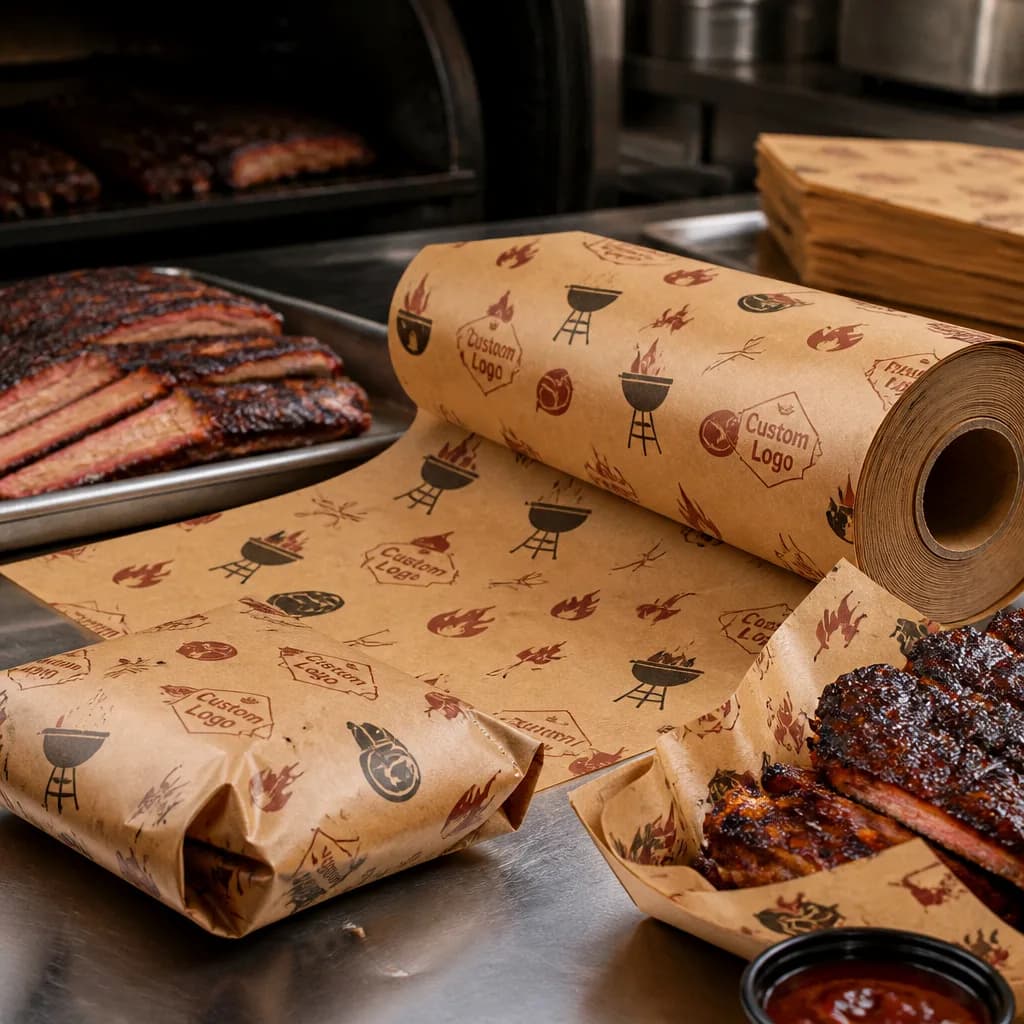
Printed paper cut to the length your counter needs
Wrap a cooked-meat portion, line a long platter or prepare paper for a takeaway order from a continuous printed web. A custom BBQ paper roll lets the service team choose the cut length instead of taking a fixed-size sheet. Xucheng Packaging coordinates roll width and length, core and outside-diameter limits, paper selection, print repeat, unwind direction and protective packing around the job at your counter.
The roll is useful when the length changes between orders while a shared width still gives suitable coverage. A small portion and a larger platter can take different lengths from the same roll. That flexibility needs room for the holder and a workable cutting action; it does not automatically mean less waste or faster service.
Tell Lynn what you want to wrap or line. You can chat on WhatsApp or choose an email option before you have dimensions, an order quantity, artwork, photos or test results. We can work through those details after the first conversation.
Where a continuous roll fits the service station
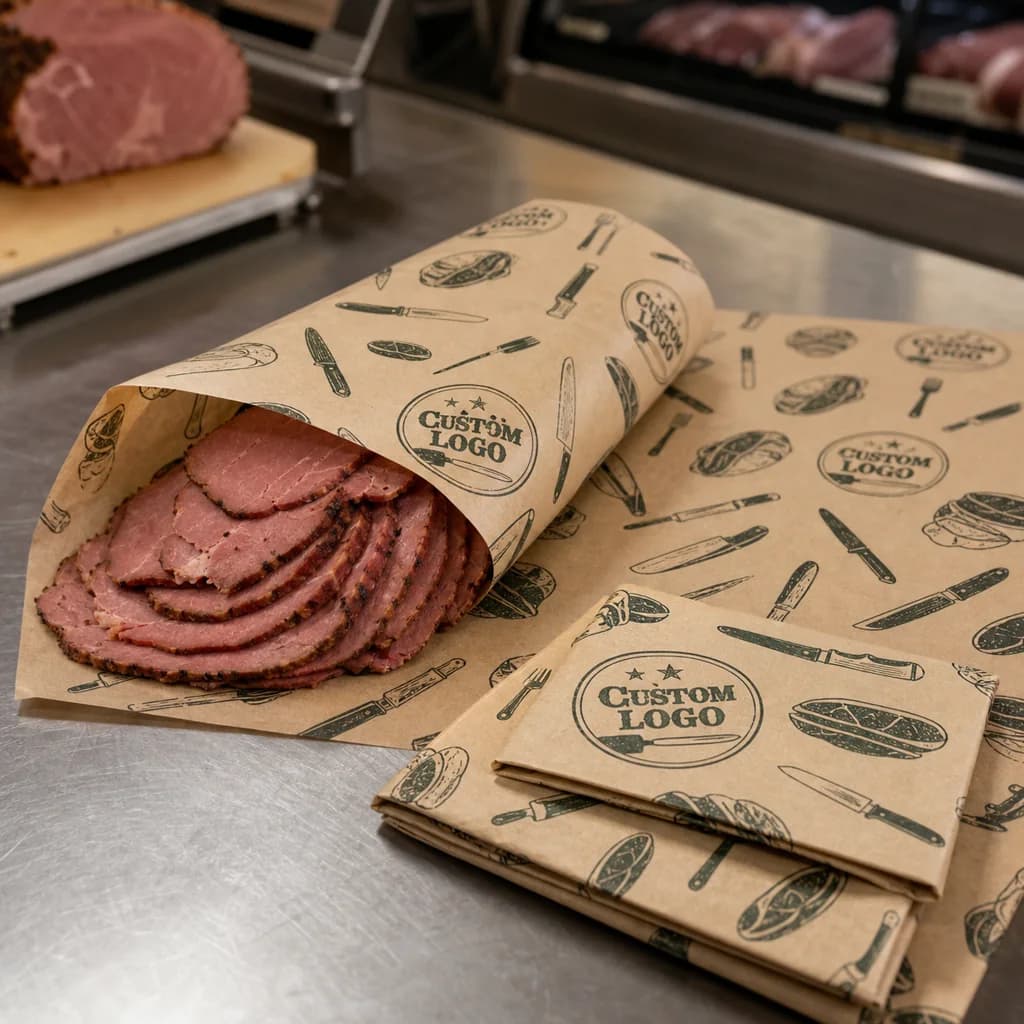
Wrap cooked-meat portions with different lengths
At a barbecue or deli counter, staff can draw out the length needed for the portion, cut it and complete the chosen wrap. The width provides coverage across the food; the cut length provides the remaining coverage and overlap. A longer piece cannot compensate for a roll that is too narrow for the normal wrapping motion.
Think about how the wrapped portion is handed over or placed inside its outer pack. Extra folds can hide the printed area or make the pack bulky. The proposed paper still needs to suit the cooked food, oil, sauce, moisture, temperature and contact time. The roll format describes supply and handling, not a guaranteed barrier performance.
Line variable trays and platters
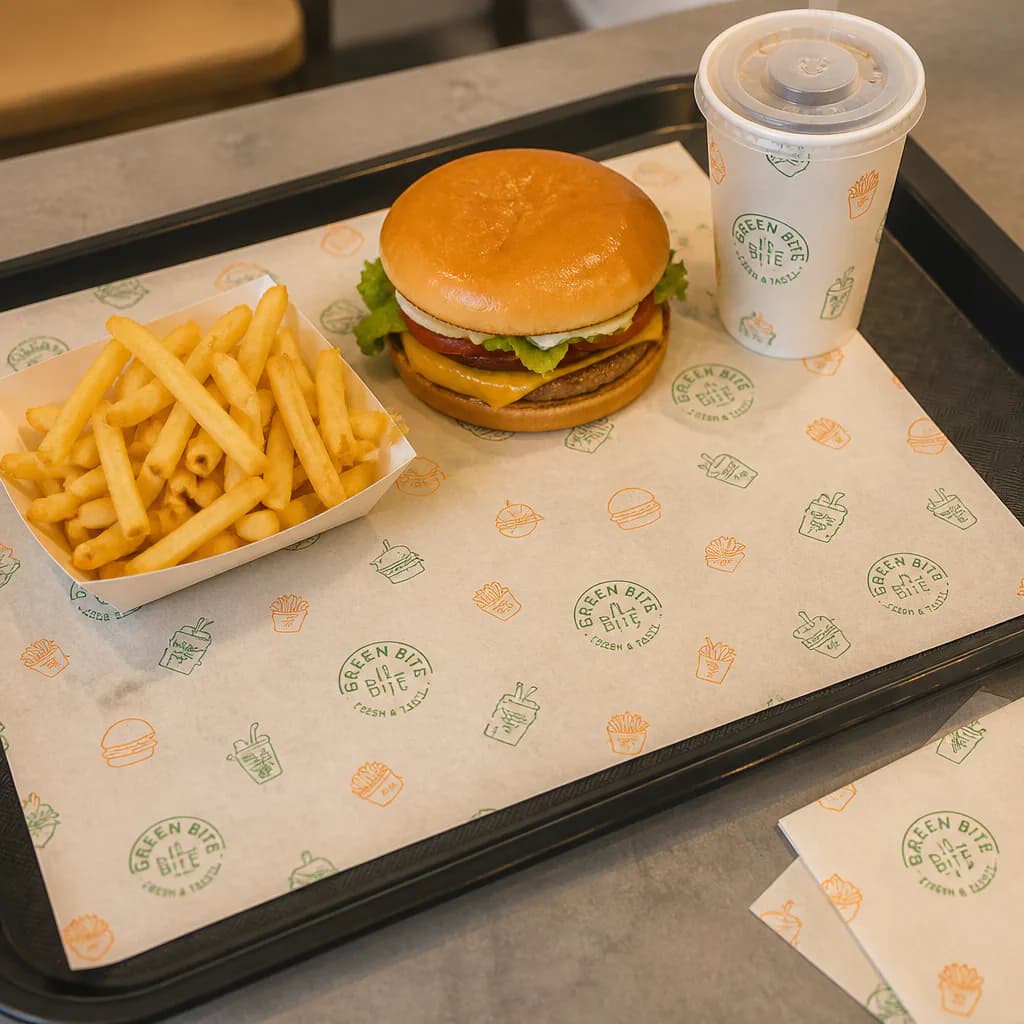
A roll can provide different liner lengths for a counter serving several platter sizes. Consider the usable base, the food footprint and the exposed paper around the food. A liner supports the presentation inside the container; it does not replace the tray or establish that the pack is leakproof.
If one fixed tray size accounts for most orders, a ready-cut liner may be easier to place consistently. See paper tray liners when the main requirement is repeatable coverage of a reusable serving tray. That is a different buying decision from keeping a roll at a station that regularly cuts different lengths.
Present branded paper at the point of handover
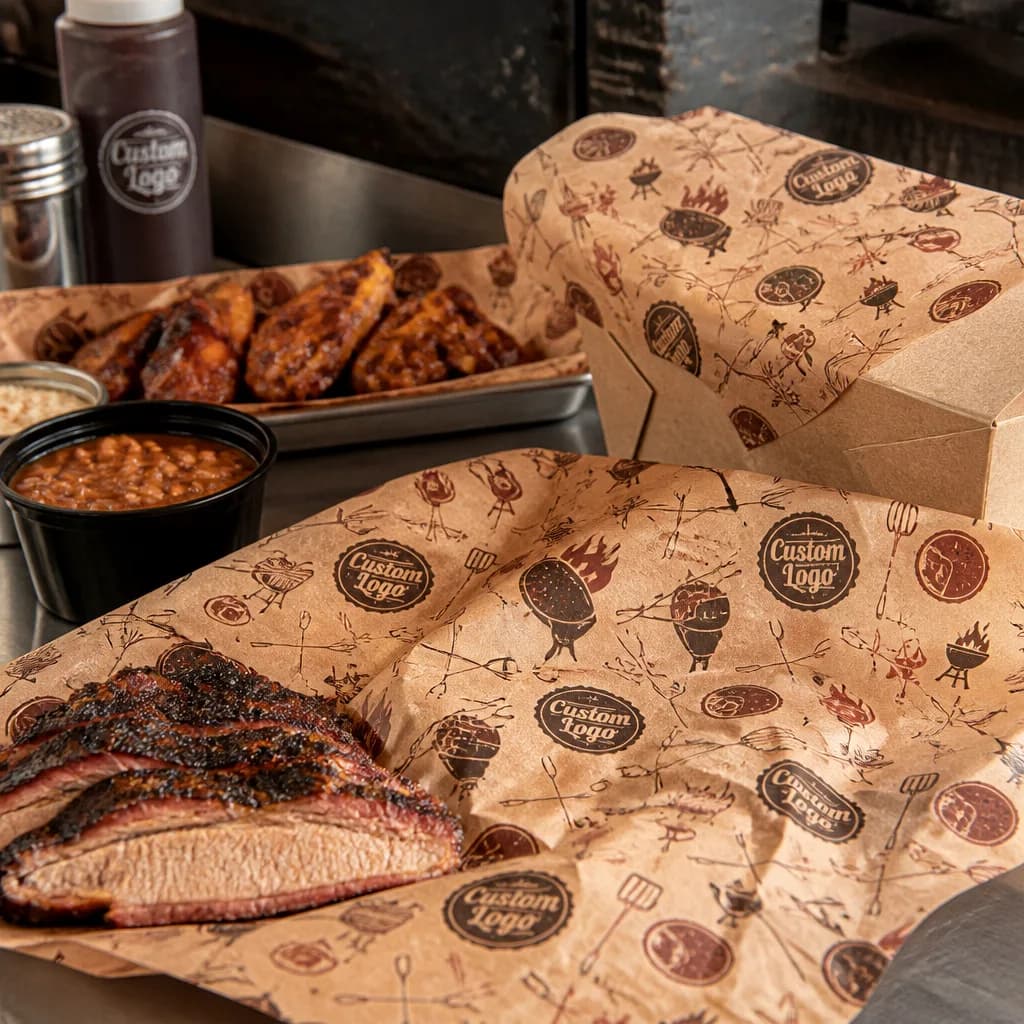
Custom print can appear across an opened platter, along an exposed liner edge or on the outer face of a completed wrap. Plan for the view the customer actually sees. A large logo in the center of a flat piece can disappear beneath food; a repeat pattern can leave several smaller brand impressions visible as coverage changes.
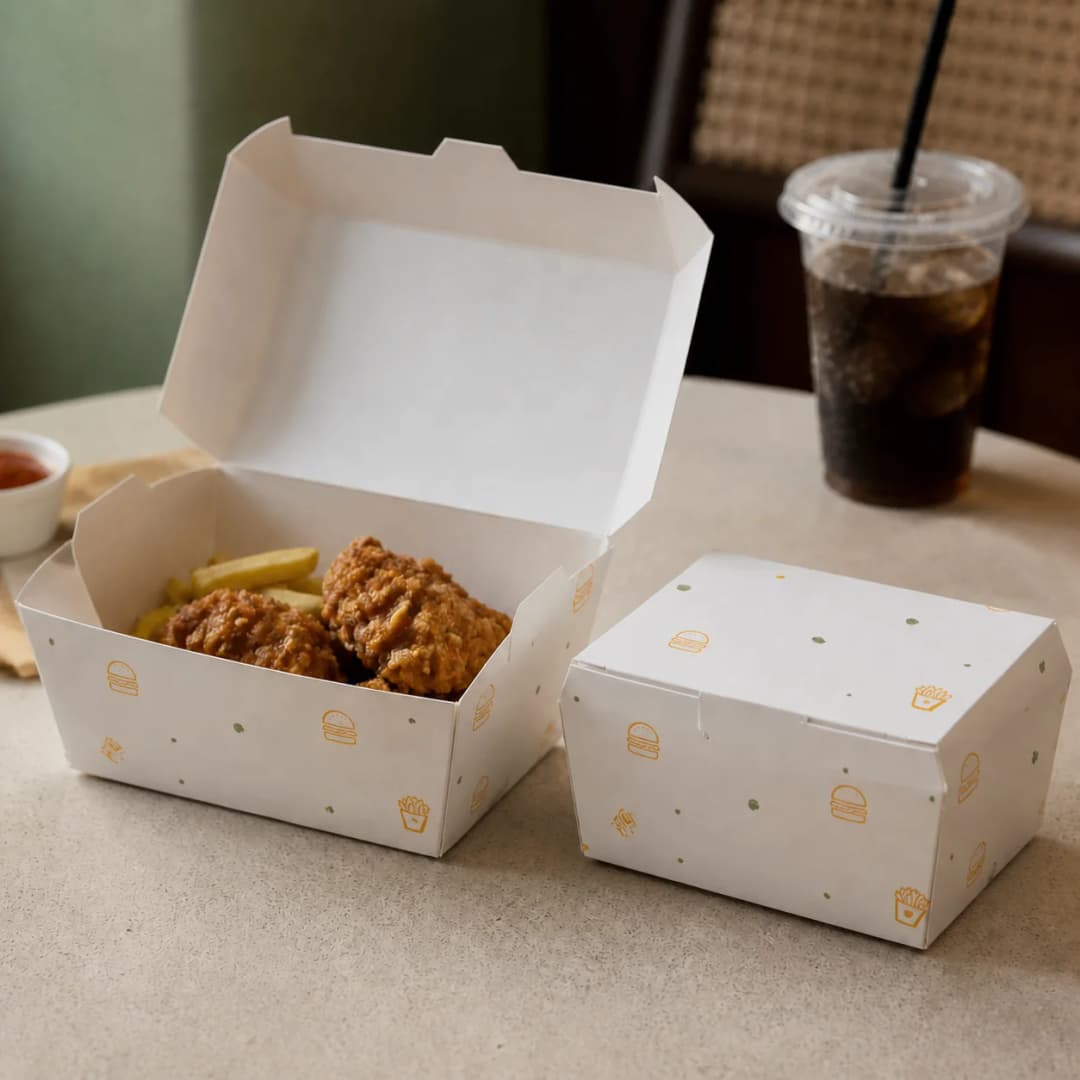
For takeaway, the paper and the outer container have separate roles. Review takeaway food boxes if the order also needs a formed container. Choose the box around the packed meal rather than assuming the roll alone supplies support or carrying protection.
Continuous rolls and ready-cut sheets
Choose a roll when staff need variable cut lengths and the station can accommodate the holder and cutting step. Roll width remains fixed within that roll, so identify a useful shared width before treating it as a replacement for several sheet sizes.
Choose BBQ deli paper sheets when staff normally take one repeatable finished piece for a portion or tray. Pre-cut supply removes the cutting step, but the finished dimensions still need to suit the order. General deli paper sheets cover pickup, separation and counter wrapping where a ready-sized piece is the main requirement.
The BBQ sheets and roll comparison guide explores the format decision across a complete service workflow. This product page focuses on developing the finished printed roll once a continuous web is a useful starting point.
Build the roll around the holder, cutter and counter
The roll width, length, core and outside diameter are connected choices. Review them together for the proposed paper rather than choosing each measurement independently.
Roll width is the web dimension across the holder. It affects food coverage and side-to-side equipment clearance. Compare the width with the normal wrap or liner, including its working folds and overlap, as well as the usable space at the dispensing point.
Roll length describes how much paper is wound onto the roll. For the same core and paper, more length generally means a larger outside diameter. Paper thickness and winding also affect the finished roll, so a requested length alone does not establish that it fits the station.
Core inside diameter needs to work with the holder or spindle arrangement. Maximum outside diameter needs clearance in the holder and around nearby surfaces. A roll can have the right paper width and still fail to feed because its core or outside diameter does not suit the equipment.
Unwind direction and cutting method determine how the web reaches the operator and which side faces the customer. Review whether staff tear, slice or use equipment to separate a piece, and how the cut web moves to the food. If a dispenser or cutting machine is already in use, its relevant limits can guide the proposed roll; machine compatibility is confirmed for that setup, not promised for every cutter.
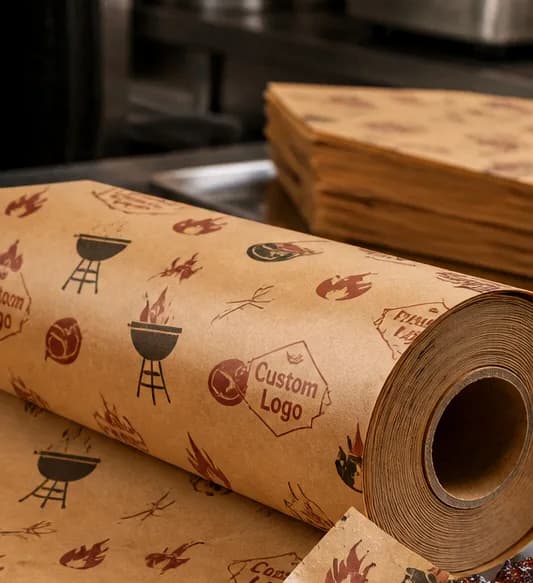
The retained illustration shows the continuous web, repeated artwork and open core. It is a product-format reference, not a dimensioned drawing or evidence of a tested equipment or heat-use specification.
Keep the print readable after unwinding and cutting
A design can look upright on an artwork file yet feed sideways or upside down at the counter. Agree the intended unwind direction, the printed viewing side and the way the operator lays the cut piece down. These choices belong with roll construction and the finished use, not only with the logo file.
For repeated artwork, consider both the repeat length and the shortest normal cut. A large repeat may leave a short piece without a complete logo. A longer liner may show several repeats, while wrapping can move part of the pattern into a fold. Check the used piece from the customer's position rather than approving the untouched roll alone.
If one specific logo position is important, discuss it alongside the cutting method. A repeating print does not automatically put a logo in the same place on every hand-cut length. Colors, spacing, small text and the visible area can be reviewed on a printed sample before the order is approved.
Select paper for the actual contact conditions
The BBQ label alone does not define butcher paper, greaseproof paper or smoker suitability. The pictured brown color and barbecue motifs are illustrations of presentation, not proof of a particular construction, coating, temperature rating or certification.
For service after cooking, the relevant review includes the food, temperature at contact, oil, sauce, moisture, wrapping or lining action and expected holding period. The paper route, any surface treatment, required performance and destination documents must be agreed for that use. A successful short handover does not by itself establish suitability for a longer holding period.
If the paper is intended to enter a smoker, oven or another heated cooking process, identify that separate use when discussing the project. This page does not confirm a cooking-paper specification. The selected construction, use limits and supporting documentation would need separate review before that application could be approved.
Work through quotation details after the first conversation
Start with the counter task; you do not need a completed technical brief to contact Lynn. Once the proposed route is clearer, the following existing specification topics help us develop a useful quotation. Unknown details can be discussed individually.
- Roll dimensions: Provide roll width, roll length, core inside diameter and any maximum outside diameter.
- Dispenser and cutting: Send holder or cutter photos and explain whether staff tear, slice or use equipment to separate each length.
- Food and use: Describe the cooked food, wrapping or lining action, temperature, oil, moisture and contact time.
- Paper requirements: State any known paper type, treatment, performance target or destination document to review.
- Print repeat: Send artwork, colors, repeat length, unwind direction and the viewing side after the web is cut and used.
- Order and packing: Provide estimated rolls, protection method, rolls per carton and delivery country.
Quotation and production timing depend on the agreed specification. MOQ is confirmed per project; roll dimensions, paper route, artwork, print repeat, core, protection and carton packing affect the practical minimum. There is no universal order quantity or fixed delivery promise on this page.
What a useful roll sample should demonstrate
A supplier sample roll helps check the proposed core fit, holder clearance, unwind direction and cutting action. Check it at the intended dispensing point; a loose piece can demonstrate coverage but cannot establish how a full roll feeds or fits.
After the material is judged suitable for the intended food contact, use representative portions or loaded trays to review the normal cut lengths, folds and exposed print. The shortest and longest normal pieces can reveal different artwork or coverage problems. Include the expected contact period when assessing the selected paper with cooked food.
Protective wrapping, roll labeling and rolls per carton should also be agreed for storage and handling. Confirm the final roll dimensions, paper route, print and unwind direction, packing and applicable documents before bulk production. These are later sample and order checks; completing them is not required before asking a question.
Frequently asked questions
When is a roll more practical than pre-cut sheets?
A roll can suit variable cut lengths or larger surfaces when counter space, holder and cutting time are acceptable. Pre-cut sheets are usually easier when every portion uses one repeatable finished size.
Is every BBQ paper roll pink butcher paper for smoking?
No. Roll format only describes how the paper is supplied. Smoker use depends on the actual paper construction, treatment, temperature and contact conditions and must be confirmed separately.
Why are core and unwind direction part of the quotation?
They affect whether the roll fits the holder, feeds from the intended side and presents the print correctly after cutting. A mismatch can make an otherwise correct roll unusable at the station.
What is the minimum order quantity?
MOQ is confirmed per project. Roll dimensions, paper route, artwork, print repeat, core, protection and carton packing determine the practical minimum.
Can I ask before I know the roll size or have finished artwork?
Yes. Tell Lynn what the paper needs to do at your counter. Dimensions, quantity, artwork, photos and sample results are not conditions for the first conversation. Holder details and material requirements can follow as we develop the project.
Discuss a custom printed roll with Lynn
Whether you are replacing an existing service roll or considering cut-to-length paper for a different counter layout, start with the job you want it to do. Chat with Lynn on WhatsApp or choose an email option. The visible email panel provides webmail and copying choices. If you prefer, leave a brief web message as a backup.