Ready-sized printed sheets for cooked-food service
Take a finished sheet from the stack, place the cooked food and complete the wrap or line the serving tray. Custom BBQ deli paper sheets bring a repeatable paper size and your printed design to a barbecue counter, deli service point or takeaway presentation. Xucheng Packaging coordinates finished width and length, the proposed paper and surface route, artwork direction, inner-pack quantity and carton packing around that use.
The sheet arrives cut to its finished dimensions. Staff do not need to measure and cut a length during each order, but the selected size still needs to cover the food or usable tray area. Choose the shape of the serving arrangement first: enclosing a portion, supporting a partial wrap and lining beneath a meal expose different parts of the paper.
You can chat with Lynn on WhatsApp or choose an email option before dimensions, quantity, artwork, photos or sample tests are ready. Start with what you want the sheet to do; we can develop the details together.
Give each sheet a clear job
Wrap a cooked-food portion
A sheet can fold around the portion for counter handover or takeaway. The finished width and length need to allow the intended coverage and overlap, including the ends if the pack is meant to enclose them. A partial wrap deliberately leaves an opening; a fuller wrap needs enough paper for its complete fold sequence.
Review the wrapped shape rather than only the flat rectangle. A larger piece may create bulky corners or hide the design beneath several folds. A smaller one may leave too little overlap for the normal portion. The proposed paper must also suit the actual food and contact period; additional paper area is not a substitute for a suitable material.
Line a tray or platter
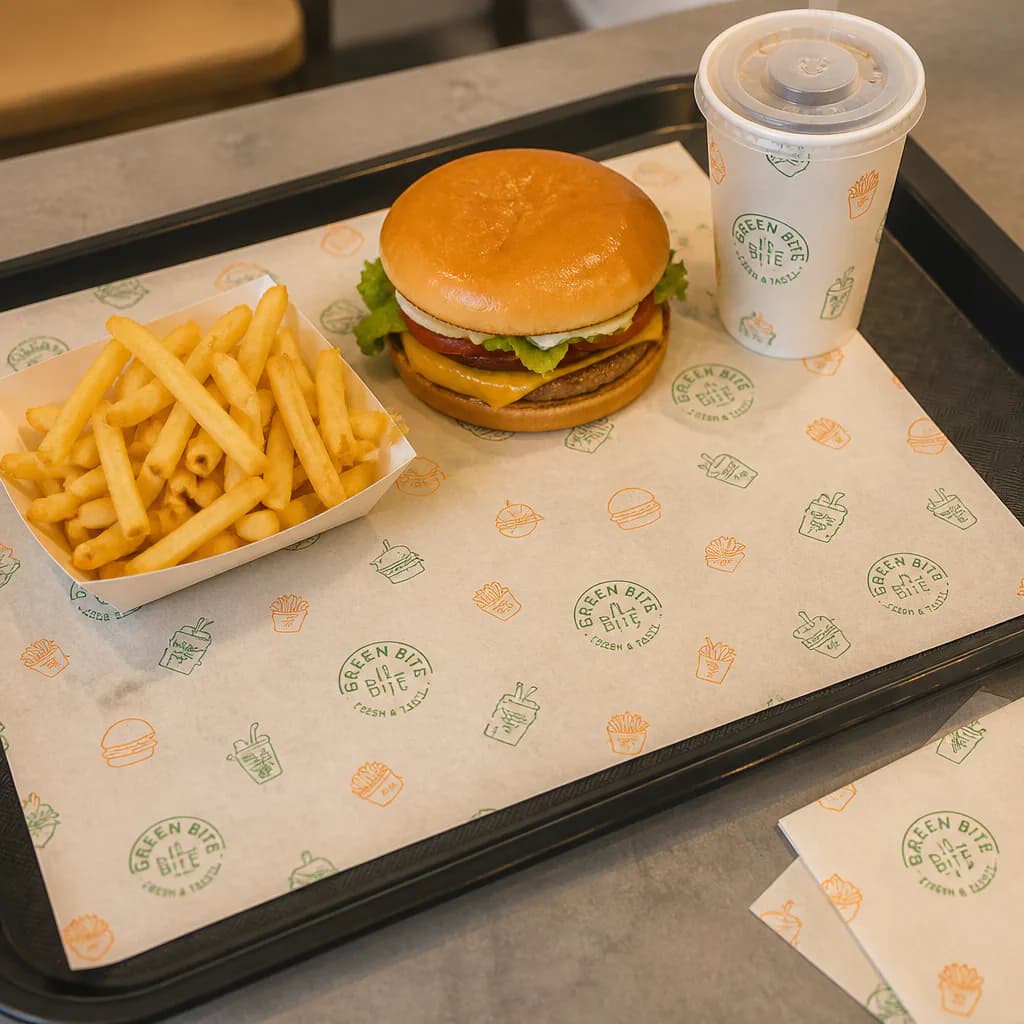
A liner sits beneath the meal and leaves paper visible around the food. Size it to the usable base and the intended overhang or fold, taking account of the complete serving arrangement. A tray containing sliced meat and sides can cover a different area from the same tray carrying one large portion.
The container continues to support the meal. A printed liner does not establish leakproof performance or replace the tray. For a reusable serving tray where base coverage and the full meal layout are the main decisions, see paper tray liners. For an order that also needs a formed takeaway container, review takeaway food boxes around the loaded meal.
Present the food when the pack opens
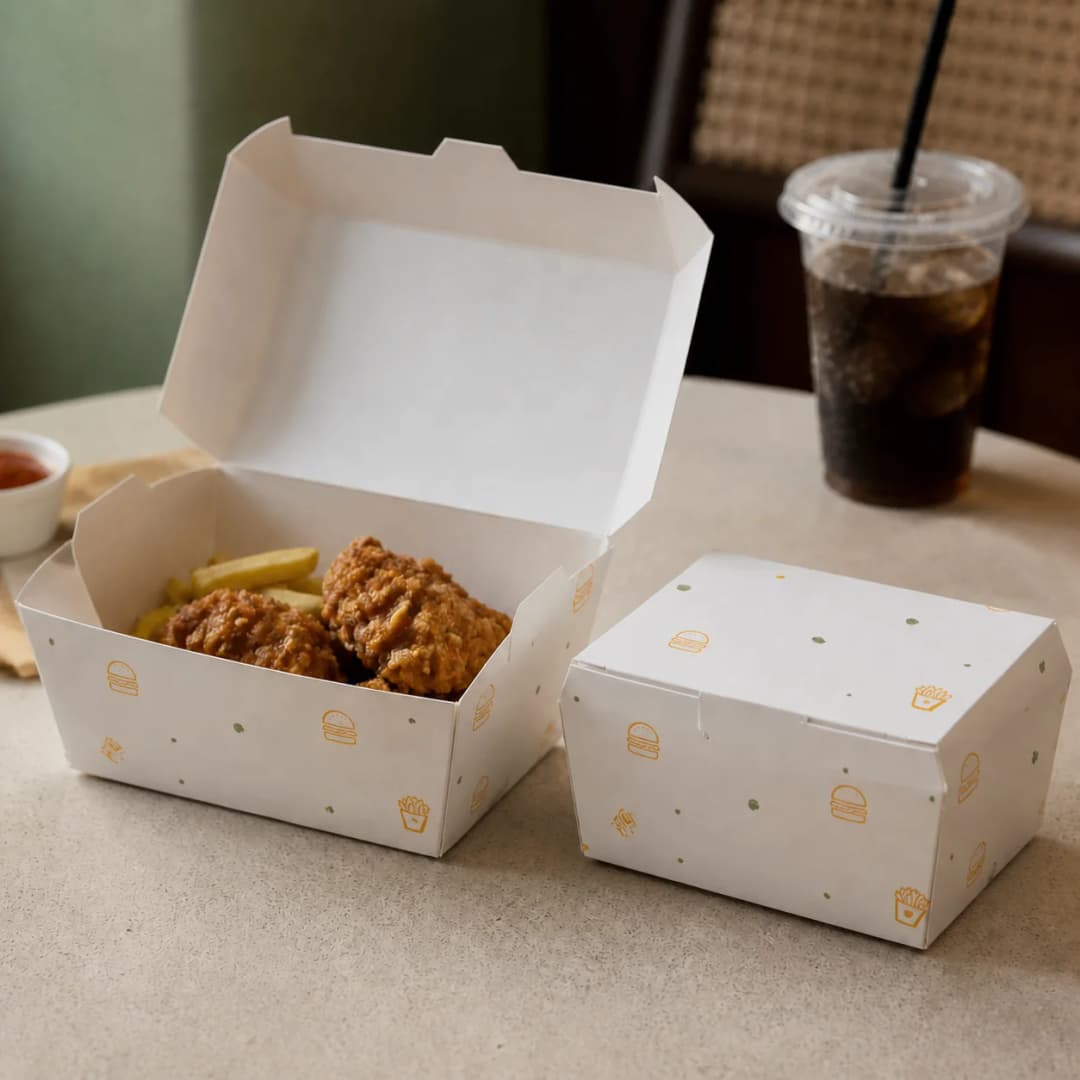
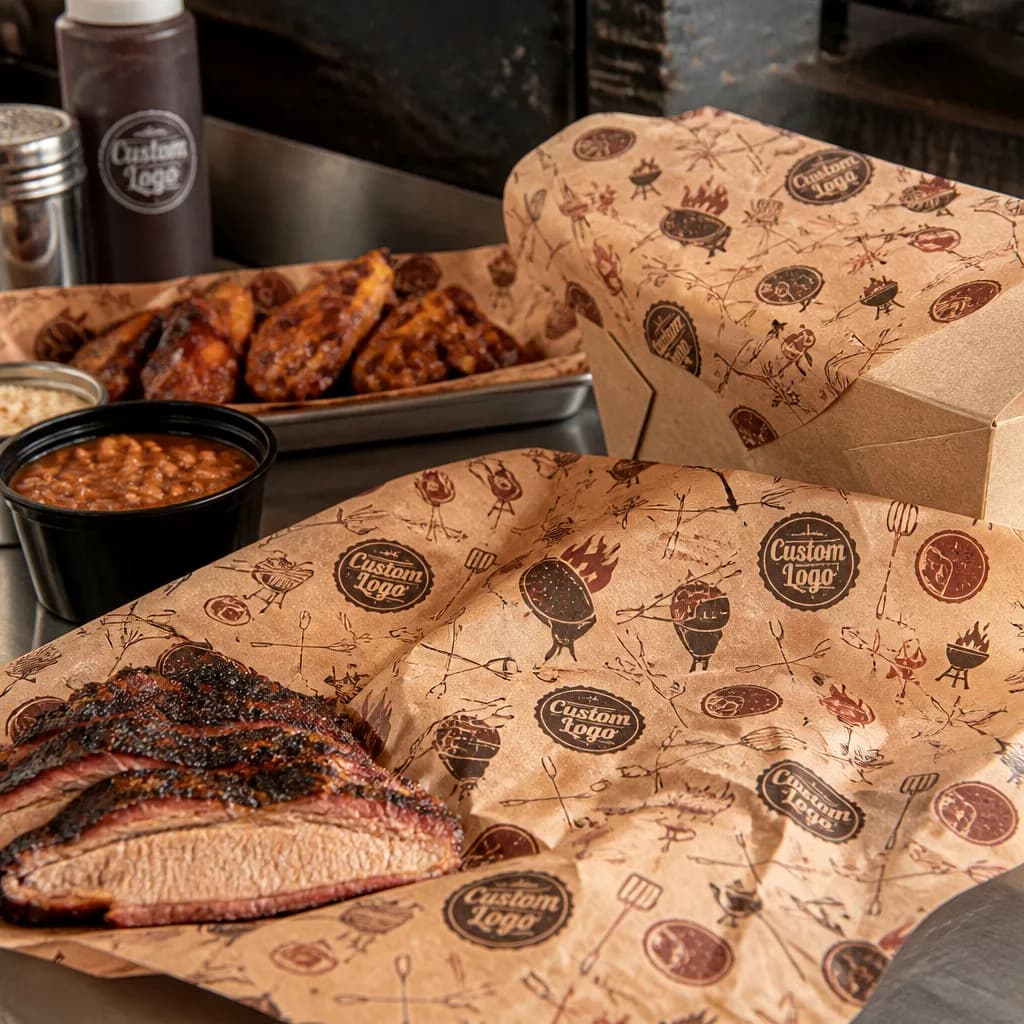
For an opened wrap or takeaway box, the printed paper can remain part of the presentation as the food is revealed. Consider which face turns outward during packing and which areas become visible when the customer opens it. A design approved only on an unused flat sheet can end up covered by meat, tucked under a fold or facing the tray.
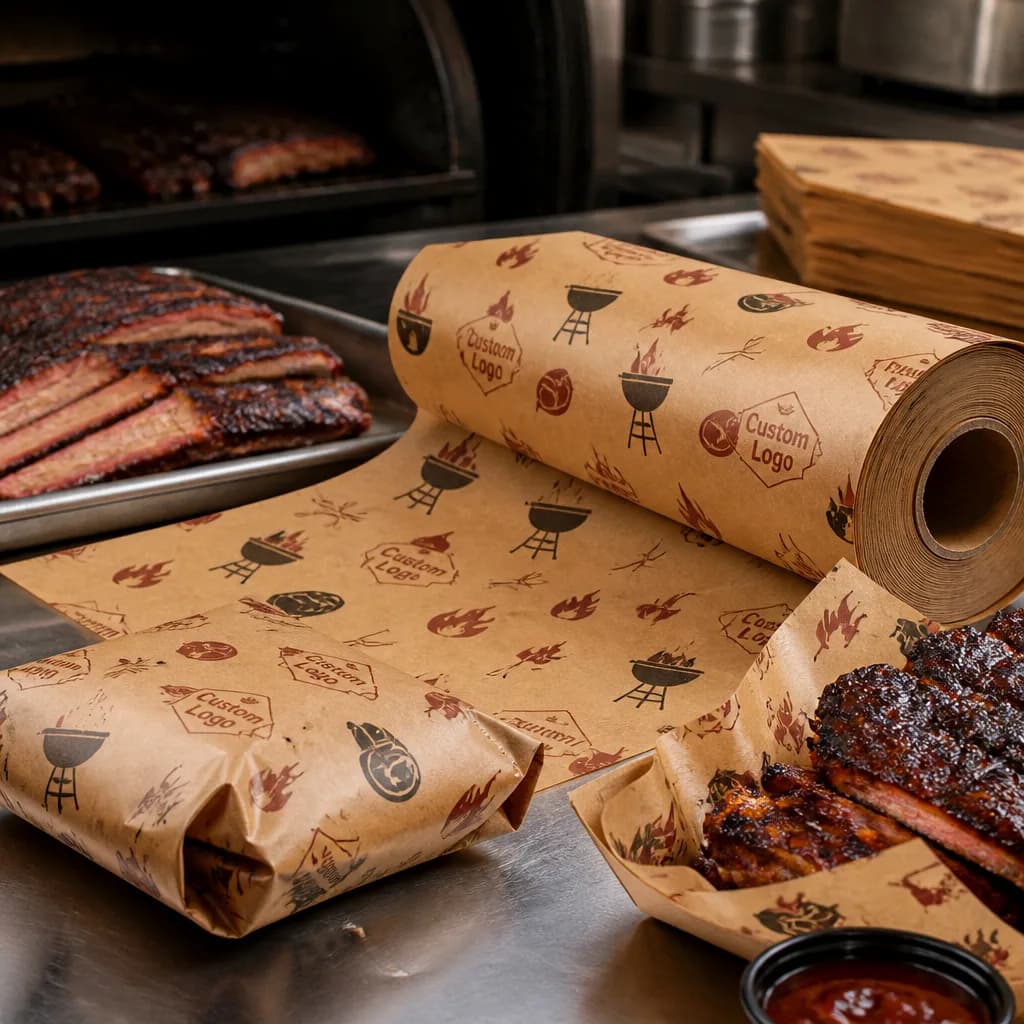
The illustration shows possible paper placement beside cooked food. Your actual food contact, finished dimensions, artwork and packing arrangement are agreed for the project; a barbecue-themed picture is not evidence of a particular paper construction.
Size the finished piece around coverage and folds
Start from a successful existing sheet if there is one. Otherwise, the portion, tray and intended wrapping movement provide a useful reference during the discussion. Check both dimensions and the way the rectangle is turned: rotating a sheet changes how its edges and printed design meet the food.
For a wrap, allow for the portion's height as well as the flat footprint. The paper travels around the food before its edges overlap. For a liner, distinguish the usable inside area from the container's outer dimensions, and decide whether the sheet lies flat or turns up at the sides.
Consider the smallest, typical and largest normal orders that are meant to use the same sheet. One finished size can be convenient when it serves that range without awkward excess or exposed corners. A second size may be more useful when a large platter and a small portion require very different coverage. The aim is a workable set of sizes for service, not a different printed sheet for every menu name.
You can ask about the project before completing measurements or a trial. Later, an existing food-contact sheet or a suitable supplier sample can help compare the proposed size with the loaded food and container. The final width, length and orientation should be clear before artwork and order details are approved.
Make stack pickup and replenishment practical
Pre-cut supply removes the cutting step, but the way staff take one sheet still matters. Consider where the stack sits, the space available to lift a piece and the movement from the paper to the food or tray. An oversized sheet can be awkward at a small counter even when it covers the portion well.
Keep print direction part of the packing discussion. When a fresh inner pack is opened, staff should be able to understand which way to place its sheets for the intended wrapping or lining action. Consistent orientation can help keep the branded face in view without turning each sheet repeatedly during service.
Inner-pack quantity and carton quantity are separate choices. The first affects how much paper is opened at the counter and how often the stack is replenished; the second affects storage and handling of the order. Compare the proposed pack with the available storage and the working station rather than choosing only by the total number of sheets.
Review single-sheet separation, pickup and replenishment with the proposed finished pack at the sample stage. Loose flat sheets do not establish interfolded or automatic dispensing behavior. If your project uses a particular dispenser, that feed arrangement needs separate confirmation; this product is specified here as finished pre-cut sheets.
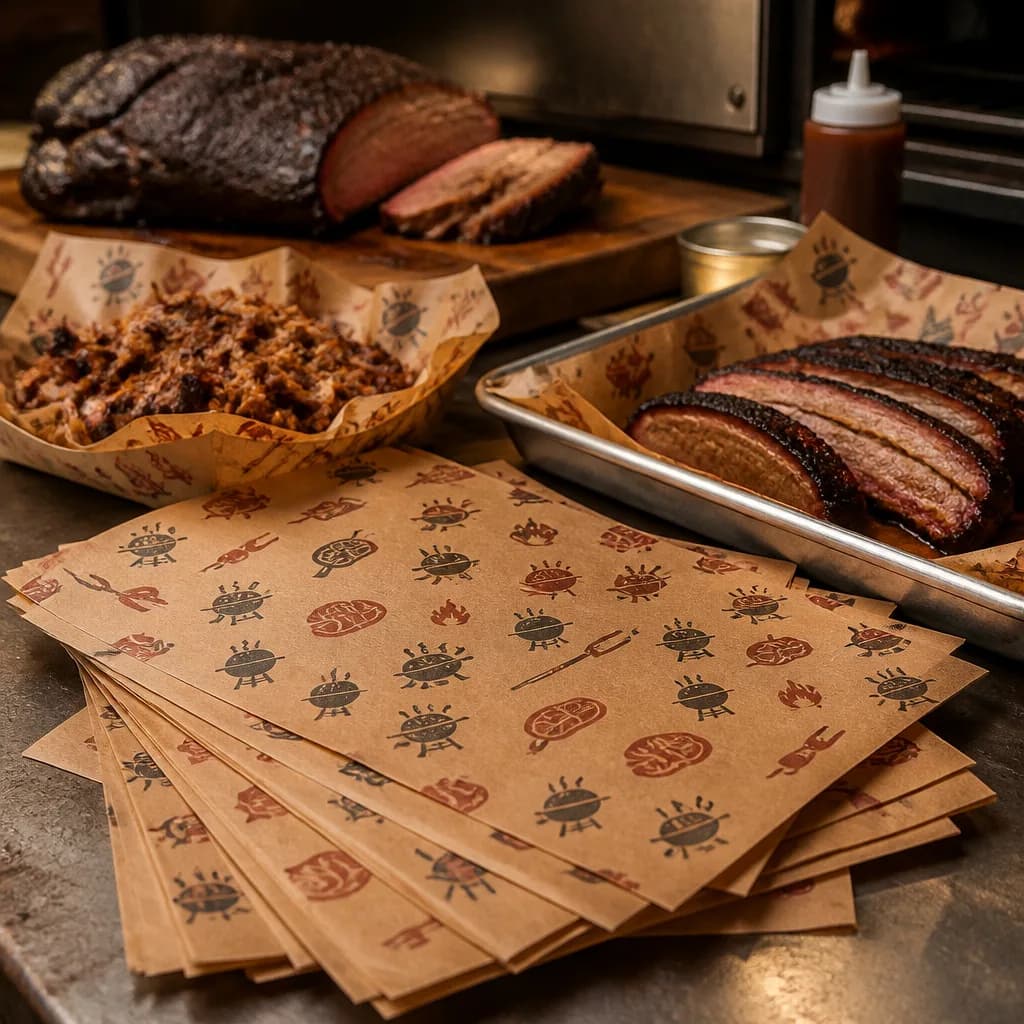
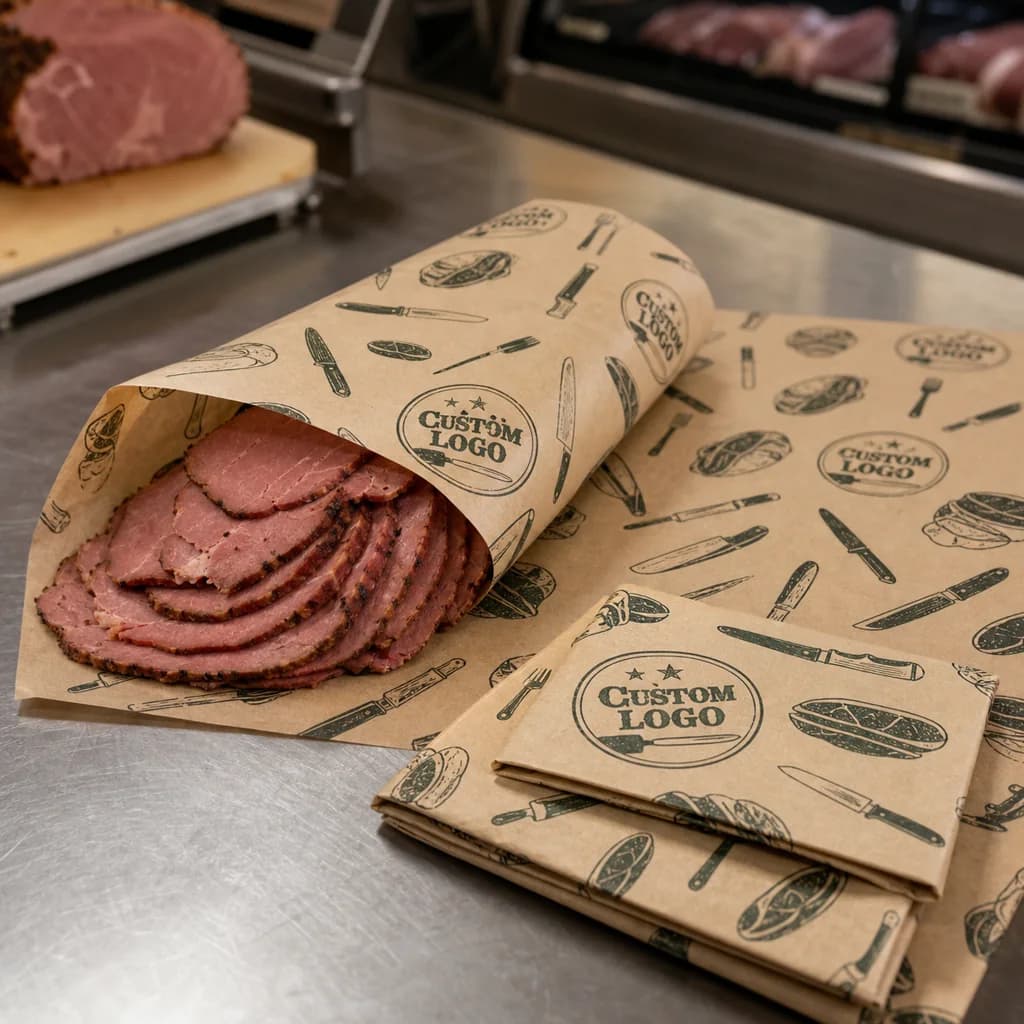
The retained detail illustration shows separate finished pieces in a stack and paper used beneath cooked-food portions. It helps explain the supply form and printed presentation; it is not a dimensioned size reference or a performance test.
Put the print where the loaded sheet leaves it visible
For wrapping, plan the design around the outer face and the folds that remain exposed. A central logo can move into an overlap, while a repeating pattern can leave branding visible in several places. The direction in which staff pick up and turn the sheet affects the customer's final view.
For lining, the food may hide most of the center. The exposed edges, corners or turned-up sides can carry the visible pattern. Check the sheet with the complete meal in place, including sides or separate containers that normally sit on the liner.
Choose between repeated artwork and a more position-dependent layout according to that use. A fixed-position message needs a predictable sheet orientation and food placement. Repeated artwork is less dependent on one exposed panel, but the repeat scale should still work at the finished size and around the normal folds.
Logo files, colors, repeat direction and the preferred visible area can be developed after first contact. A printed sample helps review the actual presentation before production; a digital layout alone cannot show how the loaded paper folds or how much artwork remains exposed.
Develop the custom sheet as a finished pack
The project can bring together finished sheet width and length, a proposed paper and surface route, wrap or liner use, repeated or positioned artwork, print orientation, inner packs and carton quantities. These choices work together. A new size can alter the exposed print area, and a different packing orientation can alter how staff present the design.
Tell Lynn whether you are replacing a current sheet, introducing printed presentation or trying to make one finished size work across a group of orders. An existing pack or photo is useful when available, but it is not a condition for starting the conversation.
If variable cut lengths are the main requirement, custom BBQ paper rolls provide a separate continuous supply format. For broader deli pickup, separation or wrapping tasks, see deli paper sheets. Keep the physical supply form clear so the quotation addresses the product your counter actually needs.
The BBQ sheet and roll comparison guide explores that format choice across a service workflow. This page develops the finished pre-cut sheet: its coverage, pickup, visible print and packing.
Match the paper to food contact and holding time
Base paper, any surface treatment, grease or moisture performance and required food-contact documents depend on the actual food, temperature, oil, sauce, contact time and destination. Brown paper, a barbecue motif or the word BBQ does not establish those properties. A sheet used for a brief counter handover may face different conditions from one that stays against the food during takeaway.
This page describes printed sheets for cooked-food service. It does not confirm butcher-paper construction, smoker or oven suitability, or direct-heat use. Any cooking-process requirement would need its own material specification, applicable limits and supporting documentation before that use could be approved.
Work toward a quotation after the first question
You can contact Lynn with a short description of the counter task. The following specification topics are for developing the quotation and sample after that conversation; they are not a form to complete before you may ask.
- Cooked food and service: Describe the meat or meal, temperature, oil, sauce, holding time and whether the sheet wraps food or lines a container.
- Finished sheet size: Provide width × length, or send the current sheet, tray dimensions and loaded photos.
- Counter workflow: Explain how staff pick up, fold, wrap, line, stack and hand over each portion.
- Paper requirements: State any known paper, treatment, performance or destination document that must be checked.
- Artwork and direction: Send vector artwork, print colors, repeat direction and the area that should remain visible after loading.
- Order and packing: Provide estimated quantity, sheets per inner pack, carton preference and delivery country.
We can review unknown details individually. The proposed quotation should identify the finished size, paper route, print and packing covered by that offer. MOQ, pricing and production timing are confirmed for the agreed project; this page does not promise a universal minimum quantity or fixed lead time.
Review a suitable sample in the finished service setup
At the sampling stage, compare coverage with the normal portion and the intended tray or wrapping method. Look at where the edges finish, whether the normal fold is easy to complete, how staff separate one piece and how the print appears once the food is loaded.
Review the proposed inner pack as well as an individual sheet. Stack orientation, access to the next sheet and the way a new pack is added can affect the service action. Use paper suitable for the intended contact when checking it with cooked food, and include the expected holding period in the material review.
Before bulk production, agree the finished dimensions, paper and surface route, intended contact conditions, artwork and viewing direction, inner-pack and carton quantities, and any required documents. Sample and final-order checks come later in the project; no test record is required for the first WhatsApp or email conversation.
Frequently asked questions
Are BBQ deli paper sheets the same as a BBQ paper roll?
No. Sheets are supplied at a fixed finished size. A roll is a continuous web that staff or equipment cut to length. They require different size, storage, dispensing, print-repeat and packing decisions.
Does the BBQ name mean the sheet can go inside a smoker?
No. A barbecue print or cooked-meat service image does not establish smoker or oven suitability. Temperature use, paper construction and required documents must be confirmed for the selected material.
How should the sheet size be approved?
Compare an existing food-contact sheet or suitable supplier sample with the largest normal portion and actual tray or wrap method. Look for uncovered areas, excessive folds, visible print and easy single-sheet pickup.
What is the minimum order quantity?
MOQ is confirmed per project. Finished size, paper route, print coverage, colors, inner packing and total quantity determine the practical production minimum.
Can I start without a finished sheet size or artwork?
Yes. Tell Lynn how the paper will be used and what you want to improve. Dimensions, quantities, artwork, photos and sample results can follow after the first conversation. We can work through coverage, paper selection and packing as the project develops.
Ask Lynn about printed pre-cut BBQ sheets
Discuss a repeatable wrapping sheet, a printed platter liner or a finished pack for your counter. Chat with Lynn on WhatsApp or choose an email option. Email opens visible webmail and copying choices. You can also leave a brief web message as a backup.